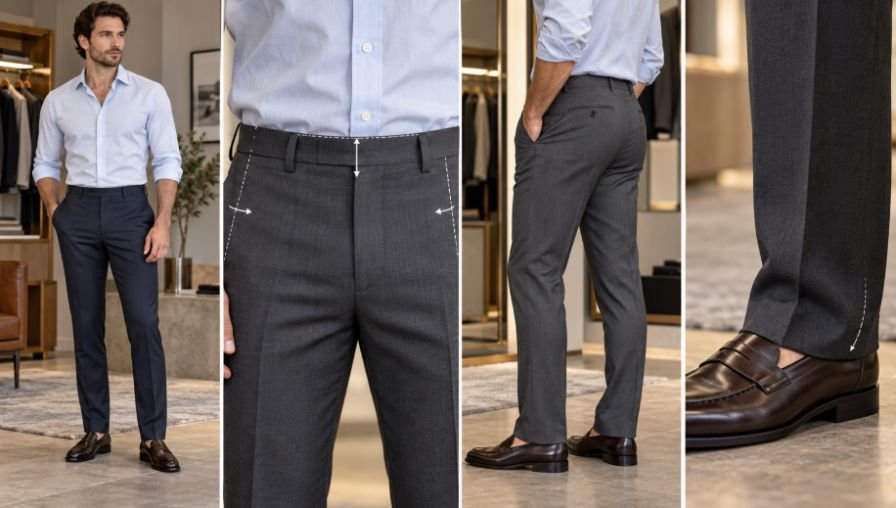
A pair of dress pants can match your labeled waist size perfectly and still fit badly. That is because good trouser fit depends on much more than the number printed inside the waistband. Rise, seat shape, thigh room, leg line, hem length, and even where you naturally carry your waist all affect how cleanly trousers hang.
For anyone wondering how should dress pants fit men, the simplest answer is this: they should stay comfortably in place without a belt, move with you without pulling, fall smoothly through the seat and thighs, and meet your shoes without unnecessary bunching.
Getting those details right makes inexpensive trousers look considerably better—and makes long office days much more comfortable.
Good Fit Is About Shape, Not Just Waist Size
Apparel researchers have studied this problem for decades. The National Institute of Standards and Technology notes that body dimensions and apparel fit are fundamental to successful apparel sizing because satisfactory fit cannot be determined from a single measurement alone.
That explains why two men with 34-inch waists may need completely different trousers.
One may have larger thighs and a flatter seat. Another may have slimmer legs but require a longer rise. Height, posture, hip shape, proportions, and preferred ease all influence the result.
Research summarized by the University of Minnesota similarly found that successful pant fitting depends on factors including body size, configuration, alignment, proportions, and the amount of ease preferred by the wearer.
Start at the Waistband, Not the Hem
Men commonly judge trousers first by their length. Start higher.
The waistband establishes where every other part of the pants sits.
Traditional dress trousers generally sit closer to the natural waist than jeans or casual chinos. Depending on the cut and your proportions, that may mean near or somewhat below the navel rather than several inches down on the hips.
The waistband should feel secure without requiring a belt to prevent the trousers from sliding.
You should usually be able to place one or two fingers comfortably inside it. A waistband that leaves deep pressure marks, folds over itself, or makes sitting uncomfortable is too tight. If you can pull it several inches away from your body, it is probably too loose.
A belt should complement the outfit, not function as emergency structural support.
Rise Can Make or Break Dress Pants
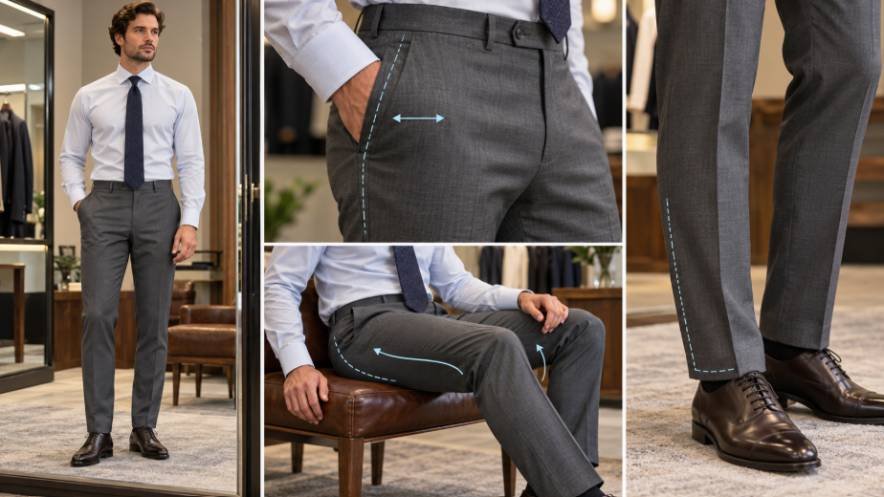
The rise is the distance between the crotch and waistband. It receives much less attention than waist size, yet it dramatically affects comfort.
A rise that is too short can pull upward through the crotch, create horizontal tension lines, and drag the waistband downward when you sit.
Too much rise can create unnecessary fabric through the front and seat.
The correct rise allows the crotch seam to sit close enough to the body for a clean silhouette without pressing uncomfortably against it.
Brigham Young University teaches garment fit and alteration principles including balance, ease, grain, and line, including their application to lower-body garments and pants patterns.
Those concepts translate surprisingly well to buying ready-to-wear trousers: if the rise is wrong, the rest of the garment rarely hangs correctly.
Check the Seat Before Looking at the Legs
Turn sideways and then look at the trousers from behind.
The fabric should follow your seat lightly without clinging to every contour. It should also avoid sagging below the buttocks.
Horizontal wrinkles generally indicate tension. Large folds or excess material often indicate too much room.
Pay particular attention to the pockets.
Side pockets that flare outward are one of the easiest warning signs that the trousers may be too tight through the hips or upper thighs. Rear pockets should also remain relatively flat rather than being stretched open.
Professional garment fitting commonly evaluates not only dimensions but also visual signals such as wrinkles, balance, ease, and seam alignment. Cornell apparel-fit research describes indicators of good garment as involving comfort, appropriate ease, straight seams, balanced hemlines, and freedom from unintended drag lines or folds.
Your Thighs Need Ease, Not Extra Fabric
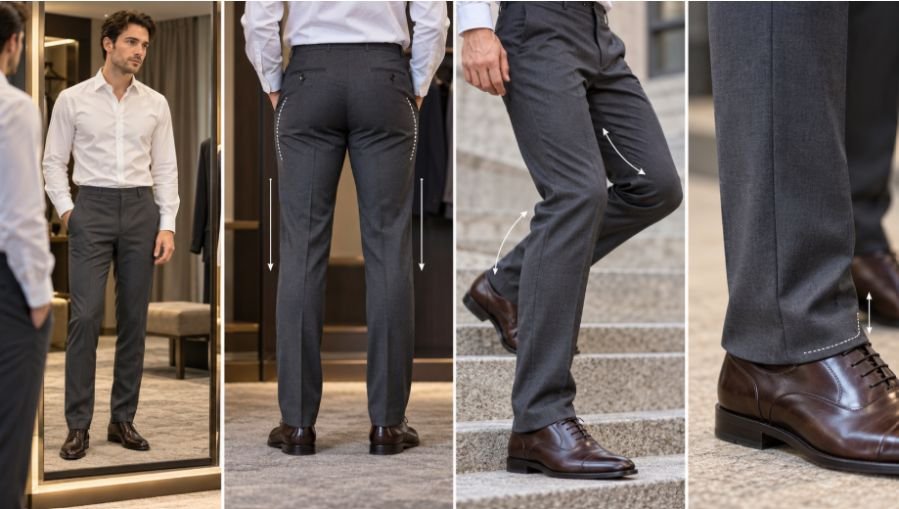
Dress pants are supposed to look streamlined, but streamlined does not mean skin-tight.
Standing naturally, pinch the fabric at the side of your thigh. Roughly half an inch to an inch of available fabric is a useful everyday benchmark, although fabric stretch, trouser cut, and personal preference matter.
Then perform a movement test.
Sit normally. Climb a stair. Bend your knee. Walk several steps.
If the fabric locks against your thighs, pulls the pockets open, or causes the waistband to shift downward, the trousers probably need more room.
Montana State University’s garment-evaluation guidance similarly emphasizes appropriate ease at areas including the waist, crotch, and seams rather than simply selecting clothing by labeled size.
Leg Width Should Create a Clean Vertical Line
Below the thighs, dress pants should generally narrow gradually toward the ankle. They do not need to be aggressively tapered.
An overly narrow lower leg can catch on the calf and prevent the fabric from falling naturally. You may notice the trouser leg sticking after you stand from a chair or forming persistent folds around the knee.
Conversely, excessive width may make the pants look shapeless. The ideal taper depends partly on your build. Men with muscular legs generally need more room through the knee and calf than very slim men.
The goal is proportion, not chasing whichever trouser silhouette happens to be fashionable this season.
How Much Pant Break Should You Choose?
The “break” describes the fold created where your trouser hem meets your shoe.
| Break | Appearance | Best For |
| No break | Hem barely touches shoe | Slim, contemporary tailoring |
| Slight break | Small crease at front | Most modern business wardrobes |
| Half break | Noticeable single fold | Classic, versatile dress pants |
| Full break | More fabric resting on shoe | Traditional wider-cut trousers |
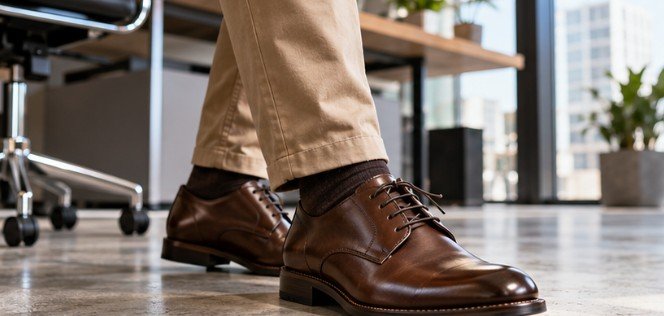
For most American office wardrobes, a slight or half break is the safest choice.
The back hem should fall cleanly rather than pooling above the shoe. Large stacks of fabric around the ankles can make otherwise well-tailored pants appear several sizes too long.
No-break trousers can look sharp, but they require precise tailoring. Cut them too short and they simply look like pants that shrank.
Use the Five-Minute Fitting-Room Test
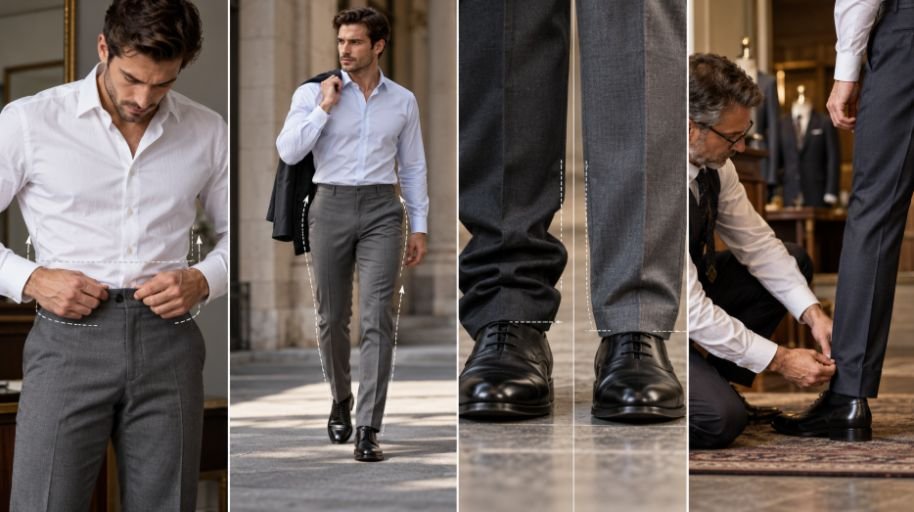
Before buying trousers, perform these checks rather than merely standing motionless in front of a mirror.
1. Remove the Belt
The pants should remain in position naturally.
2. Sit for 30 Seconds
Check whether the waistband cuts into your stomach or the crotch pulls upward.
3. Examine the Pockets
They should stay reasonably flat instead of spreading open.
4. Walk and Climb
Take several long strides and step onto a bench or fitting-room platform if possible. Your thighs should move freely.
5. Study the Wrinkles
Persistent horizontal pulling often signals tightness. Collapsed folds can indicate excess fabric or poor balance.
6. Check the Hem With Your Actual Shoe Style
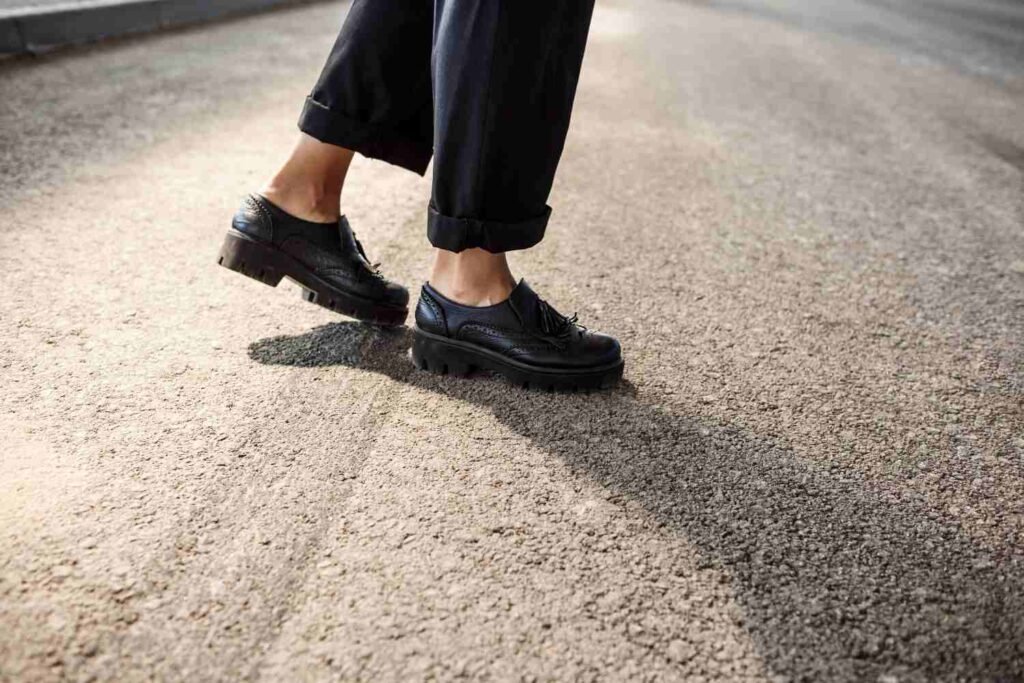
Dress pants fitted while wearing sneakers may end up the wrong length when paired with Oxfords or loafers.
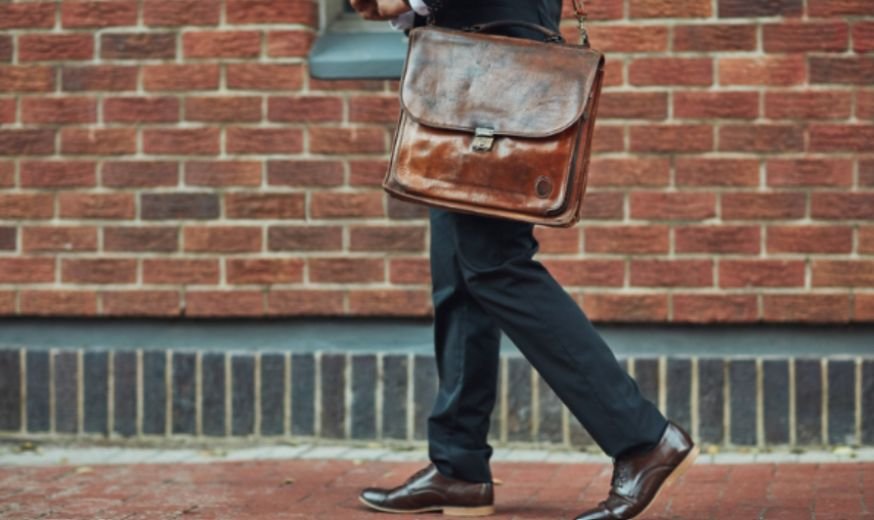
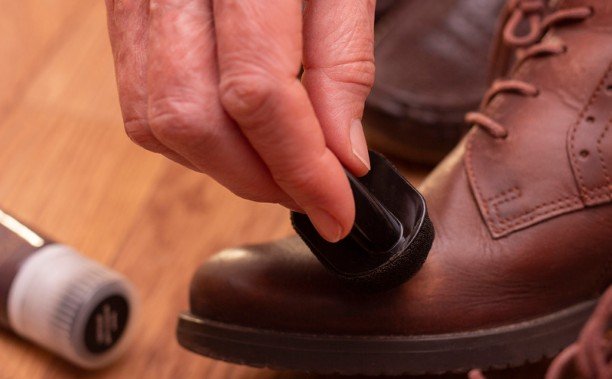
Footwear comfort also contributes to a polished appearance, particularly when dress shoes are worn throughout a busy workday. If your shoes produce persistent noise while walking, understanding why leather shoes squeak when walking can help you identify the underlying cause and determine the appropriate remedy.
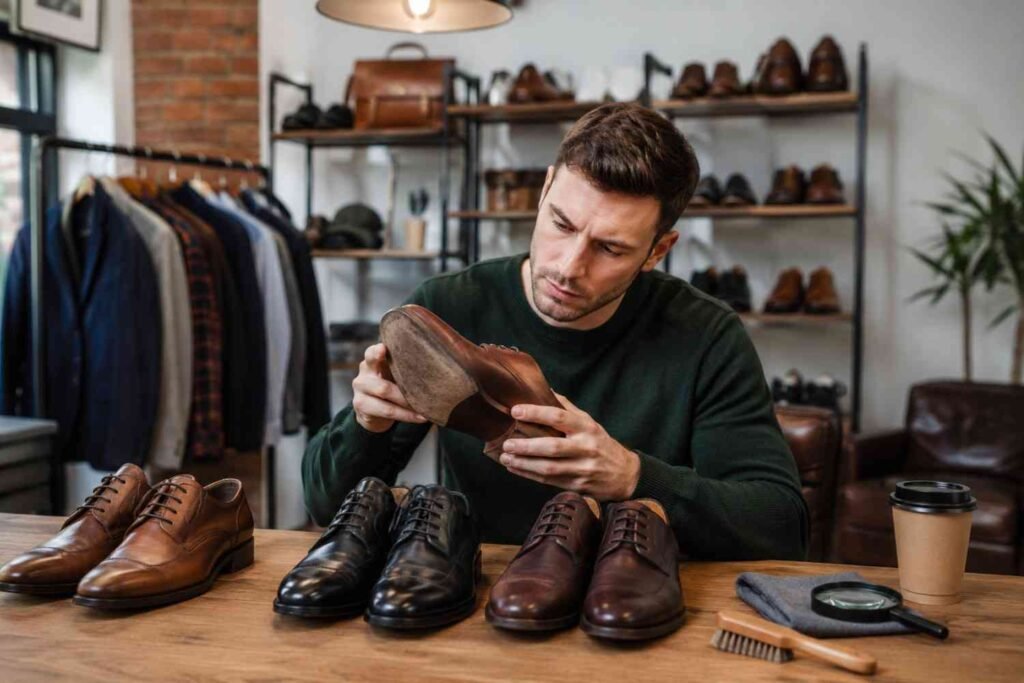
Just as trouser length influences the overall silhouette, the condition of your footwear can affect the polish of your finished look. Learning how to read heel wear on used shoes can help you identify uneven wear patterns and assess whether pre-owned dress shoes remain suitable for regular use.
What Can a Tailor Actually Fix?
Not every bad fit requires replacing the pants. A tailor can usually shorten the hem, reduce the waist moderately, refine the leg taper, and sometimes adjust excess fabric through the seat. Major rise problems are more difficult.
If trousers feel fundamentally wrong through the crotch, hips, or upper thighs, starting with another cut or size is often smarter than attempting extensive alterations.
When purchasing pre-owned dress shoes to complement tailored trousers, assessing the condition of their construction is equally important. Knowing how to check welt condition on used shoes can help you identify potential structural deterioration and determine whether a pair is worth investing in.
This distinction matters because fitting experts recognize that measurements alone cannot fully describe body shape. Apparel research repeatedly shows that garments may require alteration even when the nominal measurements appear correct.
University of Minnesota research on customized pant fit and ease.
Frequently Asked Questions
1. Should men’s dress pants be tight around the thighs?
No. They should follow the thighs without gripping them. You need enough ease to sit, walk, and climb stairs without pulling the pockets open or creating strong horizontal wrinkles.
2. Where should men’s dress pants sit on the waist?
Most dress trousers sit higher than jeans, generally around the natural waist or slightly below it. The exact position depends on the rise, body proportions, and trouser style.
3. Should dress pants touch the shoes?
Usually, yes. A slight or half break allows the hem to rest gently on the shoe. No-break trousers may barely touch the shoe but require more precise tailoring.
4. Can a tailor fix dress pants that are too big?
Often. Tailors can commonly adjust the waist, seat, hem, and leg width within reasonable limits. Major problems involving the rise or overall trouser structure may require a different size or cut.
The Best Fit Should Almost Disappear
Learning how should dress pants fit men ultimately means learning to notice what well-fitted clothing does not do.
It does not require constant belt tightening. It does not pull across the pockets, collapse below the seat, grip your calves, or pile dramatically over your shoes.
Good trousers simply follow your proportions, provide enough room to move, and hang cleanly when you stand.
Next time you try on dress pants, ignore the size tag for five minutes. Sit, walk, inspect the pockets, study the wrinkles, and check the hem with dress shoes. Your body will tell you more about fit than the label ever can.