A used leather shoe can look spotless and still carry sweat, skin debris, odor-causing microbes, and moisture deep inside the lining. That is why learning how to sanitize used leather shoes is less about making them look polished and more about cleaning the areas your feet will actually touch.
The complication is leather itself. Aggressive disinfectants, soaking, high heat, and repeated alcohol exposure can remove oils, weaken finishes, affect adhesives, or leave leather stiff and cracked. A better approach separates exterior cleaning from interior sanitation, uses as little moisture as necessary, and gives the shoe enough time to dry completely before wear.
Why Secondhand Leather Shoes Deserve More Than a Quick Wipe
Most used shoes are not inherently dangerous, but footwear creates exactly the kind of environment certain microorganisms prefer: warmth, humidity, darkness, and repeated contact with skin.
The CDC notes that the fungi associated with athlete’s foot thrive in warm, dark, moist environments and recommends keeping feet and footwear clean and dry.
Researchers have also found that conditions inside footwear matter. A study involving 420 patients found that warmer, more humid shoe environments were associated with a higher incidence of tinea pedis, or athlete’s foot.
That does not mean every thrift-store loafer is contaminated. It does mean that cleaning a previously worn shoe should focus heavily on moisture control and the interior—not simply shining the upper.
Start by Identifying What the Shoe Is Made From
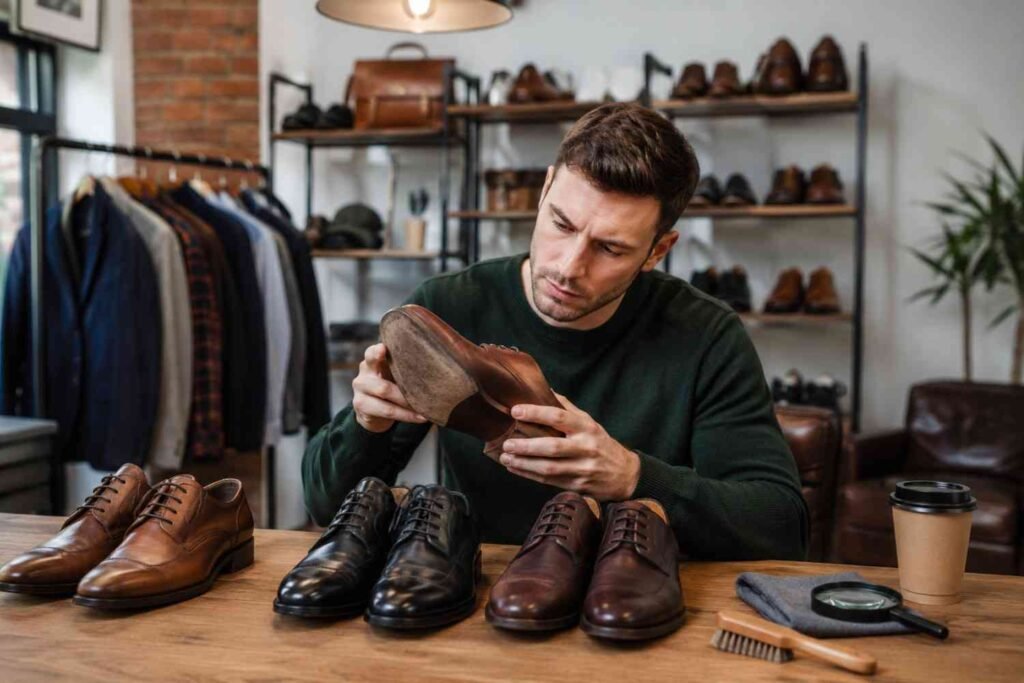
Before reaching for any cleaner, inspect the construction.
Smooth finished leather tolerates gentle surface cleaning better than suede, nubuck, patent leather, or unfinished leather. Interior materials may be leather, textile, synthetic fabric, foam, or combinations of all four.
If you are shopping for higher-quality footwear, construction matters as much as appearance. My guide to full-grain leather dress shoes under $300 explains why better leather often responds more predictably to proper maintenance.
Look for peeling coatings, cracking leather, crumbling foam, mold growth, severe water damage, or a sour odor that returns immediately after airing. Those signs can make restoration more trouble than the shoes are worth.
A Leather-Safe Sanitizing Process
1. Strip the Shoe Down First
Remove the laces and any removable insoles. If the insoles are heavily compressed, stained, strongly odorous, or inexpensive to replace, installing fresh insoles is often more practical than attempting to rescue them.
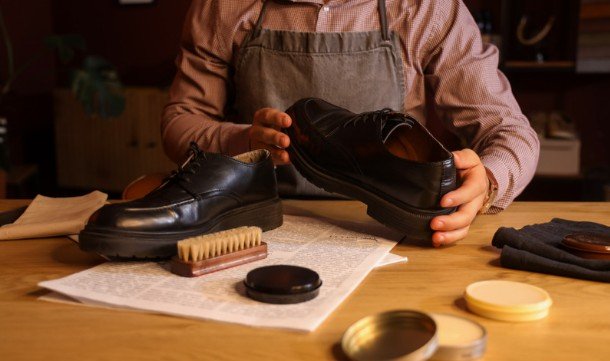
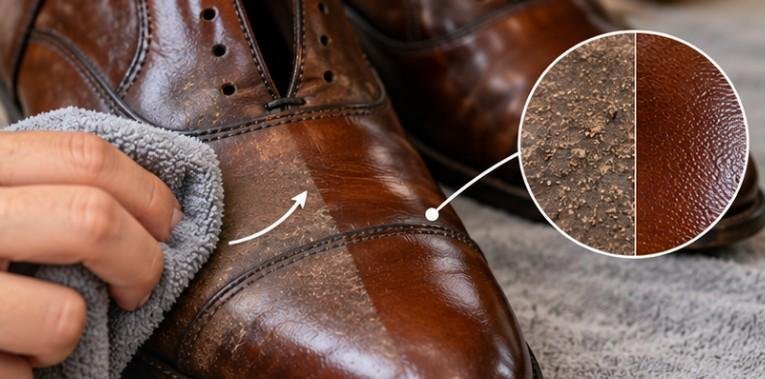
Brush loose dirt from the exterior with a horsehair or other soft shoe brush. Use a separate brush or vacuum attachment for loose debris inside the shoe.
Avoid soaking at this stage. Water trapped beneath an insole or inside the toe box can prolong drying and create another damp environment.
2. Clean the Exterior Before Trying to Sanitize Anything
Sanitizers work poorly when dirt and organic residue remain on a surface, so cleaning comes first. For smooth finished leather, apply a small amount of leather cleaner to a cloth rather than pouring it onto the shoe. Work section by section and wipe away residue.
Museum conservation guidance is deliberately conservative with leather because excessive cleaners and treatments can alter the material. The Smithsonian’s Museum Conservation Institute emphasizes that different tanning and processing methods influence how leather responds to treatment.
For ordinary modern shoes, that translates into a simple rule: use the least aggressive treatment that accomplishes the job.
3. Treat the Interior More Carefully Than Internet Hacks Suggest
A commonly repeated recommendation is to combine equal parts water and 70% isopropyl alcohol. Mathematically, however, that produces a solution containing only about 35% alcohol.
It should therefore not automatically be described as a verified disinfectant.
The EPA also distinguishes between products intended for hard nonporous surfaces and those tested for softer or porous materials. Products making antimicrobial claims must be used on surfaces covered by their labeling and according to their stated contact times.
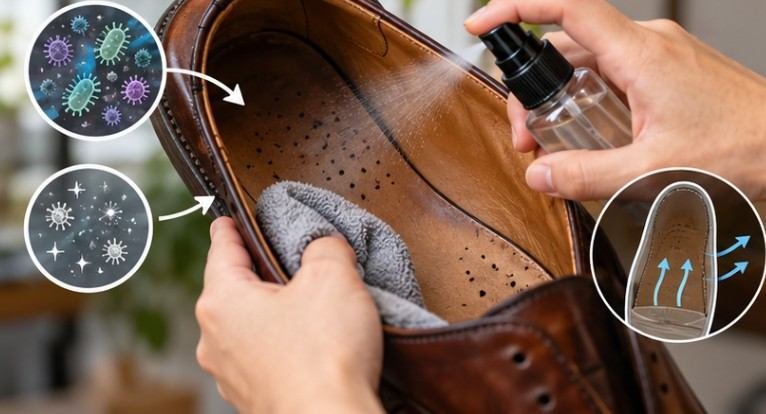
For routine secondhand-shoe cleaning, lightly wipe the textile or synthetic interior using an appropriate shoe-safe cleaning product. If you choose an EPA-registered sanitizer or disinfectant, verify that its label permits use on the material involved.
Never saturate the footbed. Alcohol can also dry leather, discolor finishes, and affect certain adhesives, so avoid freely spraying strong alcohol solutions onto leather linings without testing an inconspicuous area first.
4. Give Extra Attention to Fungal Risk
Athlete’s foot is caused by fungi, and footwear can contribute to reinfection or transmission under favorable conditions.
The American Academy of Dermatology recommends allowing footwear to dry and alternating pairs rather than wearing damp shoes repeatedly. It also warns against sharing shoes with someone who has athlete’s foot.
The American Podiatric Medical Association similarly recommends keeping feet and footwear dry, changing shoes regularly, and reducing moisture inside footwear.
If you know the previous wearer had an active fungal infection, ordinary cosmetic cleaning is not equivalent to medical-grade decontamination. Replacing removable insoles and using an appropriately labeled antifungal footwear product may be sensible.
People with diabetes, compromised circulation, significant immune suppression, open sores, or recurring foot infections should be especially cautious about wearing questionable secondhand footwear.
Drying Is One of the Most Important Steps
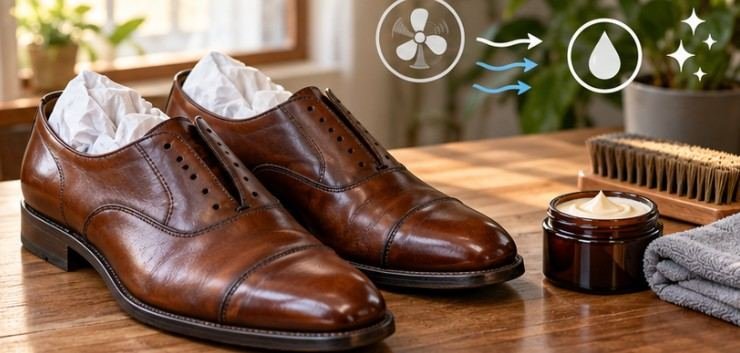
After cleaning, open the shoes as widely as their construction allows and place them in a ventilated indoor area.
Stuffing the toe lightly with plain absorbent paper can help maintain the shape and draw out moisture. Replace damp paper rather than leaving it inside indefinitely.
Do not place leather shoes on a radiator, blast them with a hot hair dryer, or leave them baking in strong sunlight. Rapid heat can stiffen leather and potentially weaken adhesives.
Give the shoes at least a full day to dry when possible. Thick boots and heavily padded footwear may require longer.
NIH-hosted medical guidance on athlete’s foot similarly emphasizes maintaining dry feet, wearing breathable footwear, and avoiding environments inside shoes that encourage fungal growth.
Condition the Leather Only After It Is Completely Dry
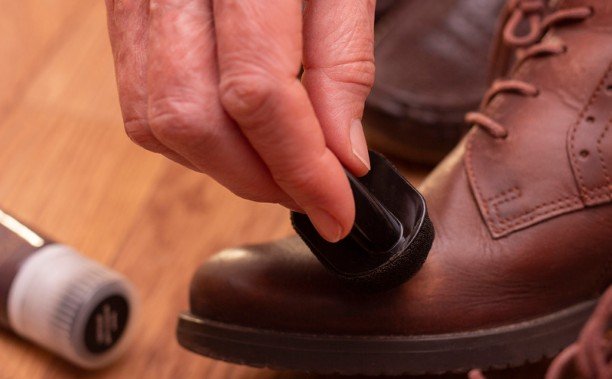
Cleaning removes dirt, but it may also strip some oils from finished leather. Once the shoe feels completely dry, apply a small amount of compatible leather conditioner or cream. Thin coats are better than saturating the upper.
Buff smooth leather afterward with a clean brush or cloth. Do not assume every leather needs heavy conditioning. Overconditioning can soften structure, darken leather, collect dirt, and leave the surface greasy.
The same principle applies whether you are maintaining an Oxford, derby, or casual leather shoe. If identifying shoe construction is part of your buying process, this breakdown of open lacing vs. closed lacing in dress shoes can help distinguish common designs.
Sanitizing Mistakes That Can Shorten a Shoe’s Life
Bleach is a poor general choice for leather footwear. Even though chlorine products can kill many microorganisms on compatible surfaces, they may discolor or chemically damage leather and should not be improvised as a leather treatment.
Likewise, avoid soaking shoes in disinfectant, sending leather shoes through a washing machine, using boiling water, or assuming vinegar is automatically safe for every leather finish.
Another misconception is that odor equals infection. Sweat, accumulated oils, aging foam, adhesives, and bacterial activity can all contribute to odor. Persistent itching, scaling, cracking, or a foot rash requires attention to the foot itself rather than endless shoe cleaning.
CDC guidance notes that athlete’s foot can produce peeling, itchy or irritated skin, especially between the toes.
Frequently Asked Questions
1. Can I spray rubbing alcohol inside used leather shoes?
Use caution. Alcohol can dry leather and affect finishes or adhesives. If used on a compatible non-leather lining, spot-test first and avoid saturating the shoe.
2. Does baking soda sanitize secondhand shoes?
No. Baking soda is useful mainly for absorbing moisture and odor. It should not be treated as a substitute for a properly labeled sanitizer or disinfectant.
3. How long should used shoes dry before I wear them?
Allow at least 24 hours when practical and longer if the lining remains damp. Wearing shoes before they are completely dry encourages the humid environment fungi favor.
4. Should I replace the insoles in used shoes?
Often, yes. Replacing heavily worn, stained, compressed, or odorous removable insoles is an inexpensive way to eliminate a major skin-contact surface.
A Cleaner Pair Starts With Restraint
The biggest mistake in how to sanitize used leather shoes is assuming stronger chemicals automatically produce safer footwear. Leather rewards a more controlled approach: remove debris, clean the upper gently, treat the interior with a material-compatible product, eliminate lingering moisture, and condition only when necessary.
I would rather spend an extra day letting a secondhand pair dry than damage good leather trying to sterilize it in minutes. Once the interior is clean, dry, and odor-free—and the upper has survived treatment unchanged—you have done far more useful work than a quick blast of disinfectant could accomplish.