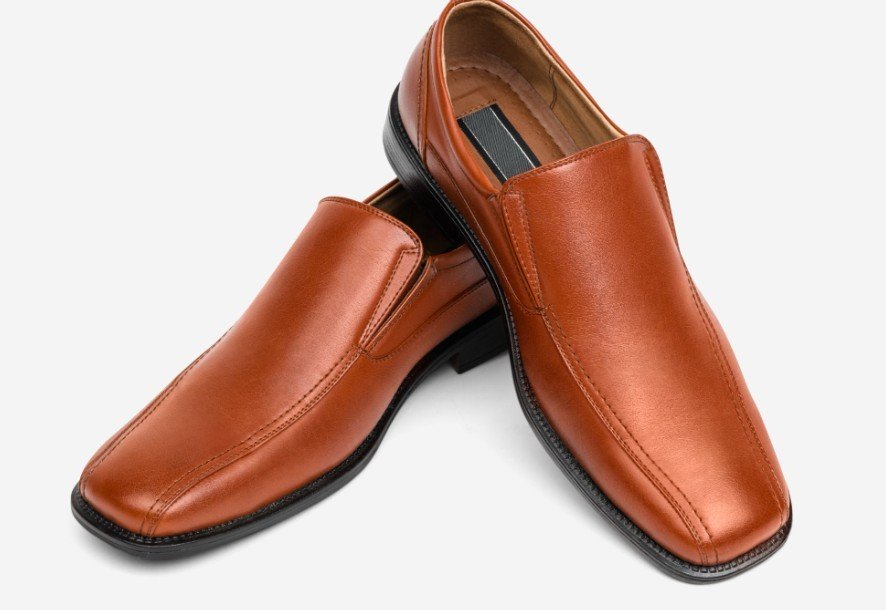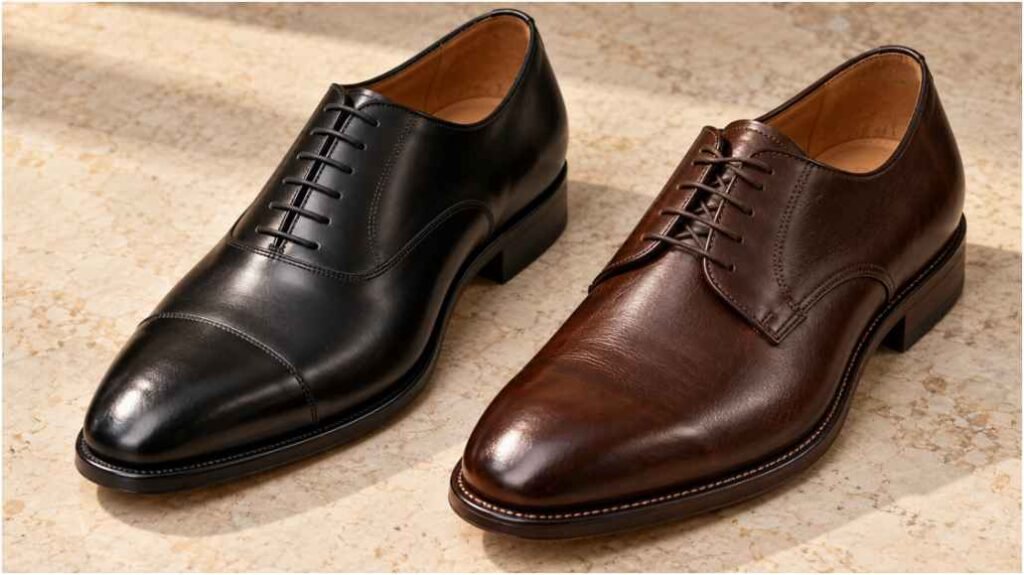
A squeaking leather shoe is rarely “just noisy leather.” The sound is evidence that two surfaces are repeatedly gripping, releasing, or rubbing as the shoe flexes. Sometimes the culprit is new leather. Other times, the leather has nothing to do with it—the noise may come from a moving insole, damp internal layers, or the outsole contacting a polished floor.
So, why do leather shoes squeak when walking? In most cases, friction, moisture, stiffness, or movement between shoe components creates the sound. The fastest solution is not applying random products. It is finding exactly where the squeak begins.
What Actually Creates the Squeaking Sound?
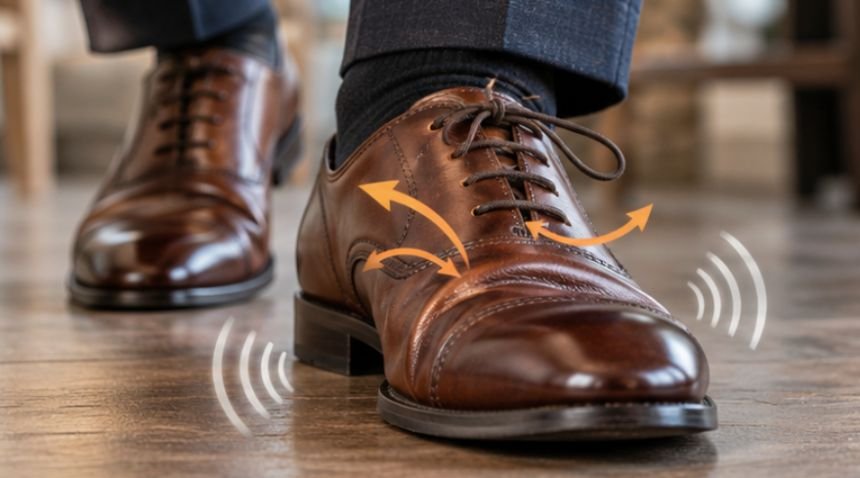
A leather dress shoe is a small mechanical system. The upper bends, the tongue moves against the quarters, the footbed compresses, and the sole repeatedly grips and releases the floor. Any two contacting surfaces can produce noise if their movement creates enough friction.
Research from the University of Pittsburgh shoe-floor friction research shows how strongly shoe-floor behavior depends on friction between the outsole material and walking surface. Researchers study microscopic interactions between flooring and footwear because changes in material, texture, contamination, and pressure alter how the surfaces grip.
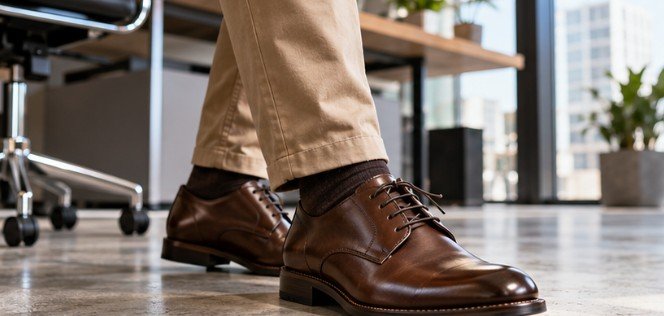
That helps explain why shoes may squeak loudly on polished tile but become completely quiet outside on concrete.
New Leather Can Be Too Stiff
New leather shoes commonly make noise around the tongue, eyelets, vamp, or other flex points.
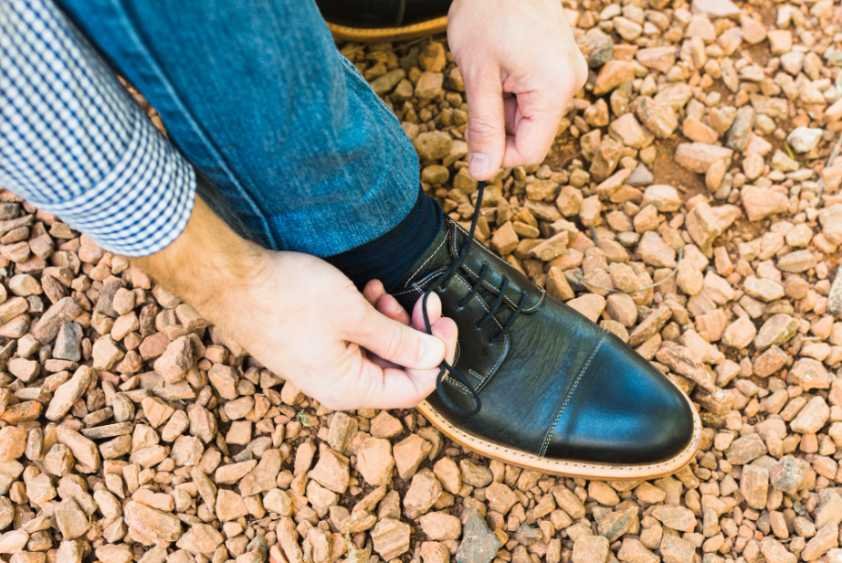
Fresh leather components have not yet softened around the wearer’s movement pattern. As the foot bends, one stiff surface can rub against another. Laces may also pull the leather tongue against the shoe quarters with every step.
This type of squeak often improves after several wears because repeated flexing changes how the surfaces meet.
Dry Leather Can Also Become Noisy
Older leather creates the opposite problem. Leather contains a network of collagen fibers, and its physical behavior is influenced by moisture and oils. Smithsonian Museum Conservation Institute material describes moisture and fat content as important to leather stability and flexibility. As leather loses flexibility, bending areas may creak or rub more noticeably.
That does not mean every squeaky shoe needs oil. Heavy or repeated leather dressings can create their own problems. The National Park Service warns that excessive dressings may cause darkening, deterioration, waxy deposits, leather dressings and other unwanted changes in historic leather.
For ordinary dress shoes, use only a conditioner designed for that particular finished leather and apply it sparingly.
Moisture Is One of the Most Overlooked Causes
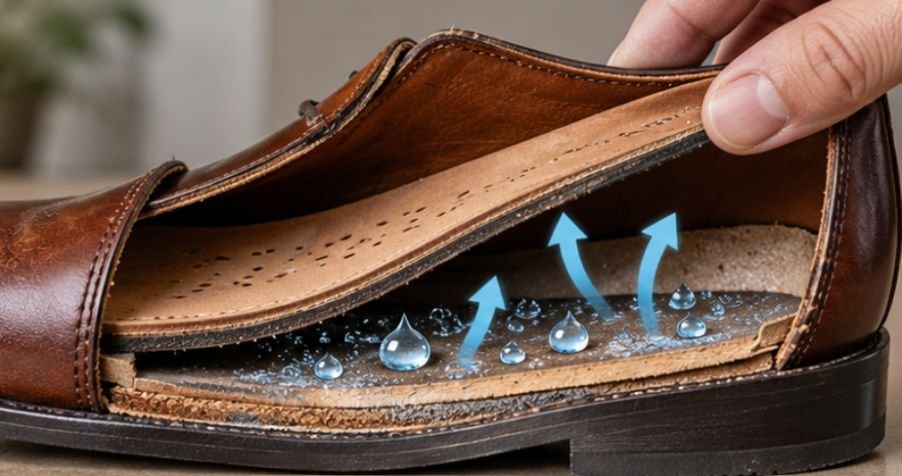
A shoe can look completely dry while holding moisture under its removable insole.
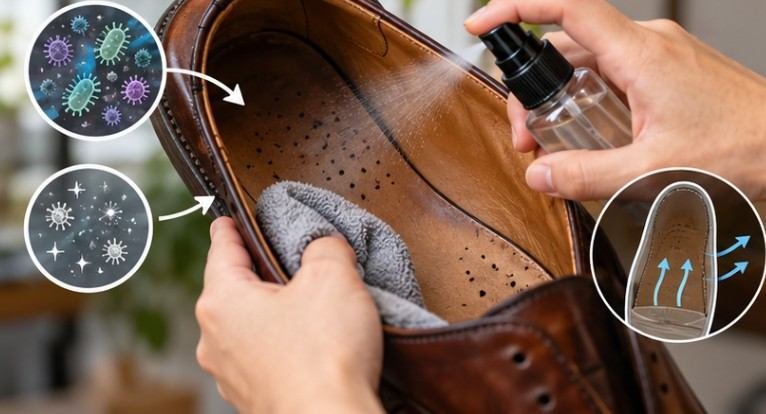
Sweat, rain, or damp pavement can introduce water between layers. As the insole presses downward and releases during walking, slightly damp surfaces may stick and separate repeatedly, producing a chirp or squeak.
Leather itself is also sensitive to humidity. National Park Service conservation guidance generally describes controlled relative humidity as important for preserving leather because major moisture changes can affect its condition.
If your shoes started squeaking immediately after getting wet, investigate moisture before trying anything else.
The 60-Second Squeak Location Test
Do not treat the entire shoe at once. Isolate the sound first.
| Test | What to Do | Likely Cause |
| Floor test | Walk on carpet, tile, then concrete | Outsole if noise changes by surface |
| Flex test | Bend the shoe gently by hand | Leather upper, tongue, or sole joint |
| Insole test | Remove the insole and walk briefly | Loose or damp footbed |
| Lace test | Loosen the laces and flex the shoe | Tongue or eyelet friction |
| Moisture check | Feel beneath the removable insole | Trapped perspiration or water |
This simple process prevents a common mistake: treating leather when the noise is actually underneath the footbed.
When buying replacement footwear online, checking the fit carefully is just as important as identifying potential shoe-care problems. This guide on how to size used shoes when buying online explains what to consider when assessing secondhand shoes remotely, helping you make a more informed purchase.
Rowan University research on shoe-floor interactions likewise emphasizes that shoe-floor friction is influenced by both biomechanical and tribological factors, reinforcing why changing walking surfaces is such a useful diagnostic test.
How to Stop Leather Shoes From Squeaking
Once you identify the source, use the least aggressive solution first.
1. Break In New Leather Gradually
If the sound comes from a new upper, wear the shoes indoors for short periods with comfortable socks.
Flexing the shoe naturally is preferable to aggressively bending, soaking, or heating it. Well-made leather generally becomes more accommodating through normal movement.
Pay attention to the tongue and eyelet area. If loosening the laces makes the noise disappear, leather-on-leather rubbing around the tongue is probably responsible.
2. Dry Damp Shoes Properly
Remove detachable insoles and allow both the shoes and inserts to dry naturally in a ventilated room.
Avoid placing leather directly beside a radiator, space heater, or other intense heat source. Rapid drying may make leather stiffer rather than solving the underlying problem.
If moisture repeatedly accumulates beneath the insole, giving each pair a full day to dry between wears can help.
3. Deal With a Moving Insole
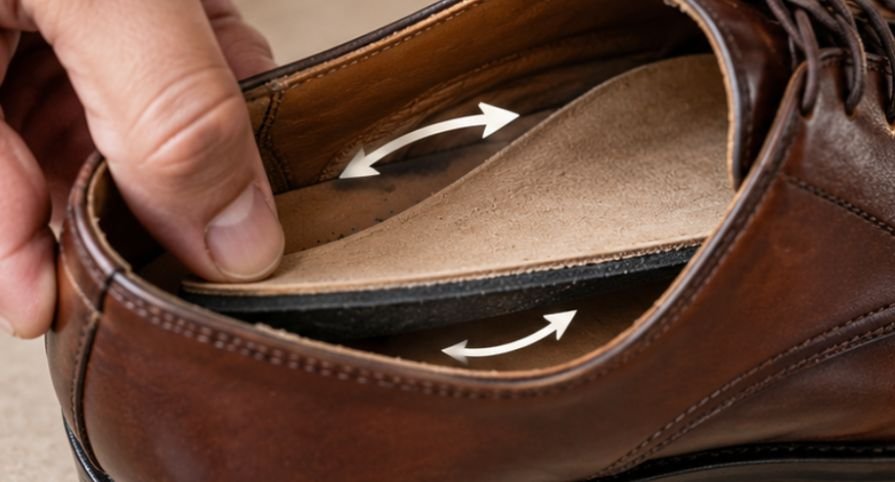
A removable insole that slides slightly against the shoe’s interior can squeak with every step.
Remove it, clean away grit, allow the cavity to dry, and reinstall it correctly. Some people use a tiny amount of absorbent powder beneath removable inserts, but excess powder can migrate through the shoe and create a mess.
Avoid lubricating structural glued areas unless you know exactly what materials are involved.
4. Condition Leather Only When the Leather Is the Problem
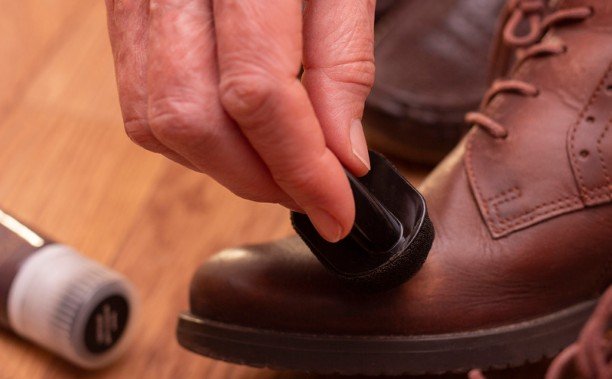
If rubbing leather feels unusually stiff or dry, a compatible leather conditioner may reduce friction. Test any product on a hidden area first because conditioners can darken certain finishes.
Do not assume petroleum jelly, cooking oil, mink oil, or household lubricants are universally safe. Conservation organizations take a particularly cautious approach to uncontrolled leather treatments. The Library of Congress, for example, specifically discourages indiscriminate oiling, leather preservation guidance and dressing of valuable leather-bound objects.
Shoes are functional objects rather than museum artifacts, but the same lesson applies: more oil is not automatically better.
5. Check Whether the Outsole Is Talking to the Floor
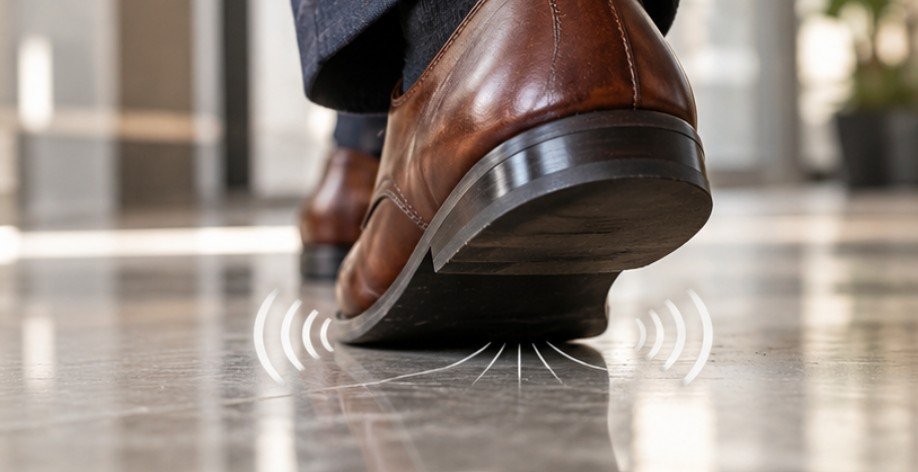
If your shoes squeak only in an office lobby, grocery store, restaurant, or kitchen, the outsole may be gripping a smooth surface.
Walk across carpet and rough pavement. If the sound vanishes, do not keep treating the upper.
New smooth rubber components sometimes quiet down naturally as the contact surface wears. Avoid aggressive sanding on expensive footwear because unnecessary abrasion can shorten sole life or damage the finish.
When Squeaking Signals a Repair Problem
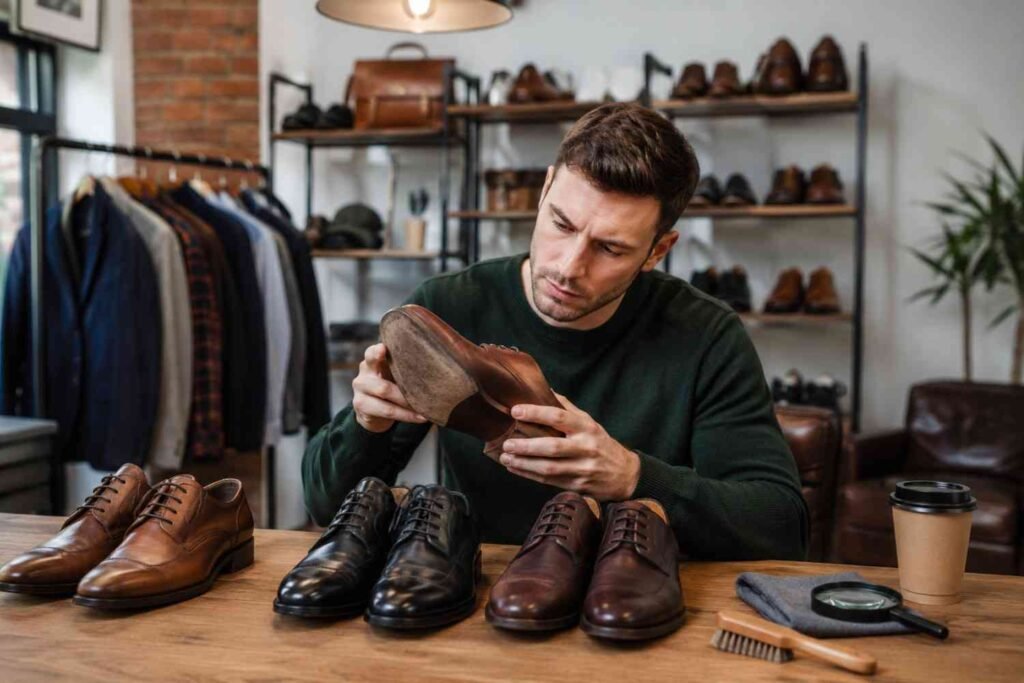
Not every squeak is harmless. If the noise appears suddenly after months of quiet wear and comes from the heel, welt, shank area, or sole junction, inspect the shoe carefully.
Look for heel movement, sole separation, unusual flexing, cracking, or visible gaps between layers. A loose component can create friction internally, and home lubrication will not repair a mechanical failure.
For quality welted dress shoes, a cobbler should examine persistent structural squeaks before the problem becomes more expensive.
When inspecting footwear for hidden damage or internal wear, it is also worth considering its overall condition and hygiene, particularly when buying secondhand pairs. Learn more about whether used shoes are safe to wear and the precautions that can help you make a more informed decision.
Common Fixes That Deserve Caution
Online shoe-care advice sometimes treats every squeak as an invitation to add powder, petroleum jelly, oil, or sandpaper. Those methods can work in specific circumstances, but diagnosis matters.
The same attention to detail that helps maintain leather footwear also matters when building a versatile formal wardrobe. If you are choosing your first suit, this guide to the best suit color for a first suit compares navy and charcoal to help you select a dependable option for professional and social occasions.
Powder makes sense for moisture or removable-insole friction. Conditioner makes sense for compatible dry leather. Changing the outsole surface may help when floor contact is responsible. None of them is appropriate for every shoe.
Suede, nubuck, patent leather, exotic skins, glued constructions, waterproof membranes, and collectible shoes may require different treatment.
Frequently Asked Questions
1. Why do brand-new leather shoes squeak?
New leather and shoe components can be stiff. As the upper, tongue, laces, and sole flex against one another, friction may create noise until the materials soften with wear.
2. Can water make leather shoes squeak?
Yes. Rain or perspiration can become trapped between insoles and internal layers, creating repeated sticking and releasing as you walk.
3. Will leather conditioner stop squeaking?
It may help if dry or stiff finished leather is rubbing against another leather surface. It will not fix loose insoles, structural problems, or outsole noise.
4. Why do my shoes squeak only on tile floors?
Smooth outsole materials can grip and release against polished tile, producing noise. If the squeak disappears on carpet or pavement, shoe-floor contact is the likely cause.
Quiet Shoes Start With Finding the Right Surface
A squeaking shoe is giving you a surprisingly useful diagnostic clue. Instead of immediately reaching for oil, powder, or sandpaper, change floors, remove the insole, loosen the laces, and flex the shoe by hand.
Those four tests can usually reveal why do leather shoes squeak when walking and separate harmless break-in noise from moisture, outsole friction, or an actual repair issue. Start with the least invasive fix and give quality leather time to adjust. If the sound comes from a moving heel or separating sole, skip the home remedies and let a cobbler find the mechanical problem before a squeak becomes a failure.