The most formal-looking shoe in your closet is probably not the best one for a modern office. Business casual works in a narrower middle ground: polished enough to look intentional, relaxed enough that the shoes do not seem borrowed from a black-tie outfit.
That makes choosing the best dress shoes for business casual men less about buying the fanciest leather available and more about balancing shape, color, construction, comfort, and the clothes already hanging in your wardrobe.
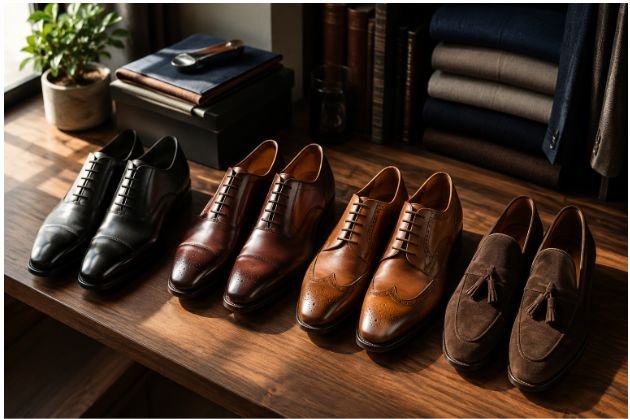
For most American offices, brown Derbies, penny loafers, restrained brogues, sleek Chelsea boots, and carefully chosen hybrid shoes occupy that sweet spot.
Business Casual Shoes Should Look Polished, Not Ceremonial
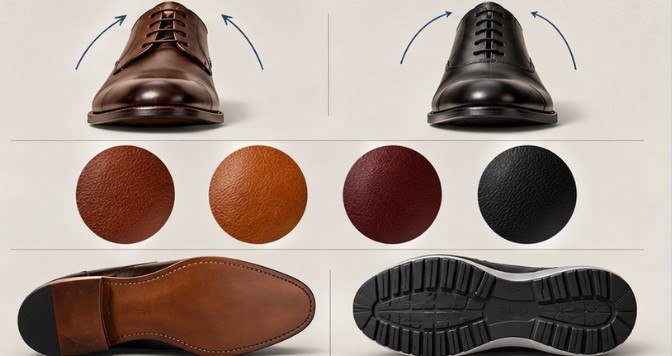
A traditional Oxford has closed lacing, meaning the eyelet sections are stitched beneath the vamp. The resulting clean, compact shape explains why Oxfords work so naturally with suits.
A Derby or blucher uses open lacing. Its quarters sit above the vamp, creating a slightly more relaxed silhouette.
That small construction difference matters.
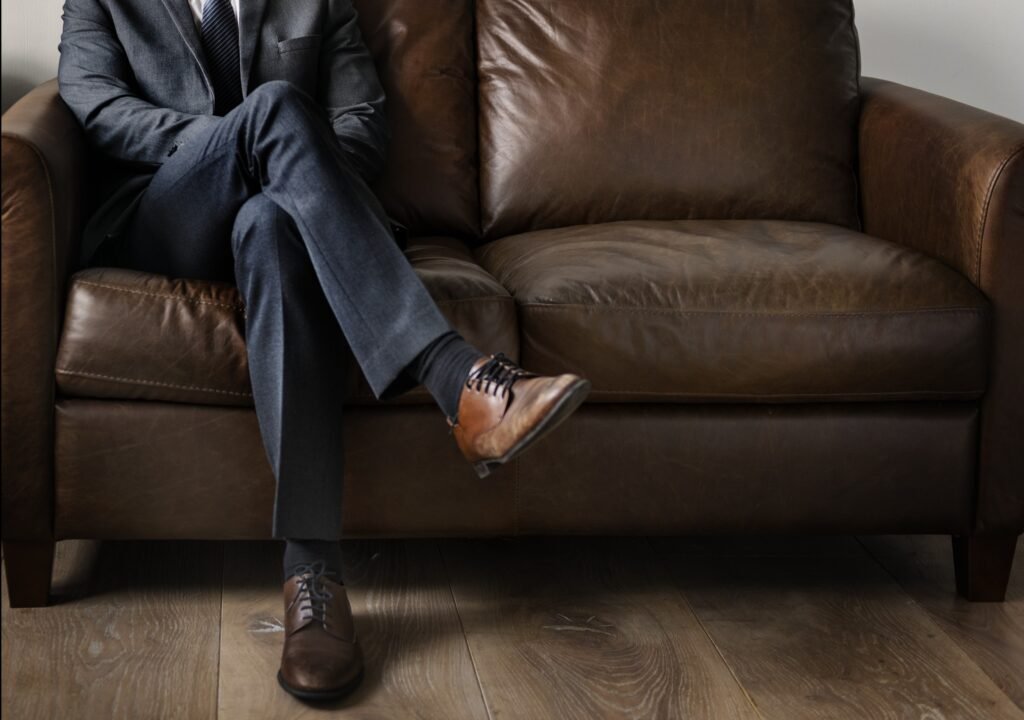
With navy chinos, an Oxford can sometimes look excessively formal. A medium-brown Derby creates enough visual softness to connect the tailored trousers with a polo, Oxford-cloth shirt, knitwear, or unstructured blazer.
Loafers push the formality down another notch without becoming casual sneakers.
Think of business-casual footwear as a scale rather than a category:
| Shoe style | Typical formality | Strongest pairings |
| Cap-toe Oxford | High | Suits, formal trousers |
| Derby/blucher | Medium-high | Chinos, trousers, blazer outfits |
| Penny/bit loafer | Medium | Chinos, trousers, smart denim |
| Chelsea/chukka boot | Medium | Fall/winter office outfits |
| Dress-shoe hybrid | Medium-low | Walking-heavy, relaxed workplaces |
The workplace itself ultimately decides where on that scale you should land.
The Five Shoe Styles That Cover Most Offices
1. A Brown Derby Is the Safest First Purchase
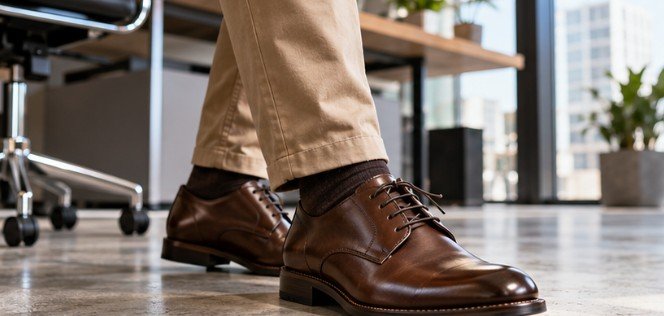
If I were building a business-casual wardrobe from one pair of shoes, I would start with a dark- or medium-brown leather Derby.
It works with navy, charcoal, medium gray, khaki, olive, and many shades of blue. The open lacing makes it less severe than a traditional Oxford, while smooth leather keeps it polished enough for client-facing settings.
The Meermin Silkcalf Blucher is one example of this approach: conventional leather construction without the visual stiffness of a highly formal dress shoe.
2. Penny Loafers Handle the Casual Side Better
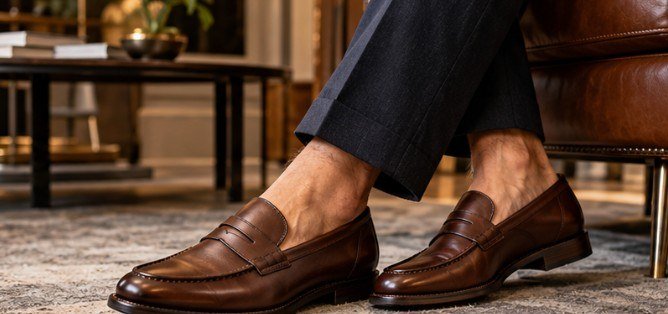
A simple leather penny loafer can move from wool trousers to chinos without attracting much attention—and that is precisely why it works.
Avoid excessively shiny leather, oversized metal hardware, or exaggerated square toes. A moderate round or almond toe usually ages better.
Suede loafers move another step toward smart casual. They are particularly effective with lighter trousers during spring and early fall.
3. Brogues Add Texture Without Looking Sloppy
Perforations originally gave brogues a distinctly less-formal identity than sleek Oxfords. Today, restrained broguing is useful because it visually bridges dress trousers and more casual fabrics.
A brown quarter-brogue Derby, for example, can complement chinos more naturally than a mirror-polished black cap toe. Keep elaborate wingtip patterns for offices where the dress code clearly accommodates personality.
4. Chelsea and Chukka Boots Earn Their Place in Winter
Cold-weather business casual does not require abandoning polish.
A streamlined dark-brown Chelsea boot works particularly well with wool trousers, flannel, dark denim, and heavier chinos. Chukka boots offer an even softer alternative.
Keep the toe profile slim and the sole relatively unobtrusive. Thick hiking tread and bulky work-boot construction change the message completely.
5. Hybrid Dress Shoes Work—With Conditions
Modern office workers may walk from a commuter station, climb stairs, cross large campuses, or spend hours standing.
That explains the popularity of shoes such as Cole Haan’s Grand series, where leather uppers meet lightweight cushioning.
The risk is going too athletic.
Choose hybrids with restrained soles, limited contrast, minimal branding, and a genuine dress-shoe silhouette. A huge white foam sole beneath a leather upper tends to look more like a sneaker disguised for work than business-casual footwear.
Comfort Matters More Than the Brand Name
A $400 shoe in the wrong last is a worse purchase than a $150 shoe that fits correctly.
A review of footwear-comfort research indexed by the National Institutes of Health examined more than 100 papers and found that comfort depends on several interacting factors rather than one magical construction feature. Well-fitting, lightweight footwear and appropriate cushioning were among the characteristics commonly associated with better comfort.
Harvard Health similarly recommends measuring both feet, shopping later in the day as feet expand, and actually walking in shoes rather than assuming they will become comfortable after breaking in.
The American Academy of Orthopaedic Surgeons goes further: it advises against buying uncomfortable footwear on the assumption that a painful shoe simply needs time to stretch. Room in the toe box and a secure heel matter from the beginning.
Try the 15-Minute Office Shoe Test
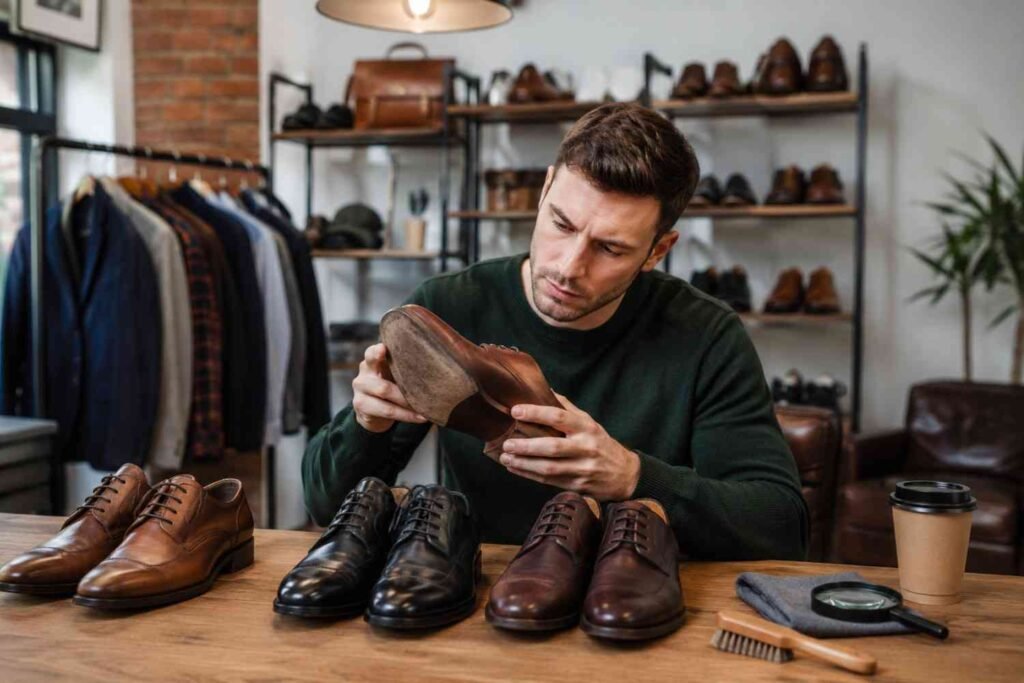
Before keeping a new pair, recreate your working day at home.
Wear your usual office socks. Stand for five minutes, walk briskly for five, then spend five minutes repeatedly sitting, standing, and climbing stairs if possible.
Reject the shoe if your toes touch the front, your heel repeatedly lifts, the forefoot feels compressed, or you already notice a pressure point.
Comfort rarely improves enough to rescue fundamentally bad fit.
Choose Color According to Your Actual Wardrobe
For maximum versatility, brown usually beats black.
Dark brown works especially well with navy, charcoal, medium gray, olive, and khaki. Cognac and tan look excellent with lighter trousers but become less convincing in conservative offices.
Burgundy is surprisingly useful because its muted red undertone works with gray, navy, and brown families.
Black still deserves a place, particularly in finance, law, executive environments, or workplaces where darker tailoring dominates. But black Oxfords combined with khaki chinos can produce an awkward formality mismatch.
Do Not Ignore the Sole
An elegant upper cannot rescue an inappropriate outsole.
For ordinary carpeted offices, leather or thin rubber soles are both reasonable. Rubber offers additional grip and tends to tolerate wet sidewalks better.
That becomes more important in workplaces involving polished floors, kitchens, retail areas, laboratories, or frequent outdoor transitions. NIOSH research involving food-service workers found substantially fewer slipping-related injury claims when highly rated slip-resistant shoes was provided.
And some jobs are not merely business casual from a safety perspective. OSHA requires appropriate protective footwear where workers face hazards such as falling objects, sole-puncture risks, or certain electrical hazards. Office dress rules never override occupational safety requirements.
Make the Shoes Match the Rest of the Outfit
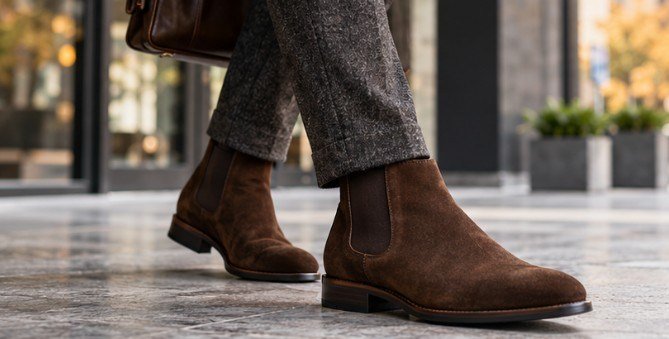
Footwear problems often begin because men evaluate shoes in isolation. A sleek loafer may look excellent with tapered chinos but disproportionately delicate under very wide trousers. Heavy brogues may overwhelm an otherwise minimalist outfit.
The same attention to proportion applies higher up the body. Details such as functional suit cuffs and correcting suit-jacket bulging and gaping influence whether an entire office outfit looks deliberate rather than simply expensive. Think in complete silhouettes.
Mistakes That Make Good Shoes Look Wrong
Do not automatically assume Oxfords are superior because they are more formal. More formal does not mean more appropriate.
Likewise, avoid excessively pointed toes, square-front dress shoes, loud contrast stitching, giant sneaker soles, distressed leather in conservative offices, and trousers pooling heavily over the shoe.
Also resist buying purely by logo. Leather quality, last shape, fit, construction, sole design, and compatibility with your wardrobe will affect daily usefulness far more than recognizable branding.
FAQ
1. Are loafers professional enough for business casual?
Yes. Clean leather penny or bit loafers work well with chinos and tailored trousers in most business-casual offices. Conservative industries may favor Derbies for important meetings.
2. Can men wear black dress shoes with business casual clothes?
Yes, especially with charcoal, gray, or darker navy trousers. Brown is usually more versatile with khaki, olive, and relaxed office combinations.
3. Are dress sneakers considered business casual?
Sometimes. Choose minimalist leather designs with discreet branding and restrained soles. Traditional offices may still expect loafers, Derbies, or conventional dress shoes.
4. Should business-casual shoes match the belt?
They do not need to match perfectly. Keeping both within the same general color family—such as medium-brown shoes with a brown belt—usually creates enough visual consistency.
The Pair You Reach for Matters More Than the Pair You Admire
The best dress shoes for business casual men are rarely the most formal or expensive pair available. They are the shoes that quietly connect the rest of the wardrobe while remaining comfortable through commuting, meetings, standing, and everyday walking.
Start with a dark-brown Derby or straightforward penny loafer, check the fit before worrying about the label, and pay attention to proportion and sole construction. Add boots, suede, or hybrids only after the basic pair works.
The winning business-casual shoe should almost disappear into the outfit. If people notice that you look put together before they notice your footwear, the shoe is doing its job.