I would rather spend a few minutes inspecting a dull shoe than cover it with another coat of wax. When the surface looks cloudy, feels sticky, or flakes across the creases, adding polish can make the problem worse. Understanding how to remove old polish buildup from leather shoes starts with choosing a cleaner that suits the leather and removing only what needs to go.
For smooth leather shoes, begin with brushing and a compatible gentle cleaner. Reserve stronger polish removers for stubborn residue, test first, and allow drying before conditioning.
Is It Polish Buildup or Damaged Leather?
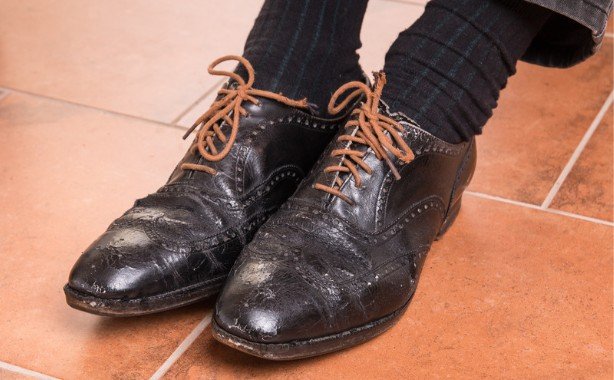
Excess polish can leave uneven shine, waxy ridges, clogged decorative holes, or flakes where the shoe bends. These signs suggest accumulated surface products, but they do not prove that every dull patch needs stripping.
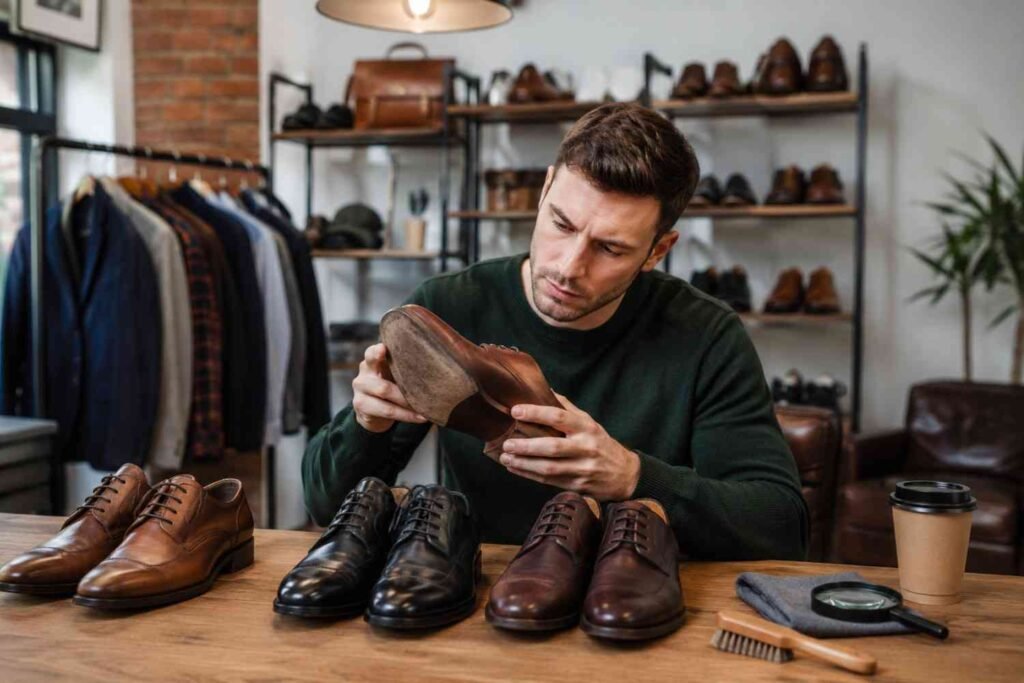
Inspect the shoes in daylight. Raised deposits differ from scratches, peeling finishes, and cracks extending into the leather. A cleaner can remove residue; it cannot repair broken fibers.
Also distinguish unwanted accumulation from an intentional mirror shine. Hard wax on a rigid toe cap may remain useful. Thick layers across the flexing vamp are more likely to crack during wear.
Choose a Cleaner That Matches the Material
Start With a Gentle Leather Cleaner
A cleaning lotion approved for the shoe’s finish is a sensible first option for light residue. Check that its label covers your leather type and intended use.
Saddle soap may help with dirt and some excess polish on compatible leather, but it is not a guaranteed remover for heavy wax. Use it sparingly, follow its instructions, and remove remaining lather.
Use a Dedicated Remover for Stubborn Wax
Heavy accumulation may require a product specifically formulated to remove shoe polish. These cleaners can be stronger than routine cleaning lotions, so repeated applications deserve caution.
This guide concerns smooth leather dress shoes. Suede, nubuck, patent leather, shell cordovan, and delicate hand-finished shoes need material-specific guidance. If the finish is uncertain, consult the maker or a cobbler before proceeding.
Prepare the Shoes Before Applying Cleaner
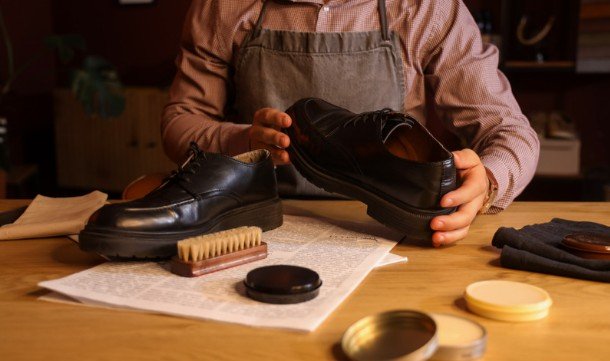
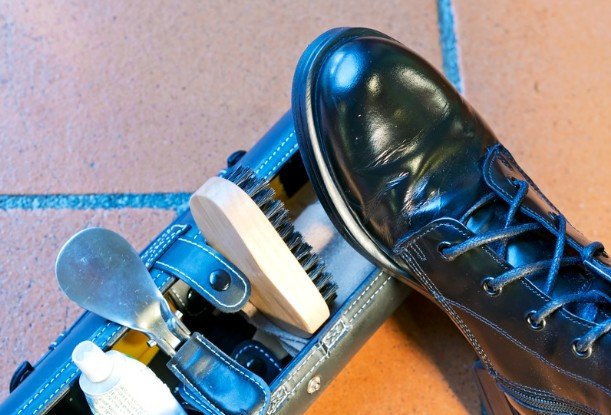
Remove the laces and brush away dust with a clean horsehair brush. Pay attention to seams, eyelets, and the welt so loose grit does not get rubbed into the upper.
Support the shoes with properly fitting shoe trees. Set out several clean cotton cloths, protect the work surface, and follow the cleaner’s ventilation and handling instructions.
Test a small amount on an inconspicuous section. Let it dry before checking for discoloration, tackiness, or an altered finish. A wet patch can conceal changes that become obvious later.
Remove Old Polish in Small Sections
Lift Light Surface Residue First
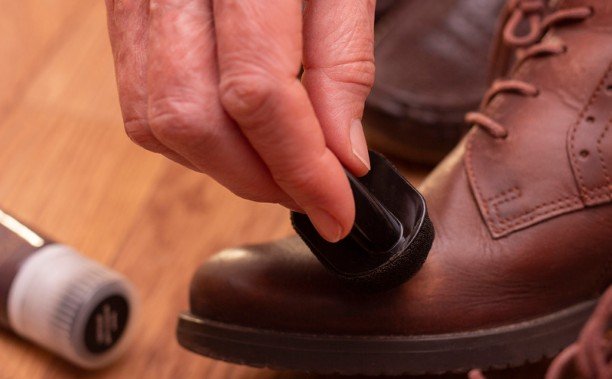
Apply a little compatible cleaning lotion to a cloth, following the label. Work gently over one section, then wipe away loosened residue using a fresh cloth area.
Let the section dry and reassess it. If the surface looks even and feels clean, additional stripping may be unnecessary. Avoid escalating simply because the leather has lost its shine.
Treat Remaining Heavy Deposits Carefully
Learning how to remove old polish buildup from leather shoes means controlling the process rather than scrubbing harder. Apply a small amount of dedicated remover to a cloth as directed.
Use controlled circular motions over the affected area. Change cloth sections frequently so dissolved polish gets lifted away instead of spread around.
Pause between passes to inspect the surface. Do not keep adding cleaner to a saturated section. Follow the product’s residue-removal instructions rather than assuming every cleaner needs rinsing.
Know When to Stop Cleaning
If your leather shoes look cloudy after polishing, stop once raised wax deposits have cleared and the surface appears reasonably even. Your goal is a clean finish, not completely bare leather.
Colored marks on the cloth may come from old polish, but they can also indicate disturbed dye or finishing products. Stop if the shoe develops pronounced color loss, roughness, peeling, or persistent stickiness.
Do not chase a perfectly colorless cloth through repeated solvent applications. If the result becomes uneven or uncertain, let the shoe dry and seek professional assessment.
Dry, Condition, and Rebuild the Finish
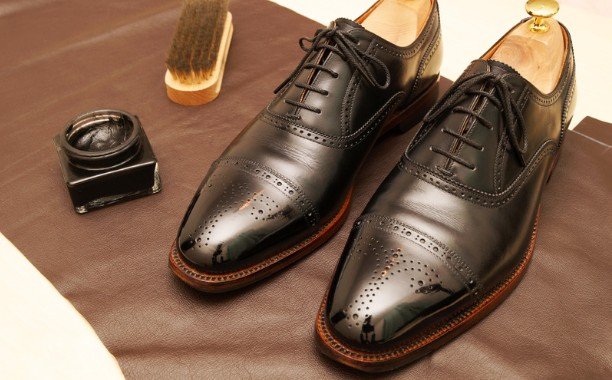
Allow the shoes to dry naturally away from radiators, hairdryers, and direct sunlight. Follow the cleaner’s stated drying period, allowing longer if the leather remains damp.
Apply a small amount of compatible conditioner only after drying. Let it absorb according to its instructions, then brush away excess.
If color needs refreshing, use a thin application of matching shoe cream. Add wax sparingly for shine, concentrating heavier shine-building layers on rigid areas rather than flexible creases.
Prevent Another Thick Polish Layer
Brush shoes after wear and avoid polishing automatically whenever they look dusty. Often, brushing restores a presentable finish without more product.
Keep cream and wax applications thin. Clean according to visible accumulation and the maker’s guidance rather than stripping on a fixed schedule.
Avoid improvised treatments involving nail polish remover, lighter fluid, shaving cream, or heat. Their effects on an unfamiliar finish are harder to control than those of a suitable leather-care product.
Frequently Asked Questions
1. What is the safest approach to how to remove old polish buildup from leather shoes?
Start with a compatible gentle cleaner after patch testing. Use a dedicated remover only for remaining deposits.
2. Can saddle soap remove every wax layer?
No. It may lift some residue, but heavy wax can require a suitable polish remover.
3. Why do shoes look dull afterward?
Removing wax reduces shine. Assess the dry surface before conditioning and rebuilding the finish.
4. Must I strip the whole shoe?
Not always. Treat unwanted accumulation while preserving sound areas when appropriate.
My Final Take
I would choose gradual cleaning over an aggressive reset. Inspect first, test carefully, and stop when the excess is gone. A restrained approach gives you a clearer view of the leather’s condition and a better foundation for the next thin coat. I would also give the shoes enough drying time before deciding whether they need conditioner, cream, or wax.
A dull surface after cleaning does not automatically mean something went wrong; the old shine may simply have lifted away. My aim would be an even finish with flexible leather, rather than an instant mirror shine. Going forward, I would brush regularly and apply smaller amounts of polish so each care session stays simple. A little patience now can help prevent another stubborn layer from forming.