A worn heel can tell you more about a secondhand shoe than a polished upper ever will. In healthy walking, initial heel contact commonly occurs toward the back and outside of the heel. Research on military recruits found that posterolateral heel abrasion was the dominant pattern even among healthy subjects. That means learning how to read heel wear on used shoes is less about spotting any wear and more about judging its depth, direction, symmetry, and effect on the shoe’s structure.
For buyers shopping used dress shoes, loafers, boots, or sneakers, those clues can reveal whether a pair has many miles left or has already molded itself around another person’s gait.
What Heel Wear Can—and Cannot—Tell You
Shoe wear develops from repeated contact between the outsole and the ground. Your stride, foot angle, walking surface, body weight, shoe construction, and mileage all influence where rubber or leather disappears first.
Clinicians sometimes inspect footwear with foot and ankle examination because unusual wear can provide clues about gait. Stanford Medicine, for example, teaches clinicians to examine sole wear during foot and ankle assessment and notes that lateral wear can occur with normal gait.
The important word is “clues.” A used shoe cannot diagnose flat feet, leg-length differences, supination, overpronation, or an old injury. The strongest research actually warns against assuming that one wear pattern always corresponds to one biomechanical condition.
For resale buyers, the better question is simpler: has the previous wear materially changed the way this shoe will sit under my foot?
Read the Location of the Heel Wear First
Outer Back Corner: Usually the Least Alarming Pattern
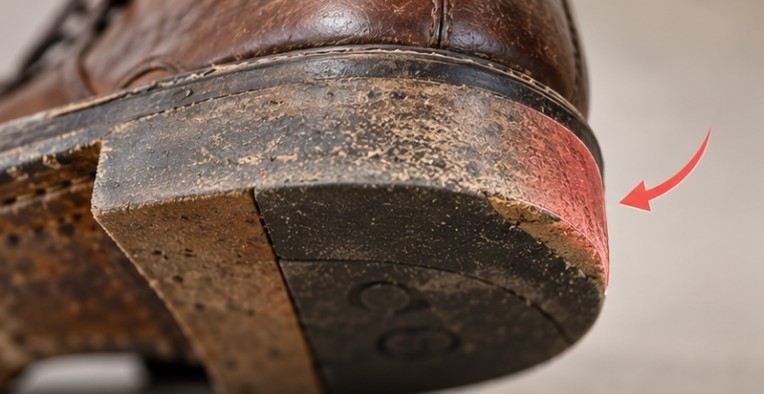
Moderate wear at the outside rear corner of both heels is generally the pattern I worry about least.
During walking, the heel typically contacts the ground first, and pressure then travels forward through the foot. The American Podiatric Medical Association describes this normal progression from heel contact through the outside of the foot toward push-off as heel biomechanics.
The military study mentioned earlier provides even stronger context: after 14 weeks of standardized training, researchers found average heel abrasion concentrated posterolaterally. So don’t reject a used pair simply because the back outside corner is scuffed. Reject it when that corner has worn so deeply that the shoe visibly tilts.
Wear Running Down the Outer Edge
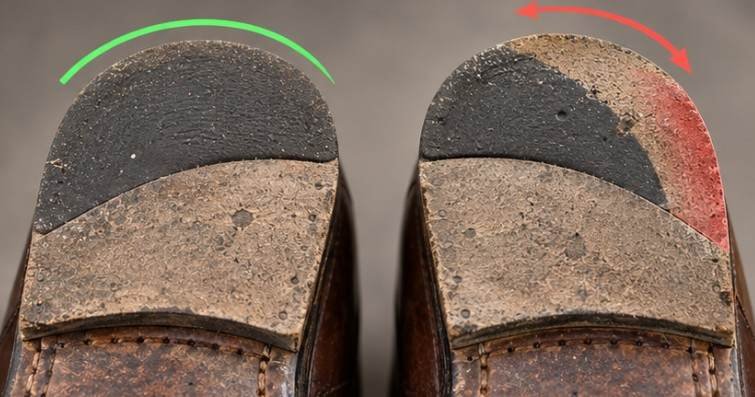
Heavy abrasion extending from the heel along much of the outside sole deserves more attention.
Traditional footwear assessments associate greater lateral wear with an outward-loading pattern that may accompany supination. Clinical research also recognizes lateral outsole and midsole wear as potentially useful observations.
However, shoe design matters. A pair with naturally beveled heels, hard leather soles, or uneven prior repairs can create misleading patterns.
For a buyer, pronounced outer wear becomes a problem when it has changed the heel’s geometry rather than merely polished away tread.
Inner Heel Wear
Concentrated wear toward the inner heel is less typical and may reflect greater medial loading.
Professional foot-health resources often connect medial wear with inward foot motion or pronation. FootCareMD, the patient education site of the American Orthopaedic Foot & Ankle Society, also explains that inner-sole wear can accompany pronation.
Again, don’t diagnose the previous owner. Judge the shoe. If the inner heel is substantially lower than the outer side, you may inherit an angled platform that encourages your foot to follow a wear pattern you never had.
Use This 5-Minute Inspection Before Buying Used Shoes
Knowing how to read heel wear on used shoes becomes much easier if you evaluate the entire rear structure rather than staring at the outsole alone.
| Check | What You Want to See | Warning Sign |
| Heel surface | Mild, reasonably even wear | One side ground dramatically lower |
| Rear view | Shoe stands nearly upright | Heel or upper visibly leans |
| Left vs. right | Similar wear depth | Major difference between shoes |
| Heel counter | Firm and shaped | Crushed, folded, or easily collapsed |
| Midsole/outsole | Material still resilient and intact | Crumbling, splitting, deep compression |
1. Put Both Shoes on a Flat Surface
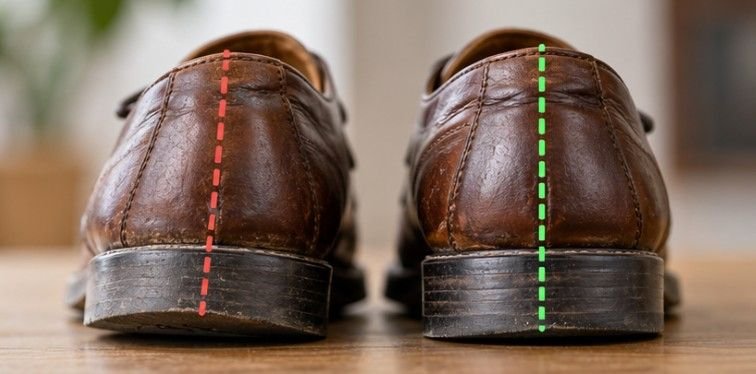
Use a kitchen counter, desk, or other genuinely level surface.
Stand the shoes side by side and crouch until your eyes are approximately level with the heels. Look at the vertical centerline of each shoe.
A slight difference is normal. A noticeable lean suggests the outsole, heel, midsole, or upper has deformed.
Researchers evaluating footwear characteristics have specifically used upper and midsole tilt as part of systematic shoe assessment.
2. Compare Left Against Right
Never inspect one shoe in isolation.
One heel may have lost twice as much material as the other. That difference could reflect gait, an old injury, walking surfaces, driving habits, or simply uneven use.
What matters to you is the result: the pair no longer provides matching platforms.
Strong asymmetry is especially concerning in firm dress shoes because your feet receive less cushioning to disguise the difference.
3. Run a Finger Across the Heel
Feel the heel rather than relying only on photographs.
You are checking for a bevel or depression deep enough to alter the shoe’s contact with the floor. Leather heel toplifts can often be replaced by a cobbler, while extensive wear into the heel base becomes a more substantial repair.
On rubber footwear, look for tread blocks that have disappeared completely or wear that has reached softer material beneath the outsole.
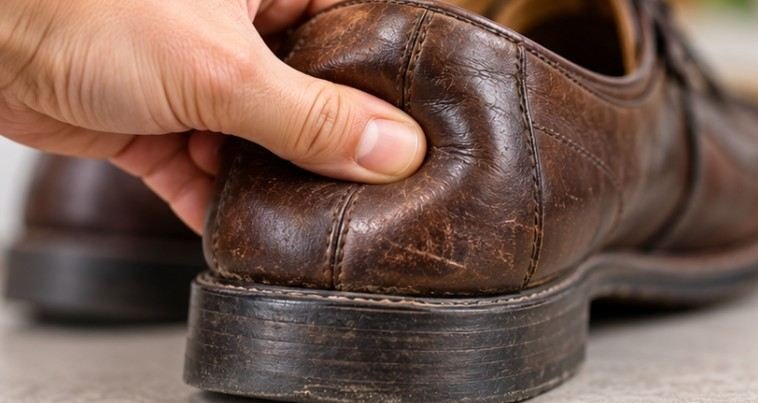
4. Squeeze the Heel Counter
The heel counter is the stiff structure surrounding the rear of the shoe.
It should resist moderate finger pressure and return toward its original shape. The American Academy of Orthopaedic Surgeons advises evaluating heel-counter firmness and evaluating shoe construction when assessing supportive footwear because that structure contributes to rearfoot stability.
A permanently crushed counter is different from cosmetic creasing. It suggests the rear structure has been repeatedly distorted.
5. Check Cushioning on Shoes That Use Foam
This matters more for sneakers and comfort shoes than traditional leather-soled dress shoes. Look for deep compression lines, unevenly collapsed foam, or a midsole that remains tilted after the shoe is unloaded.
The American Physical Therapy Association explains that cushioning helps absorb impact while the heel counter helps guide rearfoot movement. Unlike a replaceable heel toplift, exhausted molded foam may make an inexpensive used pair poor value.
Dress Shoes Need a Slightly Different Reading
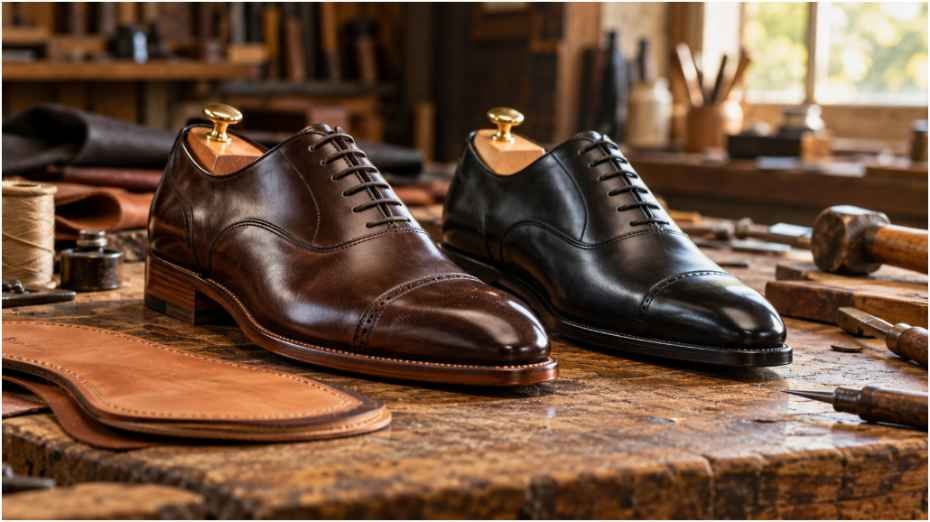
A Goodyear-welted Oxford with a worn heel is not automatically finished.
A cobbler can often replace a heel toplift before damage reaches the heel stack. On quality leather footwear, repairability may matter more than cosmetic abrasion.
That makes heel wear particularly important when comparing secondhand pairs you intend to use as business-casual dress shoes. A structurally sound upper with replaceable heel wear can still be an excellent purchase.
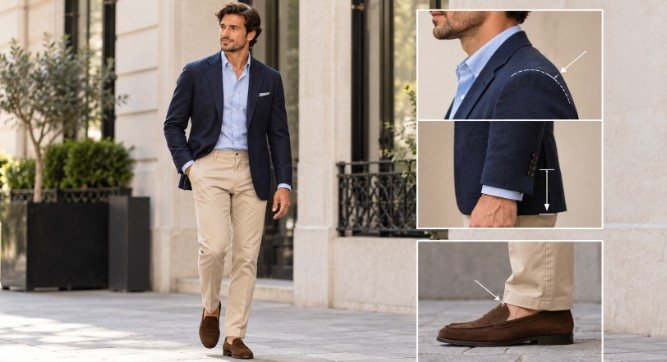
Loafers deserve similar scrutiny because their slip-on construction gives you fewer ways to compensate for distorted fit. If you’re evaluating a pair for more formal use, understanding whether loafers work with a suit is only half the equation; the heel must still sit level and hold your foot securely.
The Biggest Mistake: Treating Wear as a Diagnosis
One of the most persistent shoe myths is that you can look at a heel and instantly identify someone’s biomechanics. Research is more complicated.
In the study of 76 infantry recruits, researchers found substantial variation in heel abrasion and did not find the expected relationship between outsole wear and several measurements associated with pronation or supination.
A larger study involving 291 participants found associations between certain gait characteristics and abrasion patterns, but it also demonstrated how many personal and movement variables can influence wear. So use heel wear to evaluate the shoe, not diagnose its former owner—or yourself.
Frequently Asked Questions
1. What heel wear pattern is normal on used shoes?
Light to moderate wear near the rear outer corner is common because many people initially contact the ground toward the posterolateral heel.
2. Does outside heel wear mean someone supinates?
Not necessarily. Heavy lateral wear can accompany outward loading, but research shows ordinary healthy walkers also commonly develop posterolateral heel abrasion.
3. Can uneven heel wear on used shoes be repaired?
Often, yes. A cobbler can replace heel toplifts on many quality dress shoes. Severe wear extending into the heel base, sole, or upper may require more expensive reconstruction.
4. Why should I know how to read heel wear on used shoes before buying?
Heel wear helps reveal remaining sole life, structural tilt, asymmetry, and previous compression that may not appear in polished listing photos.
Final Take
A used shoe’s heel works almost like a mileage record, but it needs to be read with restraint. Some abrasion—particularly at the outside rear corner—is a normal consequence of walking and should not automatically kill a good deal.
I focus instead on whether the wear has changed the shoe itself. Set the pair on a flat surface, compare both heels, inspect their depth, test the counter, and calculate whether repair makes financial sense. Cosmetic wear tells you that somebody wore the shoes. Structural distortion tells you that their walking pattern may now be permanently built into them.