A size 10 stamped inside a used shoe does not necessarily fit like the size 10 already sitting in your closet. Brand lasts differ, feet change, leather stretches, insoles compress, and older footwear may come from an entirely different sizing era.
That is why learning how to size used shoes when buying online is less about trusting the number on the listing and more about comparing measurements, shape, and previous wear. Before I buy a secondhand pair, I treat the printed size as one clue—not the final answer.
That extra work matters. A research review indexed by the National Library of Medicine found that incorrectly fitted footwear is remarkably common, with several studies reporting 63% to 72% of participants wearing shoes that did not fit correctly by both length and width.
Start With Your Feet, Not the Seller’s Size Label
Your old shoe size is useful, but your current foot measurements are better.
MedlinePlus notes that even adult foot size can change and recommends getting fitted periodically. APMA similarly advises measuring both feet late in the day and fitting footwear to the larger foot.
Measure While Standing
Measure in the afternoon or evening, wearing the type of socks you expect to use with the shoes.
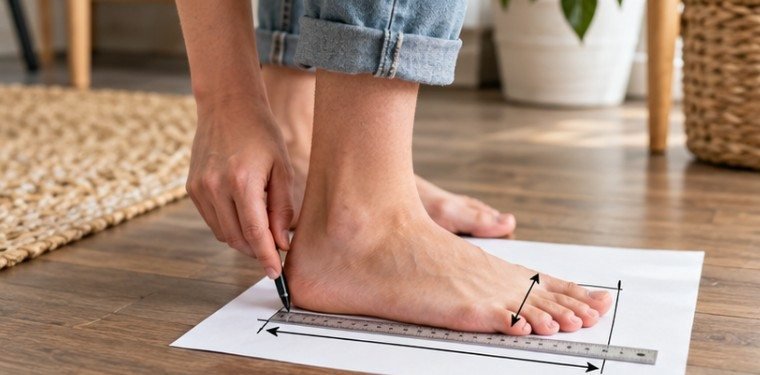
Place a sheet of paper on a hard floor, stand naturally, and have someone mark the back of the heel and the end of your longest toe. Then measure the distance. Repeat for both feet.
Next, measure the widest portion around the ball area. Width matters because buying a longer shoe does not necessarily solve a narrow fit. Harvard Health shoe-fitting recommendations specifically warns that going up half a size without adding width may still leave the forefoot compressed.
If you have access to a Brannock device at a US shoe store, use it. It can help establish foot length, width, and heel-to-ball length.
Why Heel-to-Ball Length Is Easy to Miss
Toe length is only part of fit.
Research published in Foot & Ankle explains that shoe shape must correspond with foot shape and highlights arch length as an important element of determining proper size. Ideally, the first metatarsal joint—the ball of the foot—should sit near the shoe’s intended flex point.
That explains a frustrating situation many online buyers experience: the toes technically fit, yet the shoe still feels wrong.
If your ball joint sits behind or ahead of the shoe’s widest area, you may experience pinching, heel movement, awkward creasing, or uncomfortable flexing even though the overall length seems correct.
Ask the Seller for Measurements That Actually Help
A listing that says “men’s 10 D” is not enough for an uncertain brand, vintage pair, or heavily worn shoe.
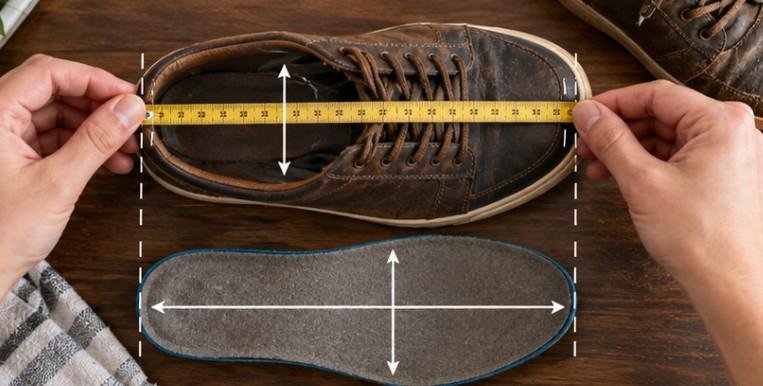
I would ask for these measurements before committing:
| Measurement | What to Request | Why It Helps |
| Internal length | Heel to interior toe | Better comparison than size label alone |
| Insole length | Removable insole measured flat | Useful for sneakers and removable-footbed shoes |
| Forefoot width | Across widest sole/insole area | Helps identify unusually narrow or broad lasts |
| Heel width | Interior or outsole heel width | Helps predict heel security |
| Boot shaft opening | Circumference if relevant | Important for pull-on boots |
The most useful comparison is not necessarily foot measurement against shoe measurement. Instead, compare the seller’s numbers with a similar shoe that already fits you exceptionally well.
For example, if your comfortable leather derby has a 12.1-inch removable insole and the used pair measures 11.6 inches in the same way, that difference deserves attention regardless of what size appears on the label.
Ask How the Measurement Was Taken
Measurement methods are surprisingly inconsistent. A tape following the curved interior of a shoe can produce a different number from a removable insole measured flat. An outsole measurement is even less useful because the welt, sole edge, and toe shape extend beyond the usable interior. Ask the seller to photograph the ruler or measuring tape in position whenever possible.
Used Shoes Can Fit Differently From New Ones
Secondhand footwear introduces variables that size charts rarely capture. Leather uppers may have stretched around a previous owner’s bunions or forefoot. Cork or foam footbeds may have compressed. Heel counters may have softened. Shoes exposed repeatedly to moisture and aggressive drying can also change shape.
The result is not always a larger-fitting shoe. A heavily molded footbed can actually make a pair feel less accommodating to a new wearer’s foot.
This is one reason I would never buy a noticeably undersized leather shoe on the assumption that “it will stretch.”
MedlinePlus explicitly advises against buying tight shoes and expecting them to loosen with wear. Johns Hopkins gives similar guidance: footwear should fit comfortably from the beginning rather than relying on a future break-in period.
Research the Brand’s Last, Not Just Its Size Chart
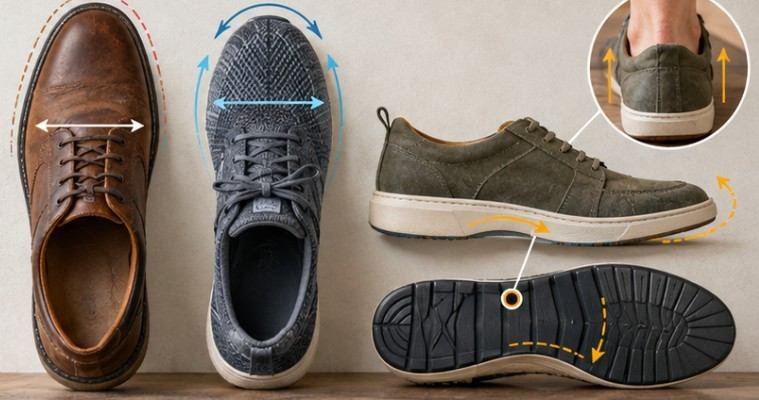
Two US men’s shoes marked 9.5 D can have dramatically different internal shapes. Manufacturers use different lasts—the three-dimensional forms around which footwear is constructed. The last controls toe-box shape, instep volume, heel width, forefoot width, and overall silhouette.
A review of footwear sizing in professional football noted that shoe-size descriptors are not standardized and that size and shape can vary between manufacturers and even within the same company.
Before buying, search the exact brand, model, and last number when available. Look for owner reports describing whether it runs long, short, narrow, wide, or high-volume.
This becomes especially important with heritage boots, loafers, welted dress shoes, and vintage footwear.
Be More Cautious With Vintage Shoes
Vintage sizing deserves additional skepticism.
Older footwear may use discontinued lasts, regional sizing systems, or dimensions that no longer match the manufacturer’s current models. The shoe may also have undergone decades of drying, conditioning, storage, resoling, or stretching.
Instead of automatically assuming every vintage shoe runs half a size small, verify the actual measurements. Blanket conversion rules can create just as many sizing mistakes as blindly trusting the label.
Photos also matter. Look at creasing, heel wear, lining distortion, toe shape, and whether the upper appears stretched sideways.
If you are choosing shoes for an office wardrobe, comparing shape and versatility with appropriate business-casual men’s dress shoes can help you decide whether the used pair makes practical sense. Buyers building a new work wardrobe may also find this guide to what men can wear on their first day at the office useful.
My Five-Step Test Before Buying
For how to size used shoes when buying online, I use a simple decision process.
- Measure both feet while standing, including length and width.
- Identify a similar pair you already own that fits properly.
- Ask the seller for internal or insole measurements using a clearly described method.
- Research the exact brand, model, last, and typical fit.
- Examine photos for stretching, footbed compression, distorted quarters, or unusually heavy wear.
If several signals agree, confidence rises considerably. If the label says your size but the measurements, last information, and wear pattern disagree, I trust the evidence instead of the label.
How Much Toe Room Should You Allow?
There is no universal millimeter figure that works perfectly for every shoe and every foot. A systematic review of footwear-fit studies noted commonly suggested clearance of roughly 10–20 mm between the foot and the end of a shoe, while another review found that published recommendations vary considerably.
That is why comparing against a known-good shoe is so valuable. A pointed Oxford naturally contains unused space ahead of the toes, while a rounded sneaker or boot may fit differently. Never calculate fit by simply adding a fixed amount to foot length without considering shoe shape.
FAQ
1. Should I size up when buying used shoes online?
Not automatically. Compare the shoe’s actual measurements with a comfortable pair you own. Previous wear, brand lasts, and construction can affect fit more than the listed size.
2. How do I know if secondhand shoes will fit?
Ask for internal length and width measurements, research the specific model or last, and compare those measurements with shoes you already wear comfortably.
3. Is insole length the same as foot length?
No. A shoe normally needs some space beyond the foot, and toe shape affects unused internal length. Compare insole measurements with a similar well-fitting shoe rather than your bare foot alone.
4. Why is how to size used shoes when buying online harder with vintage footwear?
Vintage shoes may use older lasts and sizing conventions and may have stretched, shrunk, molded, or been resoled during years of use.
The Takeaway
Buying used shoes successfully is really an exercise in replacing assumptions with measurements. The number printed inside the shoe tells you where to begin, but it cannot reveal the last shape, previous wear, stretched leather, compressed footbed, or the relationship between your arch and the shoe’s flex point.
I would rather skip a seemingly perfect bargain than buy a pair supported only by a size label. Measure your feet, compare a known-good shoe, ask the seller for precise dimensions, and research the model. A few extra measurements before checkout are far cheaper than discovering the mistake after the shoes arrive.