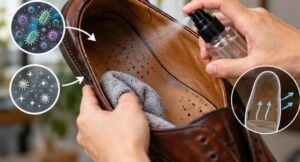
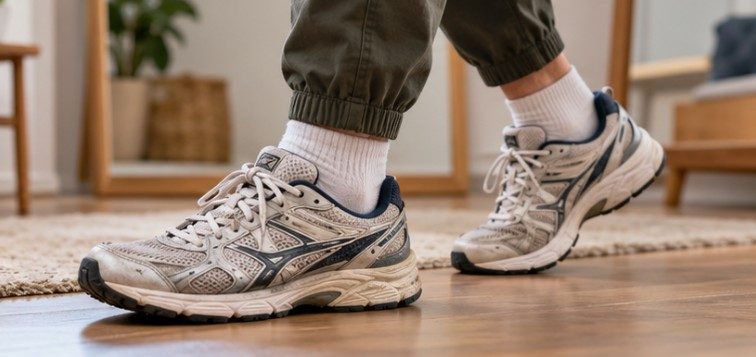
A secondhand shoe can look nearly new while hiding the two things that matter most: what is living inside it and what has happened to its support. So, are used shoes safe to wear? In most cases, yes—provided the shoes are clean, completely dry, structurally sound, and genuinely fit your feet. The fact that another person wore them is not automatically a health problem.
The better question is whether the pair has retained enough support and can be cleaned appropriately before it becomes part of your rotation. Used dress shoes worn occasionally may have years left in them. A heavily compressed pair of running shoes can be a much poorer bet.
The Two Main Risks Are Hygiene and Wear
Most concerns about secondhand footwear fall into two categories: microorganisms inside the shoe and mechanical deterioration underneath your foot.
Neither should be dismissed, but neither means every used pair belongs in the trash.
Fungi Prefer the Same Conditions Found Inside Shoes
The Centers for Disease Control and Prevention notes that tinea pedis, better known as athlete’s foot, is caused by fungi that thrive in warm, dark, moist environments. Keeping feet and footwear clean and dry helps reduce the risk.
MedlinePlus goes further, noting that athlete’s foot can spread through contact with contaminated objects, including shoes.
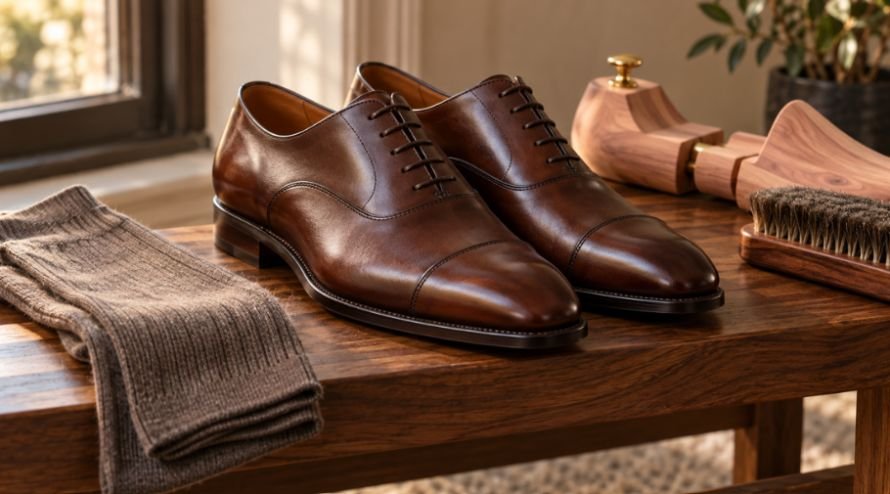
That makes moisture history important. A dry leather Oxford from a carefully maintained wardrobe is quite different from a pair of athletic shoes stored damp in a gym bag. Visible mold, persistent odor, a wet footbed, peeling lining, or obvious fungal-looking residue are reasons to move on rather than attempt a rescue.
The American Academy of Dermatology also recommends not sharing shoes with someone who has athlete’s foot and emphasizes keeping footwear dry.
A Clean Shoe Can Still Be a Bad Shoe
Sanitizing footwear does not restore worn cushioning, correct an uneven heel, or rebuild a collapsed midsole.
This matters especially with athletic shoes.
One longitudinal study involving 33 recreational runners examined footwear after 350 and 700 kilometers of use. Researchers found that plantar pressure patterns changed as the shoes accumulated mileage, including a significant increase in pressure in the midfoot.
Another study comparing six-month-old athletic footwear with new versions of the same model found measurable changes in midsole hardness and loading characteristics.
The lesson is straightforward: a used shoe does not have to look destroyed to have changed mechanically.
Use This Five-Minute Safety Test Before Wearing Used Shoes
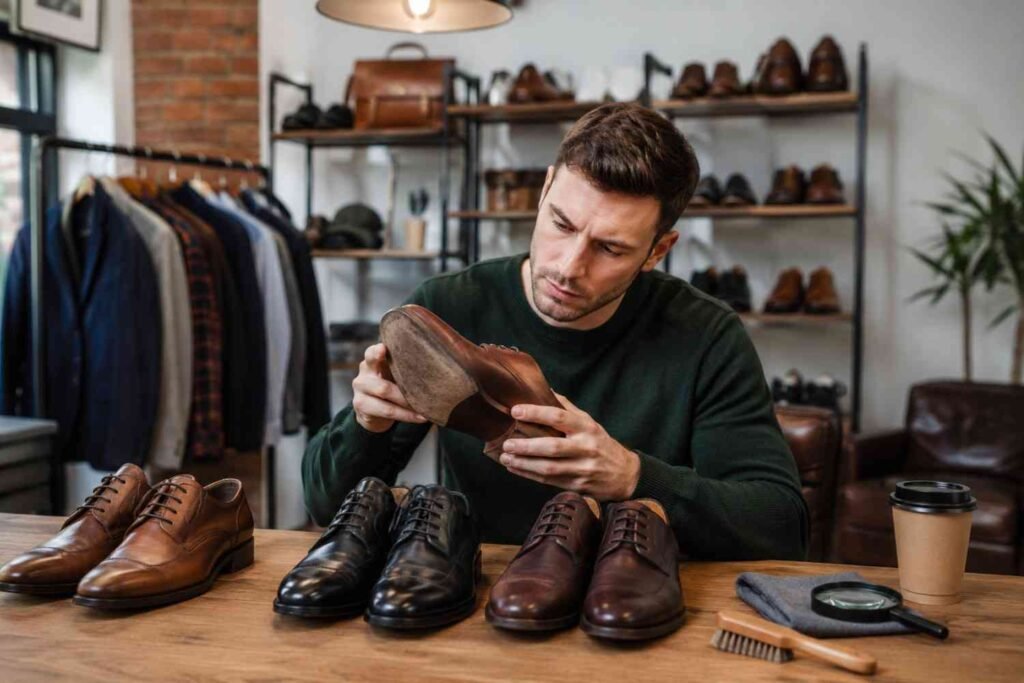
You do not need specialized equipment. A tabletop, good lighting, your hands, and a careful test walk can reveal most obvious problems.
| Check | Usually acceptable | Reason to skip |
| Interior | Dry, clean, mild normal odor | Mold, dampness, strong persistent odor |
| Outsole | Even, moderate wear | Severe wear on one edge |
| Midsole | Still resilient and level | Hard, crushed, cracked, tilted |
| Heel | Upright and stable | Leaning inward or outward |
| Upper | Supple and secure | Deep cracks or failed seams |
| Fit | Comfortable immediately | Pinching, slipping, pressure points |
1. Look Straight Down at the Heel
Place both shoes on a flat surface.
The heel counters should sit reasonably upright. If one shoe visibly leans or the heel is ground down dramatically on one side, the previous owner’s gait may already be built into the shoe.
Minor outsole wear is normal. Severe asymmetric wear is different.
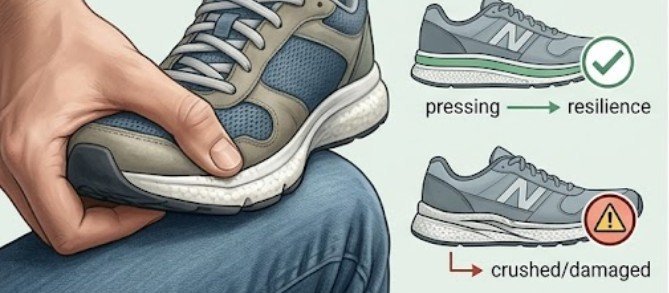
2. Press the Cushioning
With sneakers and walking shoes, press firmly into the midsole.
Some foams become noticeably hard, wrinkled, flattened, or permanently compressed with age and use. Once cushioning has deteriorated substantially, cleaning the shoe will not make it supportive again.
Dress shoes require a slightly different evaluation because leather soles and welted construction are designed differently. If you are evaluating higher-quality footwear, understanding Goodyear-welted versus Blake-stitched dress shoe durability can help you distinguish repairable wear from structural failure.
3. Flex the Shoe in the Right Place
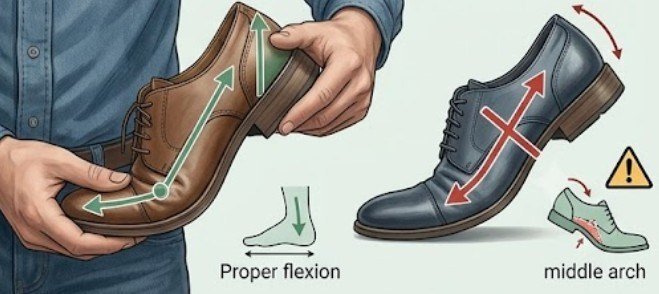
A sound shoe should generally flex near the forefoot where your toes bend. It should not fold effortlessly through the middle of the arch unless its design specifically calls for extreme flexibility.
The American Academy of Orthopaedic Surgeons recommends evaluating overall shoe construction and notes that a supportive shoe should bend at the toe box rather than through the shank.
AAOS guidance on proper shoe construction and fit
4. Inspect the Footbed
Remove the insole if possible.
Deep impressions underneath the heel or forefoot show where the previous owner’s weight repeatedly landed. A faint impression is not necessarily a problem, but a severely compressed footbed may no longer support your foot evenly.
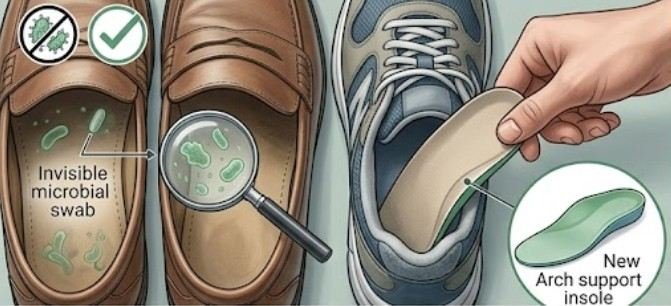
Replacing a removable insole can improve hygiene and comfort, but it cannot fix a worn-out midsole underneath it.
5. Walk Indoors Before Committing
Wear clean socks and walk around indoors.
Pay attention to heel slipping, toe pressure, arch discomfort, or the sensation that one shoe tips your foot sideways.
Do not assume discomfort will disappear because the shoes are already broken in.
AAOS specifically warns against buying shoes that do not fit with the expectation that they will eventually stretch comfortably.
This becomes especially important with structured styles. For example, a used double monk may already have strap creasing and footbed impressions, so checking a proper double monk strap dress shoe sizing guide before buying can prevent an expensive sizing mistake.
How Should Used Shoes Be Cleaned?
Cleaning depends on material. Start by removing loose dirt, laces, and removable insoles. Clean the exterior according to the manufacturer’s material recommendations rather than soaking everything indiscriminately.
Wash machine-safe laces separately and allow all components to dry completely before reassembly.
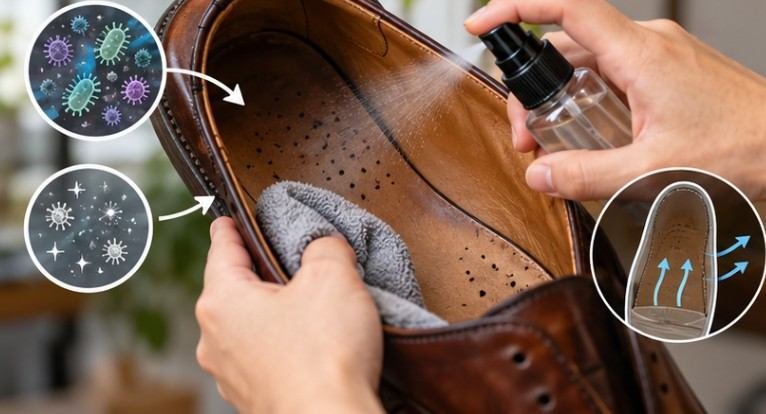
For the interior, the safest approach is to use a footwear-cleaning or disinfecting product that the shoe manufacturer says is compatible with the lining material. Avoid saturating leather interiors, glues, foam, or delicate finishes with aggressive chemicals.
If fungal contamination is strongly suspected, replacing removable insoles is often more practical than attempting to preserve them.
The American Academy of Dermatology notes that fungi can persist on objects and recommends dealing carefully with contaminated footwear following a fungal infection.
Some Buyers Should Be More Cautious
The general advice changes when foot problems make pressure, wounds, or infection more consequential.
People with diabetes, peripheral neuropathy, poor circulation, previous foot ulcers, significant deformities, or immune-system problems should be particularly careful about secondhand footwear.
MedlinePlus notes that people with diabetes may not feel rubbing or pressure normally because of nerve damage, potentially allowing blisters or sores to develop unnoticed. In these situations, professionally proper shoe fitting may be the safer choice.
Children also deserve extra attention. Growing feet change size rapidly, and poorly fitted shoes can cause pressure and discomfort. Used children’s footwear is most reasonable when it has very little wear, plenty of toe room, a level sole, and no significant impression from the previous wearer.
Used Dress Shoes and Used Running Shoes Are Not Equal
A useful distinction gets lost in blanket advice about secondhand footwear. A well-constructed leather dress shoe may be designed for sole replacement and long-term maintenance. If its upper, welt, insole, and heel structure remain healthy, visible outsole wear may be repairable.
Running shoes depend much more heavily on foam cushioning. Once the foam has substantially hardened or compressed, there may be little worth repairing. That is why age alone tells you less than construction, mileage, storage conditions, and wear pattern.
FAQ
1. Are used shoes safe to wear after cleaning?
Usually, yes, if they are thoroughly cleaned, dried, structurally sound, and fit correctly. Cleaning cannot restore worn cushioning or correct severe uneven wear.
2. Can you catch athlete’s foot from secondhand shoes?
Potentially. Fungi can spread through contaminated footwear. Keeping shoes clean and dry and avoiding visibly contaminated pairs reduces the risk.
3. Should I replace the insoles in used shoes?
It is often worthwhile. New removable insoles can improve cleanliness and comfort, although they cannot repair a collapsed or deteriorated midsole.
4. Are used shoes safe to wear every day?
They can be if their support and fit remain good. Heavily worn athletic shoes, uneven heels, damaged interiors, or compressed cushioning make poor everyday choices.
The Final Step Before You Wear Them
Used footwear does not become unsafe simply because another person owned it. What matters is the condition you inherit.
Before wearing a secondhand pair, look inside it, smell it, place it on a flat surface, inspect the heel wear, press the cushioning, check the sole, and walk in it. Clean and dry it appropriately before regular use.
A well-maintained pair that passes those checks can be an economical and perfectly practical purchase. A cheap pair with mold, uneven wear, collapsed cushioning, or a poor fit is rarely a bargain once discomfort—or a trip to a foot specialist—is added to the price.