
The smartest first suit is rarely the most exciting one in the store. It is the one you can wear to an interview on Monday, a wedding on Saturday, and a formal dinner months later without looking out of place.
For most American men, the best suit color for first suit shopping is navy blue, with dark charcoal gray running a very close second. Both colors are conservative enough for serious professional settings yet flexible enough to work with different shirts, ties, shoes, and occasions.
The harder question is not whether navy and charcoal work. It is deciding which one deserves the first spot in your closet.
Why Your First Suit Color Matters More Than You Think
Buying a first suit is different from adding a fifth suit to an established wardrobe. Your first one has to perform several jobs.
You may need it for job interviews, graduations, weddings, business presentations, networking events, dinners, memorial services, or other occasions where showing up underdressed can feel noticeably wrong.
That is why versatility matters more than novelty.
Cornell University’s professional dress guidance recommends charcoal gray and navy for interview suits and emphasizes something equally important: fit.
University of Michigan Law School guidance makes a similar recommendation, describing gray and navy as dependable interview attire guidance.
That overlap is useful. These are not simply fashionable colors. They are colors that consistently survive conservative professional dress expectations.
Navy Is the Safest First Choice for Most Men
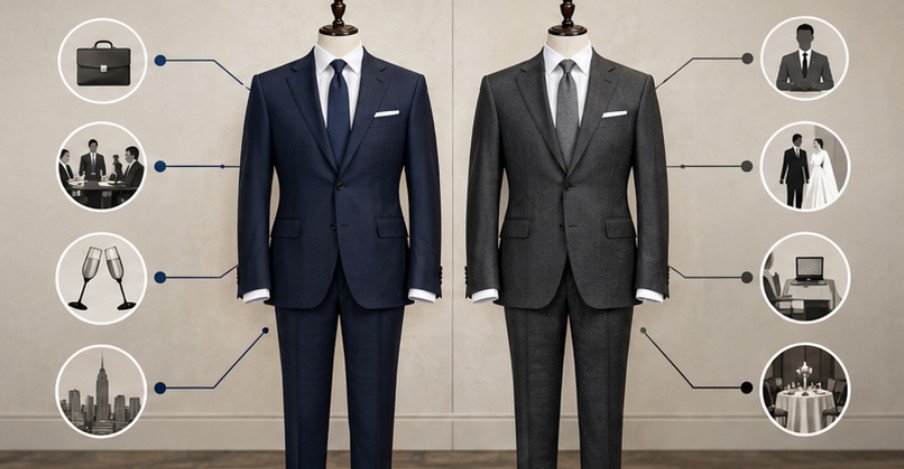
If I were helping someone buy one suit with no certainty about where he would wear it next, I would start with a dark or medium-dark navy.
Navy has formality without looking severe. It works in daylight, photographs well at weddings, looks professional in offices, and can move from a white dress shirt and conservative tie to a lighter, more relaxed combination.
It also gives you plenty of footwear options.
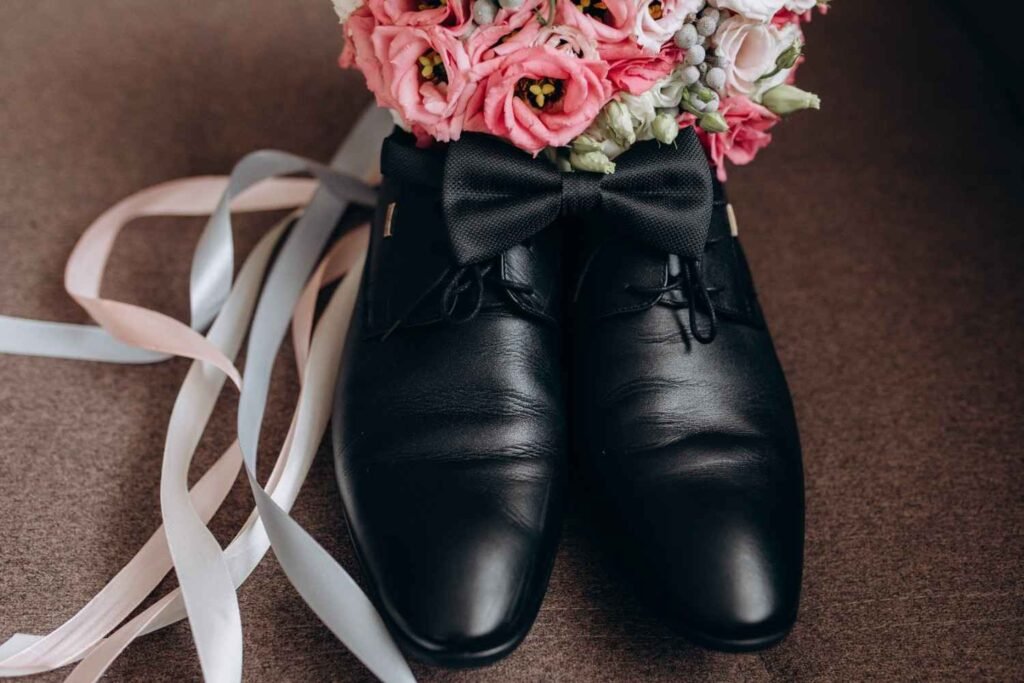
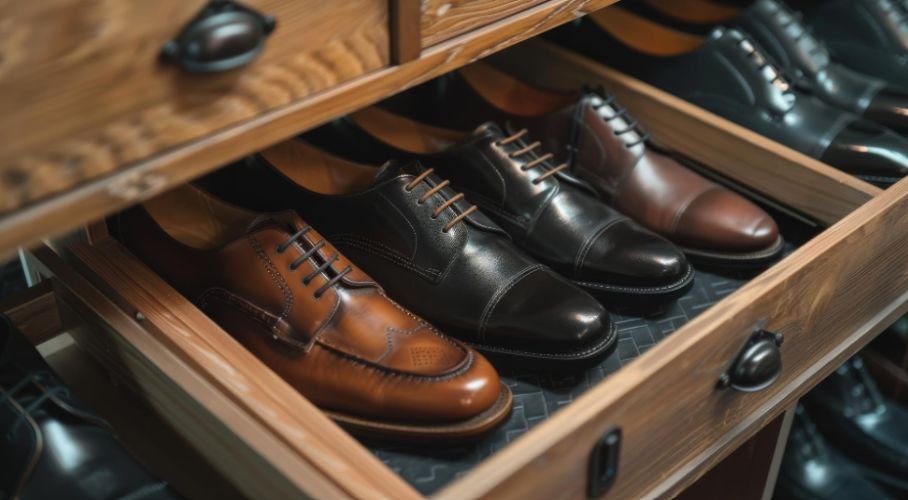
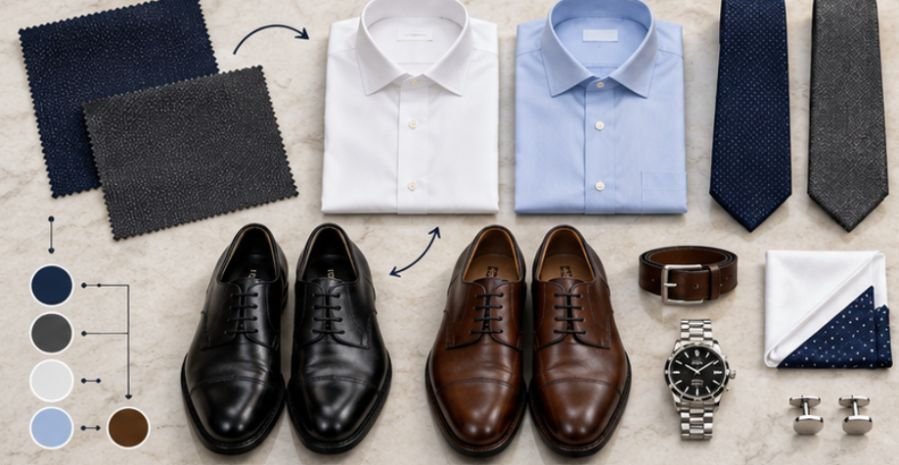
Dark brown shoes create an approachable business look. Black shoes make navy noticeably more formal. Burgundy or oxblood can work once you are comfortable experimenting.
Choosing the right footwear can make a navy suit work across a wider range of professional settings, particularly when the dress code calls for a polished but not overly formal appearance. Explore these best dress shoes for business casual men for options that balance professional style with everyday versatility.
A white shirt is almost impossible to get wrong, while pale blue provides an easy second option.
The U.S. Department of Labor’s interview guidance includes navy and charcoal among recommended business-professional suit colors. It also notes that professional shoes may be black, burgundy, or brown depending on the suit.
Pick a True Navy, Not an Electric Blue
“Navy” covers a surprisingly wide range in stores.
For a first suit, avoid bright royal blue, highly saturated cobalt, or anything shiny enough to resemble prom attire. Look for a blue that appears unmistakably navy indoors but reveals more blue under natural daylight.
A solid color or extremely subtle texture gives you far more longevity than windowpane checks, dramatic pinstripes, or contrasting threads.
When Charcoal Gray Is the Better First Suit
Charcoal deserves serious consideration if most of your expected suit use is highly conservative.
Think law, finance, government interviews, funerals, traditional corporate offices, formal presentations, or evening business events.
Charcoal carries less visual warmth than navy. It tends to look restrained and authoritative, particularly with a crisp white shirt, dark tie, and black shoes.
CareerOneStop, a career resource sponsored by the U.S. Department of Labor, recommends dark suits including navy and gray for more formal interviews.
The downside is that charcoal can feel slightly more businesslike during relaxed daytime celebrations. That does not make it wrong for weddings or social events; it simply gives navy a small versatility advantage.
Navy vs. Charcoal: The First-Suit Test
Use your actual calendar rather than abstract fashion rules.
| Decision factor | Navy | Charcoal |
| Job interviews | Excellent | Excellent |
| Weddings | Excellent | Very good |
| Conservative business | Excellent | Excellent |
| Funerals or memorials | Very good | Excellent |
| Brown shoes | Excellent | Good |
| Black shoes | Excellent | Excellent |
| Day-to-evening flexibility | Excellent | Very good |
| Best all-purpose first purchase | Winner | Close second |
Here is the simplest decision method: list the five occasions where you are most likely to wear a suit during the next two years.
If the list mixes weddings, interviews, parties, professional events, and formal dinners, choose navy.
If it is dominated by traditional corporate, legal, government, or solemn events, charcoal becomes equally compelling.
The National Association of Colleges and Employers advises interview candidates to dress professionally while avoiding loud colors and busy patterns. That supports the broader principle behind a first suit: reduce distractions and maximize adaptability.
Why Black Usually Shouldn’t Be Your First Suit

Black seems like the logical safe choice because it matches everything. In practice, it is less versatile than navy or charcoal for American daytime business wear.
A solid black suit creates stronger contrast and can read as unusually formal. It works naturally for funerals, evening occasions, certain formal events, hospitality uniforms, and situations where black is specifically expected.
That does not mean a black suit is bad. It means its strongest uses overlap less neatly with the everyday jobs expected from a one-suit wardrobe. If you are building a suit collection, black can come later.
Don’t Let Color Distract You From Fit
A beautifully colored $900 suit with collapsing shoulders and puddled trousers will usually look worse than a well-altered $350 suit.
Start by checking the shoulders. The jacket’s shoulder seam should end approximately where your natural shoulder ends without obvious dents or overhang.
Button the jacket. It should close cleanly without pulling into an obvious “X” across the front.
Next, examine sleeve and trouser length. Small adjustments here can dramatically change how intentional the entire outfit looks.
Michigan Law’s interview advice specifically emphasizes alterations, noting that proper tailoring affects both appearance and comfort.
That makes fit the real tie-breaker. If the charcoal suit fits substantially better than the navy option, buy the charcoal one.
A Simple First-Suit Shopping Checklist
Before paying, confirm that you are buying a two-piece matching suit rather than a sport coat and similar-looking trousers.
Choose navy or charcoal in a solid color or very understated pattern. Look for a single-breasted jacket with two buttons and moderate notch lapels rather than unusually skinny or oversized proportions.
Try it with a white dress shirt and real dress shoes. Sit down, walk around, button the jacket, raise your arms slightly, and inspect the suit from the back.
When shopping for dress shoes to complete your first-suit wardrobe, inspect the soles carefully, especially if you are considering pre-owned footwear. Knowing how to tell if used shoes need resoling can help you identify worn-out soles and assess whether a pair needs professional repair before regular use.
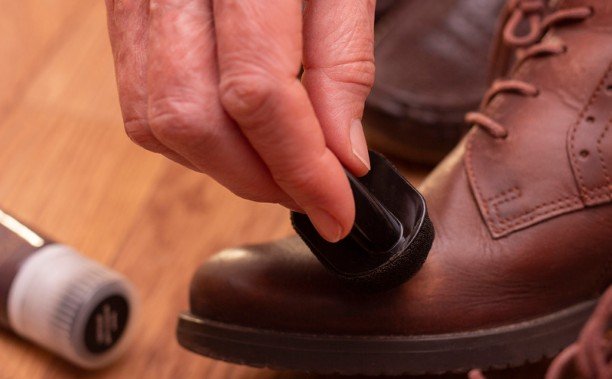
Before wearing pre-owned dress shoes with a carefully chosen suit, make sure they have been cleaned and properly sanitized. This guide on how to sanitize used leather shoes explains how to freshen secondhand footwear before adding it to your wardrobe.
Finally, budget for alterations before spending extra money on a designer label.
A suit should make getting dressed easier. If buying it immediately creates problems matching shirts, shoes, ties, and occasions, it probably is not the right first suit.
Frequently Asked Questions
1. What is the best suit color for a first suit?
For most men, navy is the safest choice because it suits interviews, weddings, business events, and formal occasions. Charcoal is an equally strong option for more conservative wardrobes.
2. Is navy or charcoal better for job interviews?
Both are excellent. Navy can appear slightly more approachable, while charcoal creates a restrained, traditional business look. Fit and overall presentation matter more than choosing between them.
3. Can I wear brown shoes with a navy suit?
Yes. Medium to dark brown shoes pair naturally with navy. Black shoes are preferable when you want the outfit to look more conservative or formal.
4. Should my first suit be black?
Usually not. Black has legitimate formal uses, but navy and charcoal offer greater flexibility across daytime business, interviews, weddings, networking events, and other common occasions.
The Suit You Don’t Have to Think About
The best suit color for first suit ownership is ultimately the color that disappears into the background while you get on with the occasion.
For most men, that is navy. It gives you the widest runway between serious business and social formality while accepting almost every standard shirt-and-shoe combination. Charcoal is the smarter alternative when your wardrobe needs to lean conservative.
Do not chase the color that looks most dramatic under store lighting. Buy the one you can reach for five years from now without wondering whether it is appropriate. That is what makes a first suit genuinely useful.