A single construction detail separates a shoe destined for a boardroom from one suited for a weekend dinner. When comparing open lacing vs closed lacing dress shoe formality, the rule is straightforward: closed lacing is unequivocally more formal than open lacing.
I learned this years ago after wearing a handsome pair of split-toe bluchers to a strict black-tie gala. My shoes were mirror-shined calfskin, but the raised flaps stood out like work boots against tailored tuxedo trousers.
That evening forced me to dissect footwear architecture from the ground up. The position of two small strips of leather changes everything about a shoe’s visual weight, line, and acceptable dress codes.
Anatomy of the Facing: Why Lacing Construction Dictates Elegance
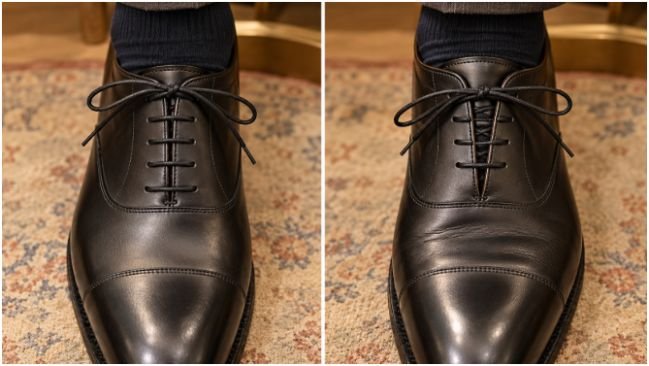
To understand formality, look directly at the eyelet tabs, known as the shoe’s facings. The method a cordwainer uses to attach these facings to the vamp (the upper leather over the instep) controls the shoe’s entire visual profile.
CLOSED LACING (Oxford) OPEN LACING (Derby)
\ / | |
[Eyelet Tabs] [Eyelet Tabs]
Stitched UNDER vamp Stitched OVER vamp
========= =========
Vamp Vamp
Under the Vamp: Closed Lacing (The Oxford)
On a closed-lacing shoe, the shoemaker stitches the eyelet tabs directly underneath the front vamp. The quarters (the side panels) pull together from beneath.
When laced tightly with straight bars, the two edges touch. They form a single, unbroken surface across your instep. This seamless transition mirrors the clean, uninterrupted drapery of bespoke tailoring. Because there are no flapping leather edges or extra stitched overlays, the Oxford presents an exceptionally low-profile silhouette.
Over the Vamp: Open Lacing (The Derby)
Open lacing reverses this construction. The shoemaker stitches the quarters on top of the vamp, creating two distinct wings that hinge open freely.
This design originated as a 19th-century hunting boot engineered for Prussian soldiers and British countryside sports, as documented by footwear historians at Permanent Style. The visible, raised leather layers add tangible physical bulk. While modern artisans build gorgeous, refined Derbies, those open wings will always evoke functional, utilitarian outerwear.
The Formality Spectrum: From White Tie to Smart Casual
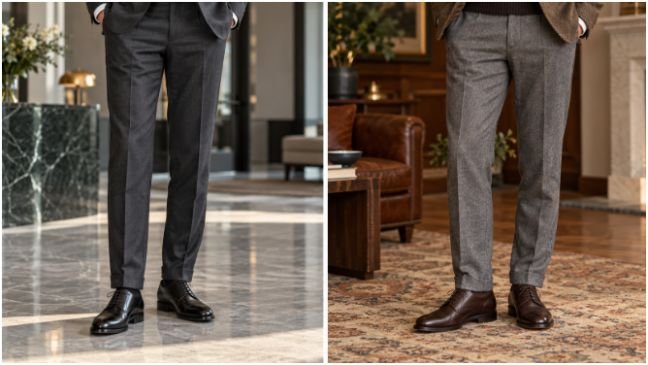
Menswear rules rely on clean lines. The fewer visible seams, overlays, and protrusions a shoe has, the higher it climbs up the formal ladder.
| Feature | Closed Lacing (Oxford) | Open Lacing (Derby / Blucher) |
| Facing Seam | Concealed under the vamp | Exposed on top of the vamp |
| Silhouette | Sleek, flush, tapered | Heavier, segmented, layered |
| Visual Weight | Minimal | Substantial |
| Highest Dress Code | White Tie, Black Tie, Morning Wear | Black Tie Optional (rarely), Business Formal |
| Natural Habitat | Worsted wool business suits | Flannel trousers, chinos, dark denim, blazers |
| Ideal Lacing | Straight bar lacing | Criss-cross lacing |
The Hierarchy of Occasions
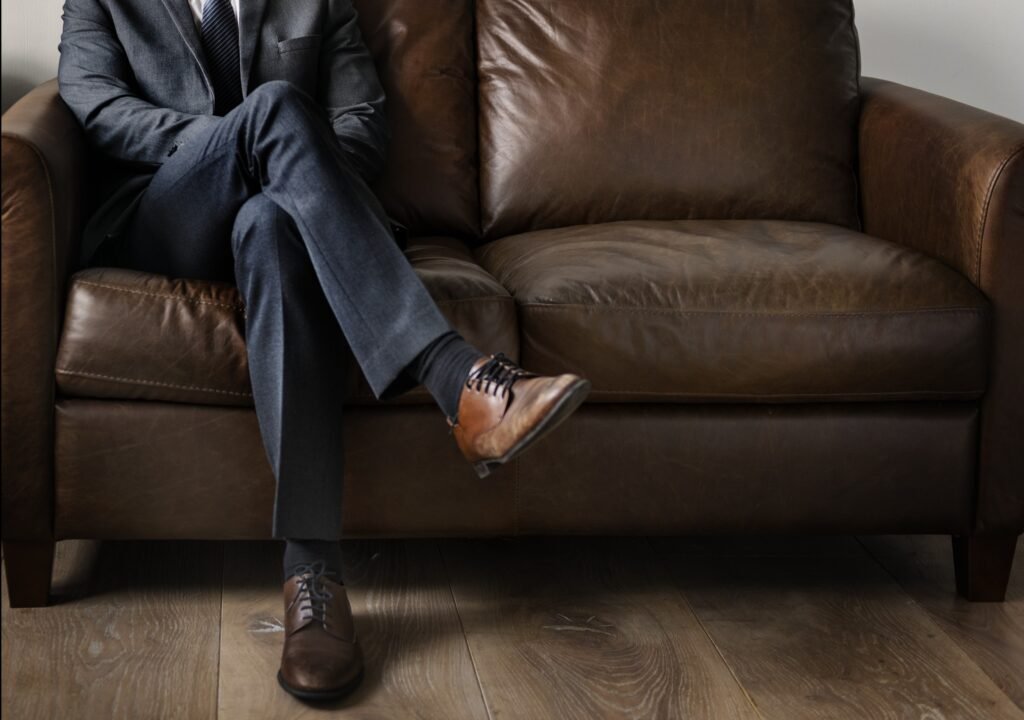
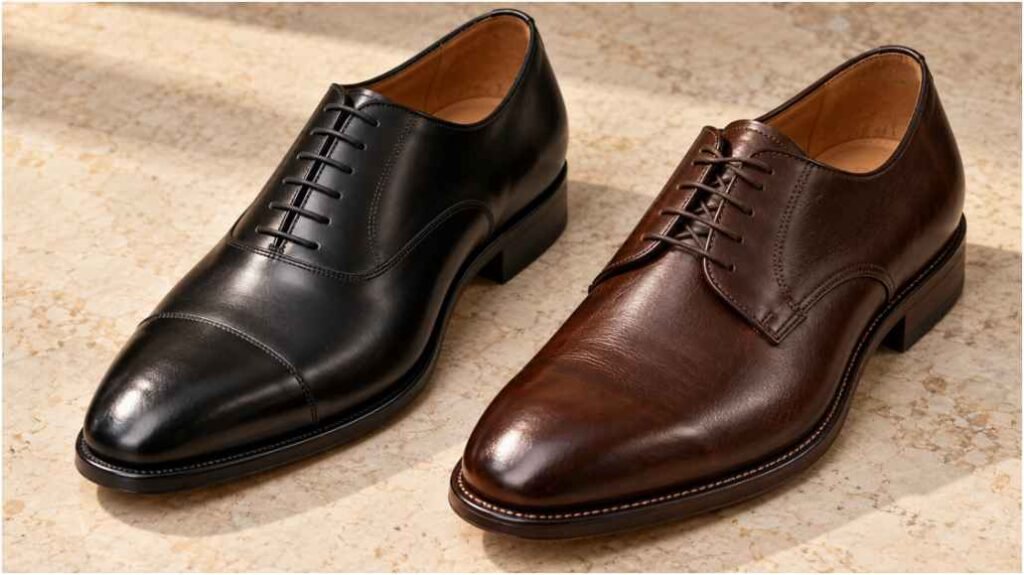
Closed-lacing Oxfords belong with formal worsted wool suits. For traditional black tie, a patent leather or mirror-shined calfskin wholecut Oxford remains non-negotiable. Wear a dark navy or charcoal two-piece suit to a conservative legal client meeting, and a black cap-toe Oxford completes the silhouette naturally.
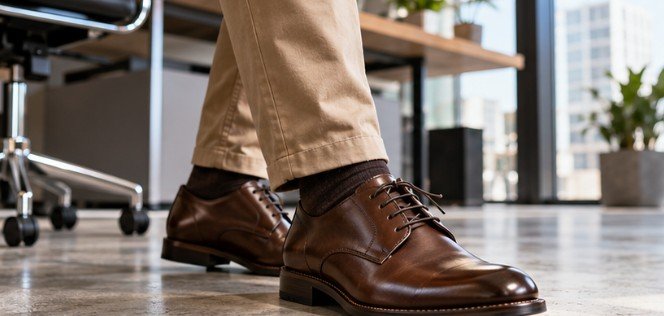
Open-lacing Derbies own the transitional territory. Pair dark brown calf Derbies with flannel trousers, tweed sports coats, cotton chinos, or raw selvedge denim. While a sleek, minimalist Derby can handle everyday office suits, it looks underdressed once peak formal dress codes take effect.
FORMALITY RANKING (High to Low)
[1] Black Plain-Toe Wholecut Oxford (Closed)
[2] Black Cap-Toe Oxford (Closed)
[3] Dark Brown Plain-Toe Derby (Open)
[4] Semi-Brogue Oxford (Closed)
[5] Full Wingtip Derby (Open)
[6] Suede Longwing Blucher (Open)
When Broguing and Color Override Lacing Structure
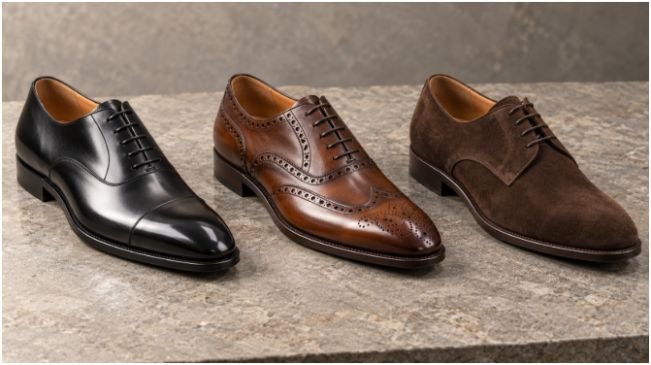
Lacing construction establishes the baseline, but surface decoration shifts the balance quickly. As classic menswear authority Put This On often highlights, decorative perforations (broguing) strip away formality faster than lacing adds it.
Consider this comparison:
- A black cap-toe Oxford with closed lacing sits near the top of formal menswear.
- Punch full wingtip broguing across that same Oxford, and its formality drops below a pristine, unornamented black calfskin Derby.
Color works the same way. A cognac or walnut closed-lace Oxford turns casual purely because light leather demands attention. If you want maximum versatility, a dark chocolate brown or deep oxblood sits in the functional sweet spot.
The “Instep Gap” Dilemma: Real-World Fit vs Theoretical Formality
Here is an uncomfortable reality most menswear guides skip: an ill-fitting Oxford destroys formality faster than a handsome Derby.
Closed lacing has almost no forgiveness over high arches. When I test fit dress shoes, I measure what I call the Instep Gap. On a properly fitted Oxford, the eyelet tabs should close almost parallel, leaving no more than a quarter-inch gap at the top.
If you have high arches, the closed facing pulls into an exaggerated “V” shape, exposing an inch of tongue and pulling the leather taut across your bridge:
PROPER OXFORD FIT THE HIGH-INSTEP “V” ERROR
[ | | | ] \ /
Tabs pull parallel Wide gap exposes tongue
Clean, flat profile Strains seams, breaks lines
That strained gap breaks the silhouette. In those cases, hunting down comfortable leather dress shoes for wide feet with an open-lacing pattern looks significantly sharper than stuffing your foot into an Oxford that refuses to close. A clean, comfortable Derby always beats a distorted Oxford.
How Sole Construction Changes the Equation
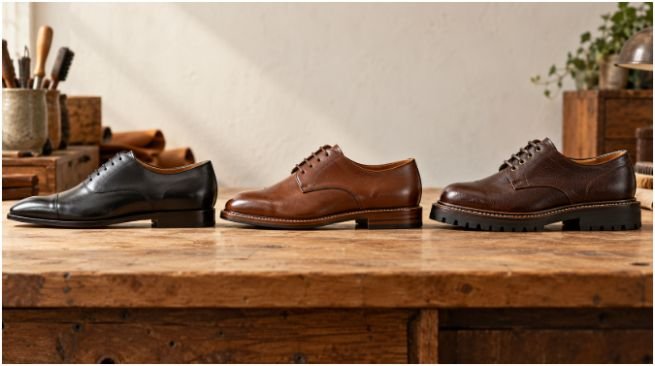
Upper construction is only half the battle. Sole thickness dictates whether a shoe looks tailored or rustic.
SOLES COMPARED:
Beveled Single Leather Sole ===> Ultra-formal, wafer-thin edge
Standard Goodyear 360° Welt ===> Balanced business attire
Double Leather / Commando ===> Rugged, country/casual only
A closed-lace Oxford mounted on a heavy double leather sole with an extended storm welt looks clumsy with formal trousers. True formal shoes require a close-cut, single-leather sole, ideally with a trimmed, beveled waist.
For practical daily wear, a classic goodyear welted sole offers weather resistance and recraftability. When master shoemaker Justin FitzPatrick discusses welt proportions on The Shoe Snob Blog, he emphasizes that trim welt margins maintain elegance.
Reserve thick storm welts, rubber Dainite studs, and Commando treads for open-laced Derbies and country brogues.
Frequently Asked Questions About Dress Shoe Lacing
1. Can you wear open-lacing Derby shoes with a tuxedo?
No, open-lacing shoes clash with black tie standards because their visible flaps add unnecessary bulk against satin or grosgrain dinner suit facings.
2. Are all closed-lacing shoes called Oxfords?
Yes, in modern terminology, any low-cut dress shoe featuring closed facings stitched beneath the vamp falls under the Oxford family.
3. Which lacing system handles high arches better?
Open lacing handles high arches far better because the unattached tabs spread outward without pinching your bridge.
4. Is straight bar lacing strictly required on Oxfords?
Yes, straight bar lacing aligns horizontal parallel bars across the facing, preserving the clean lines that make Oxfords formal.
Step Up Your Footwear Strategy
Stop treating shoe purchases like an afterthought. If you are building a tailored wardrobe from scratch, buy a clean black or deep espresso cap-toe Oxford first; it covers weddings, funerals, board meetings, and formal evening events without compromise.
Once that formal baseline exists, invest in rich brown open-lace Derbies to anchor your weekday suits, flannel trousers, and tailored denim.