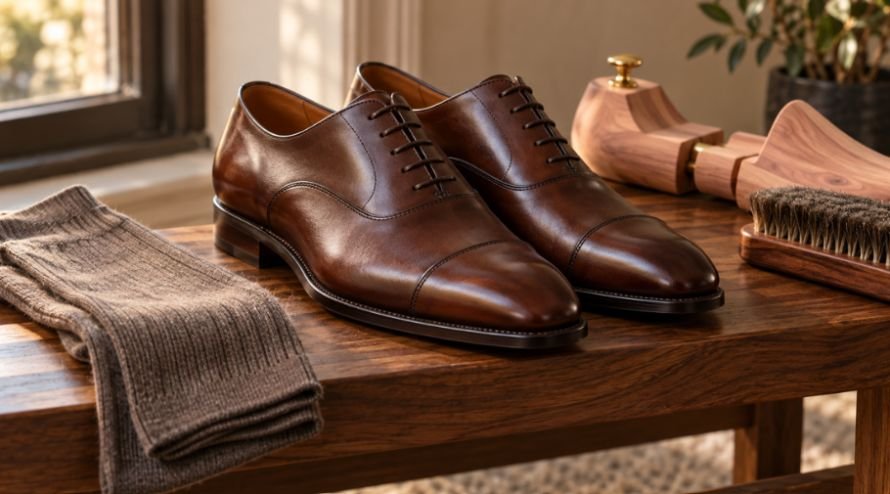
Nothing matches the sharp silhouette of fine calfskin footwear right out of the box. But behind that mirror shine lies an uncompromising reality: high-tensile collagen fibers pressed tightly together during tanning. If you slip them on and immediately head out for an eight-hour workday, your heels will bleed, and your vamp will crease awkwardly.
Over the past decade of collecting and restoring bench-made footwear, I have refined an exact, painless system for how to break in stiff calfskin leather dress shoes without scarring the leather or your feet.
┌────────────────────────────────────────────────────────┐
│ THE 14-DAY CALFSKIN BREAK-IN CYCLE │
└────────────────────────────────────────────────────────┘
[Day 1] Massage counter + pre-flex vamp manually
[Days 2-4] 20-30 min carpet wear with thick crew socks
[Days 5-7] Scale to 60-90 min; evaluate pressure points
[Days 8-10] Apply thin conditioning cream to top grain
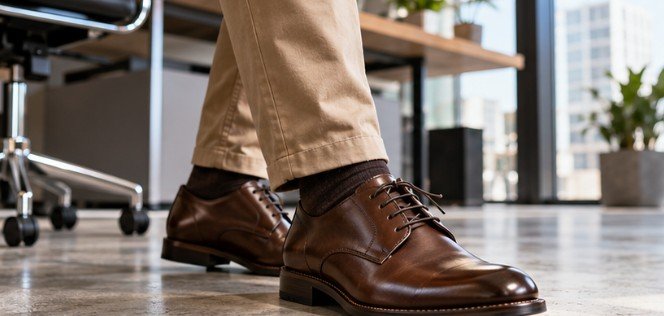
[Days 11-13] 2-3 hours indoor desk wear; add cedar trees
[Day 14] 4-hour continuous indoor test -> Ready
Why Calfskin Fights Back: The Science of High-Density Grain
Calfskin comes from young cattle, meaning the grain is far finer, denser, and more uniform than standard cowhide. Heritage tanneries certified by the Leather Working Group process this leather with chromium salts or vegetable tannins to create high tensile strength and structural memory.
The hide starts out stiff because those microscopic collagen bundles have not yet yielded to repetitive kinetic motion. Full-grain calfskin molds to the contours of your metatarsals, heel shape, and instep line through continuous, gradual heat and perspiration transfer.
Beyond the break-in process, the way a dress shoe is constructed can influence its durability, flexibility, and long-term value. This comparison of hand-welted bespoke leather dress shoes vs. factory-made explains the differences in craftsmanship and construction methods that matter when investing in quality footwear.
Rushing this process forces the leather to crease aggressively along the vamp instead of developing soft, natural ripples. To understand the full process of vegetable tanned leather dress shoes patina development, you must allow the fiber bundles to ease into their natural flex zones over time.
The 3-Phase Break-In Protocol I Swear By
Breaking in fine leather shoes is not an endurance contest; it is controlled fiber manipulation. Rushing the process guarantees painful blisters and broken heel counters.
Phase 1: Bench Work and Counter Manipulation (Day 1)
Before slipping the shoes onto your feet, soften the most rigid structural components by hand.
High-end dress shoes feature a celastic or leatherboard heel counter sandwiched between the outer calfskin and the lining. This structure anchors your heel, but it can bite ruthlessly into your Achilles tendon.
Step 1: Cup the heel firmly in your non-dominant hand.
Step 2: Place your dominant thumb on the inner upper collar.
Step 3: Roll the top 5 mm edge inward using firm, rolling pressure.
Step 4: Repeat for 60 seconds around the heel rim.
Next, establish where the shoe will fold naturally. Slide your hand inside the toe box, rest the leather sole against your knee, and gently flex the sole upward by 25 to 30 degrees. This manual roll teaches the grain where to hinge naturally across the ball of your foot.
Phase 2: Micro-Wear and the Double-Sock Method (Days 2 to 7)
Do not wear your shoes outside during the first week. Keep them on interior rugs and hardwood floors to preserve the outsoles.
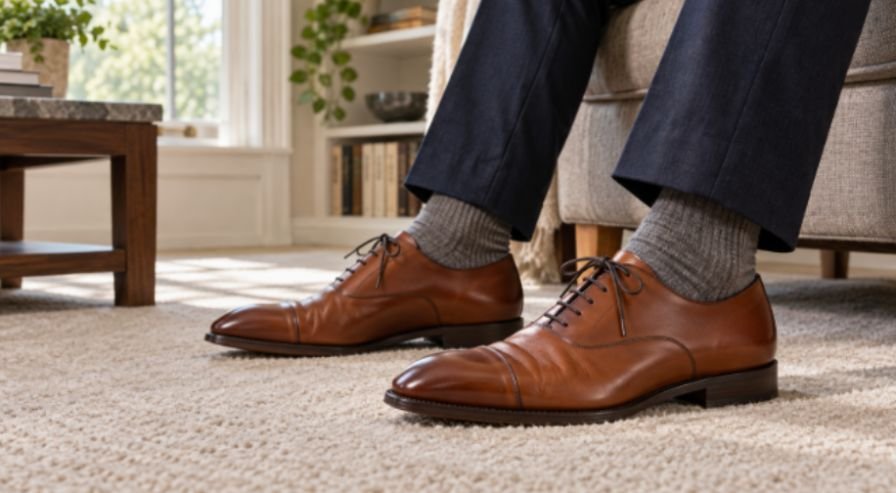
Start on Day 2 by putting on a pair of thick cotton crew socks, or stack two thin dress socks. The added bulk creates uniform outward pressure across the ball and instep while insulating your skin from friction points.
Limit your wear time strictly according to this schedule:
| Day Range | Daily Wear Window | Environment | Primary Objective |
| Days 2–3 | 20 to 30 minutes | Clean carpet / seated | Warm the inner lining with body heat |
| Days 4–5 | 45 to 60 minutes | Indoor walking | Yield the ball flex zone |
| Days 6–7 | 90 to 120 minutes | Light household chores | Map instep and arch settlement |
According to foot biomechanics outlined by the American Podiatric Medical Association, concentrated friction against an unyielding heel counter causes micro-tears in epidermal layers within 20 minutes. Sticking to short, progressive sessions stops blister formation before it begins.
Phase 3: Conditioning and Targeted Expansion (Days 8 to 14)
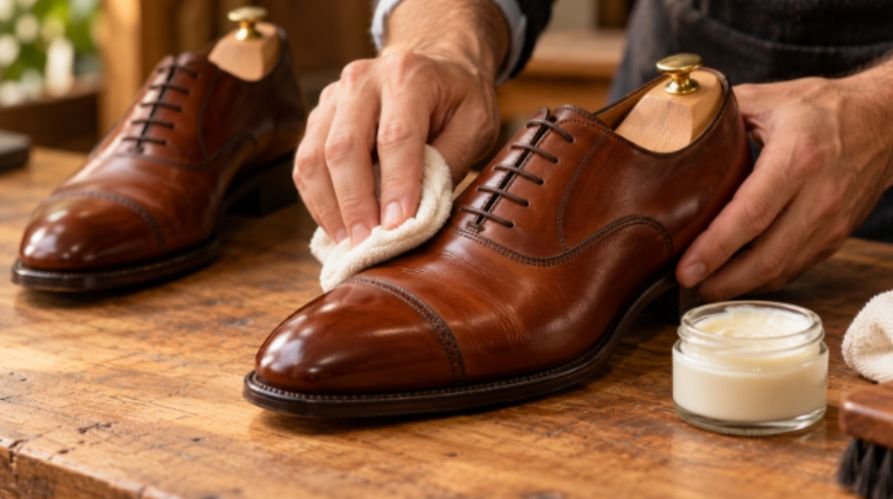
Dry calfskin resists flexing. By the second week, your foot heat has begun shaping the internal leather lining, making this the ideal time to nourish the outer grain.
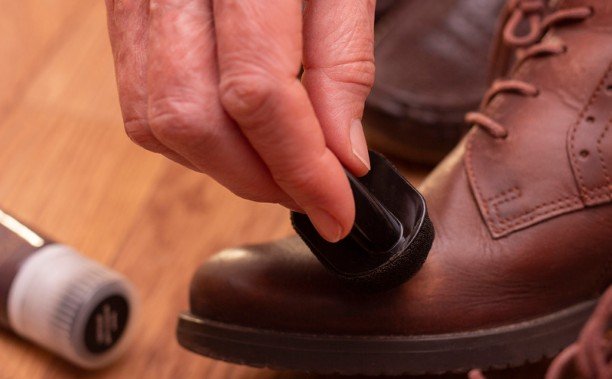
Apply a pea-sized dab of high-grade emulsion conditioner containing natural beeswax and neatsfoot oil. Massage it thoroughly across the vamp and quarters. Conditioning lubricates the surface fibers, allowing them to slide against one another without cracking under tension.
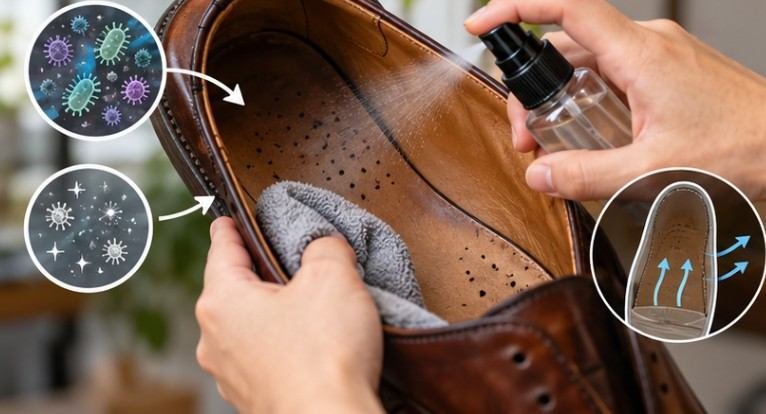
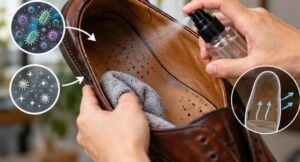
If you notice a stubborn pinch along your outer pinky toe, insert a two-way wooden shoe stretcher overnight. Spray a light mist of alcohol-free stretching fluid inside the shoe to relax the local grain fibers safely before turning the stretcher’s mechanical wheel.
Sizing Error vs. Break-In Resistance: Know When to Stop

There is an enormous difference between the natural stiffness of new calfskin and wearing the wrong shoe size entirely. Calfskin will yield horizontally across the width of the ball and mold over your instep. It will never stretch in length.
NORMAL STIFFNESS CRITICAL SIZING MISMATCH
┌──────────────────────────────┐ ┌──────────────────────────────┐
│ • Mild lateral snugness │ vs. │ • Toes touching the toe box │
│ • Firm heel lock │ │ • Heel slipping > 1/2 inch │
│ • Uniform lace vamp closure │ │ • Numbness across top arch │
└──────────────────────────────┘ └──────────────────────────────┘
Fine shoemakers like Crockett & Jones build their shoes around proprietary lasts with dedicated volume proportions. If your big toe makes hard contact with the internal toe box, or if your vamp facings overlap completely when tied, no amount of break-in will fix the fit. Swap them for the correct size before you mark the outsoles.
Costly Shortcuts That Ruin Fine Calfskin
Internet forums offer plenty of “quick hacks” for stiff leather. Most of them will permanently damage high-end footwear.
- The Hairdryer Trick: Direct heat desiccates essential oils in vegetable and chrome-tanned hides. The upper dries out, causing premature spiderweb cracks at flex zones.
- The Freezer Water Bag: Freezing bags of water inside the toe box risks catastrophic seam ruptures along the welt. Water expands unpredictably and rots interior stitching.
- Submerging in Water: Water breaks down internal water-soluble adhesives, shifts the cork footbed, and stains delicate aniline-dyed finishes.
- Skipping Rest Days: Leather needs recovery time. Never wear the same pair two days in a row; insert untreated cedar shoe trees and rest them for 24 hours to wick away sweat.
Frequently Asked Questions
1. How long does it take to fully break in calfskin dress shoes?
A proper break-in takes two to three weeks of progressive, 30-to-120-minute indoor wear sessions.
2. Can I use rubbing alcohol to stretch calfskin leather faster?
Never use rubbing alcohol on calfskin; it strips aniline dyes and dries out the leather grain.
3. Will a shoe stretcher ruin the shape of my dress shoes?
A quality wooden shoe stretcher used with gradual tension will safely widen tight areas without distorting the silhouette.
4. How do I know when my calfskin shoes are ready for the outdoors?
They are ready once you can wear them indoors for four straight hours without pinching, heat spots, or heel slip.
Walk Tall: Your Oxford Initiation Is Complete
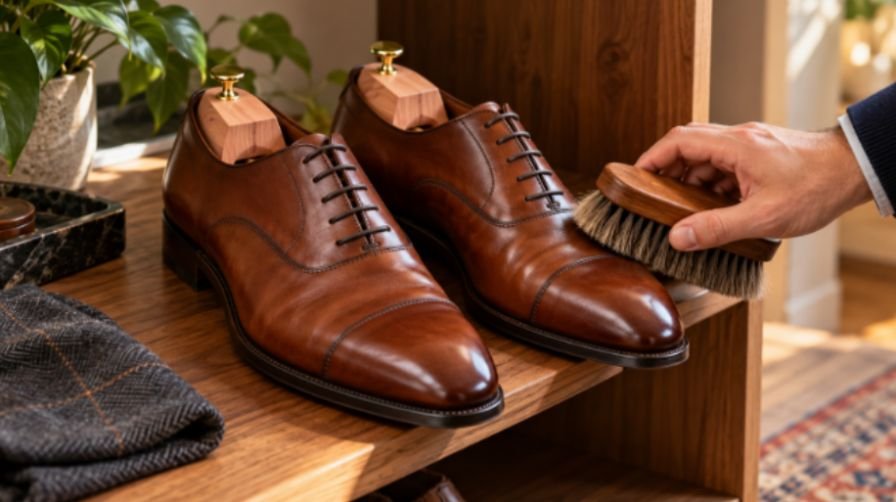
Now that you have softened the counters, rolled the vamps, and moisturized the grain, your stiff calfskin has transformed into an extension of your foot. You can proudly step outside in your men’s burgundy leather dress shoes knowing your stride is blister-free, your soles are intact, and your uppers will age beautifully for decades. Insert your cedar shoe trees tonight, give them a quick horsehair brush, and enjoy every step.