A five-day office schedule does not automatically mean you need five suits. For most American professionals, the practical answer to how many suits should a man own for work is three to five. That range gives you enough variety to avoid obvious repetition, allows wool garments to recover between wears, and provides insurance when one suit is at the cleaner or needs repairs.
The number changes dramatically, however, depending on whether you wear a suit five days a week or only for client meetings. Someone working in a conservative law firm may reasonably need seven suits. Someone in a business-casual tech office might be perfectly prepared with two.
The smarter question is not “How many suits do successful men own?” It is “How many suits does my actual work schedule require?”
The Short Answer: Match Your Suit Count to Your Workweek
Use your frequency of wear as the starting point.
| Work situation | Practical number of suits | Best approach |
| Suit required 5 days a week | 5–7+ | Build a full rotation of business colors |
| Suit worn 2–3 days a week | 3–5 | Prioritize versatile navy and gray |
| Hybrid/business-casual office | 2–3 | Add sport coats and separate trousers |
| Suit needed occasionally | 1–2 | Buy versatile, conservative options |
Five to seven suits make sense for professionals in banking, law, consulting, government relations, luxury sales, or executive positions where traditional business dress remains common.
If suits appear only during presentations, interviews, conferences, or important client meetings, buying seven is unnecessary.
Why Rotation Matters More Than Variety
Wool has natural resilience. Kansas State University guidance recommends giving wool clothing approximately 24 hours between wearings so the fibers can recover and wrinkles can relax. University of Georgia Extension makes a similar recommendation and notes wool’s natural wrinkle resistance.
That makes rotation practical rather than merely fashionable.
If you repeatedly wear the same navy suit Monday through Thursday, friction appears in predictable places: trouser seats, knees, elbows, pockets, cuffs, and jacket edges.
Three suits worn in rotation will generally handle regular use better than one expensive suit worn constantly.
For more information on wool maintenance, see Kansas State University’s Care of Wool guidance and University of Georgia Extension’s textile fiber guide.
Use This Simple Suit-Count Test
Instead of guessing, calculate your wardrobe from your schedule.

Step 1: Count Your Weekly Suit Days
Think about a normal month rather than an unusually formal week.
If you wear suits:
- five days weekly, start around five suits;
- three days weekly, three or four suits usually works;
- once weekly, two suits may be enough;
- several times yearly, one excellent suit may cover most situations.
Then consider whether unexpected meetings frequently change that schedule.
Step 2: Add One “Unavailable Suit”
Assume one suit cannot be worn.
It might be at the dry cleaner, have a loose button, need trousers pressed, or get stained during lunch.
If your wardrobe collapses whenever one suit becomes unavailable, you probably own one fewer suit than you need.
That is why a man wearing suits three days weekly may benefit from four rather than stopping at three.
Step 3: Consider Your Climate
A year-round wardrobe in Boston or Chicago may eventually need more seasonal variation than one in climate-controlled offices in Southern California.
Lightweight tropical wool works well across much of the year, while heavier flannel makes more sense in cold climates. Hot-weather professionals may also add lighter wool, cotton, or linen-blend tailoring once their core wardrobe is established.
Do not buy seasonal suits before covering your basic colors.
Build the First Four Suits in the Right Order
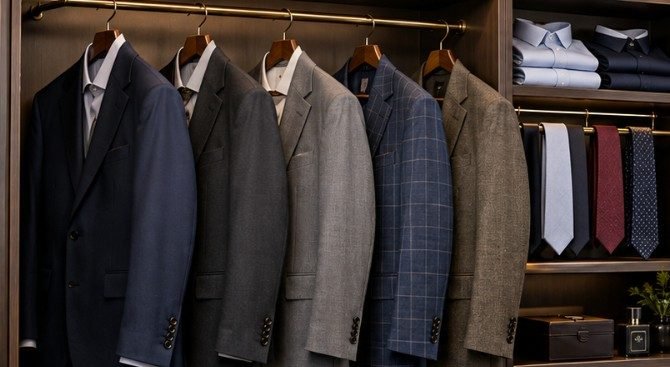
Knowing how many suits should a man own for work matters less than choosing suits that cooperate with one another. Four versatile suits can create a stronger professional wardrobe than eight highly distinctive ones.

1. Start With Navy
A dark navy single-breasted suit is difficult to beat.
It works for routine office days, interviews, conferences, business dinners, weddings, presentations, and many formal social occasions.
Pair it with white, pale blue, or lightly patterned shirts and almost any conservative business tie.
2. Add Charcoal
Charcoal is the strongest second purchase because it feels slightly more formal and serious than navy.
It works particularly well for important presentations, finance and legal environments, interviews, funerals, and evening business events.
Owning navy and charcoal already covers an enormous portion of professional life.
3. Add Mid-Gray
Your third suit should create visible variety without becoming difficult to coordinate.
Mid-gray does exactly that.
It feels lighter than charcoal, pairs easily with brown or black shoes, and works especially well during daytime meetings and warmer seasons.
4. Only Then Experiment
Once you have dependable solids, consider subtle patterns such as a restrained check, bird’s-eye weave, muted stripe, or seasonal fabric.
A memorable windowpane suit might be enjoyable, but it is a poor second suit because coworkers notice frequent repeats much faster.
Five Suits Do Not Mean Five Trips to the Cleaner
One common wardrobe mistake is assuming a suit must be professionally cleaned after every wear. It usually does not.
The American Cleaning Institute says suits can typically be worn multiple times during normal use before dry cleaning and gives a general guideline of approximately three to four wears for wool suits, although stains, sweat, odors, and working conditions can require earlier cleaning.
See its guidance on how frequently clothing needs cleaning. Between wears, empty the pockets, inspect for stains, brush away surface dirt, and place the jacket on an appropriately shaped hanger.
The Smithsonian’s textile-care guidance notes that garments stored on hangers should have adequate support and should not be crushed tightly among other clothes. You can read its textile storage recommendations here.
Most importantly, follow the garment’s label rather than applying one cleaning rule to every suit.
The Federal Trade Commission requires covered clothing sold in the US to include care instructions supported by evidence from manufacturers or importers. See the FTC’s Care Labeling Rule guidance.
Where Men Waste Money Building a Suit Wardrobe
The biggest mistake is buying quantity before understanding fit.
Five mediocre suits with pulling buttons, oversized shoulders, or trousers that pool around the shoes will not outperform two well-fitting ones.
Start with fewer suits if your budget is limited. Spend first on correct shoulder fit, sensible proportions, alterations, and versatile fabric.
Another mistake is purchasing several near-identical navy suits immediately. Rotation matters, but your wardrobe should also create visual variation.
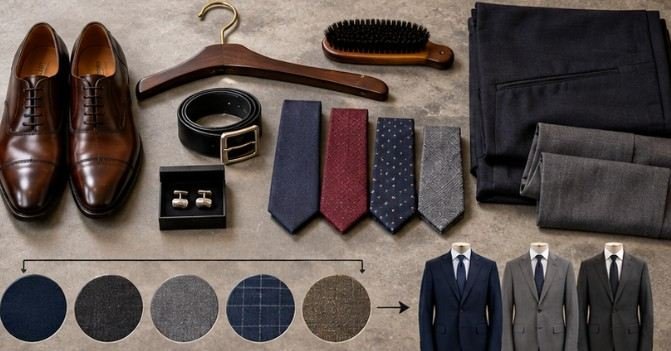
A navy, charcoal, and mid-gray trio gives significantly more flexibility than three nearly indistinguishable dark-blue suits.
Finally, do not treat a sport coat as a failed suit jacket. In a business-casual office, two suits plus two good sport coats may offer more useful combinations than five suits.
When You Actually Need Eight or Ten Suits
Some professionals genuinely benefit from a larger wardrobe.
If you wear tailored clothing every weekday, attend evening business functions, travel frequently, meet the same clients repeatedly, and operate across multiple seasons, expanding toward seven to ten suits becomes reasonable.
That is an advanced wardrobe, not a starting requirement.
The first objective should be enough rotation to keep every suit available, presentable, and appropriate.
Once five dependable suits are working hard, additional pieces can solve narrower problems: summer heat, winter weather, travel, evening events, or days when you want something less conservative.
FAQ
1. Is three suits enough for work?
Yes. Three suits can comfortably support someone wearing tailoring two or three times weekly, especially if the colors are navy, charcoal, and mid-gray.
2. Can I wear the same suit twice in one week?
Yes, but avoid consecutive days when possible. Giving wool time between wears helps wrinkles relax and allows the garment to recover.
3. What two suits should every man own?
Start with dark navy and charcoal gray. Both work across interviews, office meetings, presentations, weddings, business dinners, and many formal events.
4. Do I need five suits if I work five days a week?
Not necessarily, but five creates a convenient weekday rotation. Three or four can work if your dress schedule varies and you rotate carefully.
Your Closet Should Reflect Your Calendar
The answer to how many suits should a man own for work is rarely “as many as he can afford.” It is as many as he can regularly use, maintain, rotate, and wear confidently.
For most professionals, three to five is the sweet spot. Start with navy, charcoal, and mid-gray; then expand only when your schedule creates a real need.
A good professional wardrobe should reduce decisions rather than create them. If every Monday morning gives you several clean, appropriate, well-fitting choices, you already own enough suits.