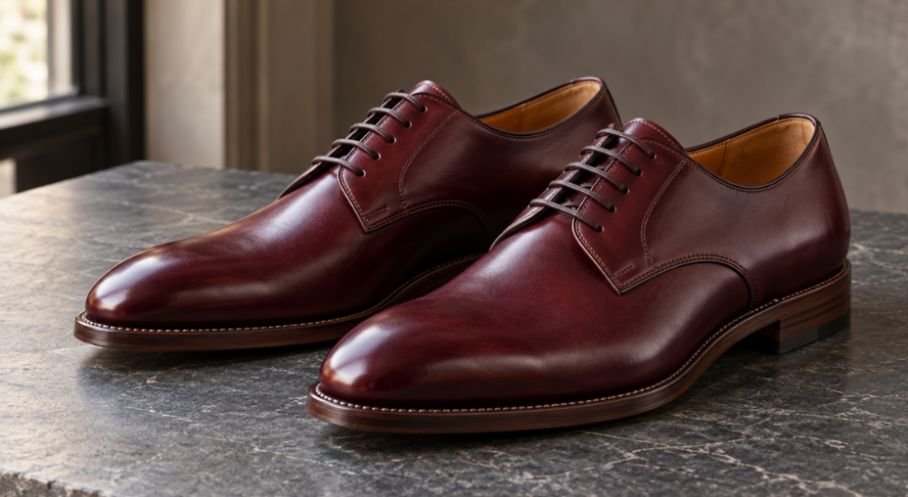
Black dress shoes are predictable, while standard walnut browns can fall flat beneath navy trousers. After years of testing tailored footwear, my go-to recommendation remains identical: men’s burgundy leather dress shoes plain toe derby. This specific configuration delivers understated gravitas without the stiffness of formal black footwear.
An open-throat plain toe cut in rich wine tones solves two persistent problems at once. It eliminates uncomfortable instep pressure for men with higher arches, and it eliminates the drabness that plagues standard corporate suiting.
Anatomy of the Plain Toe Derby: Why the Open Vamp Matters
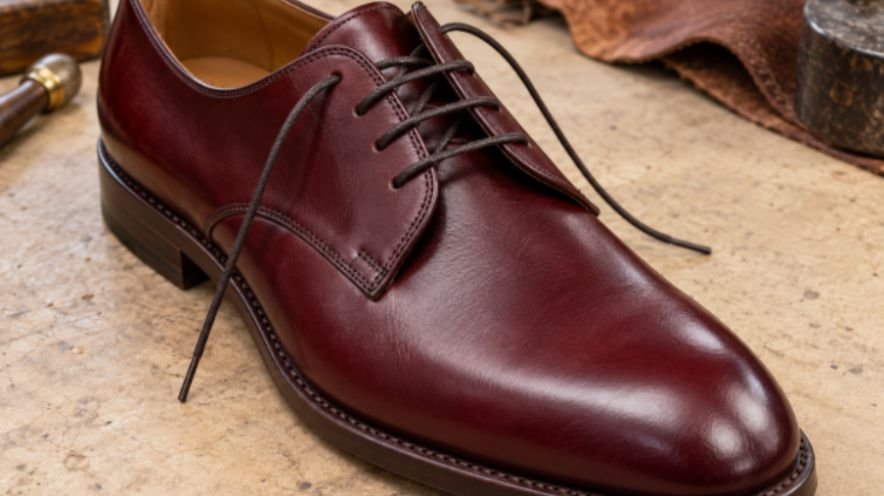
The defining feature of any derby shoe is open lacing. The quarters—the leather panels containing the lace eyelets—are stitched directly on top of the vamp.
This build differs fundamentally from closed lacing dress shoe formality, where eyelet tabs sit flush underneath the vamp. Derbies accommodate broader insteps because the facing panels spread open naturally without pinching your bridge. While oxfords enforce a rigid “V” shape across the throat that restricts swollen feet, derbies flex outward across the entire upper arch.
The clean plain toe construction keeps the shoe sleek. Omitting toe caps, medallion punch-outs, and wingtip broguing creates an unbroken sweep of leather from throat to welt. That balance prevents the shoe from feeling either too rugged or excessively stiff.
Quarters, Vamps, and Instep Volume
A plain toe design leaves the grain fully exposed to visual inspection. Without seams or perforations to conceal imperfections, manufacturers must select higher-grade hides.
The open throat design makes derbies exceptionally comfortable leather dress shoes for wide feet. When lacing up, the shoe’s throat spreads or cinches according to the natural swelling of your feet during long office hours.
Blake Stitching vs. Goodyear Welt Longevity
When selecting your pair, look past the leather finish and examine the sole attachment.
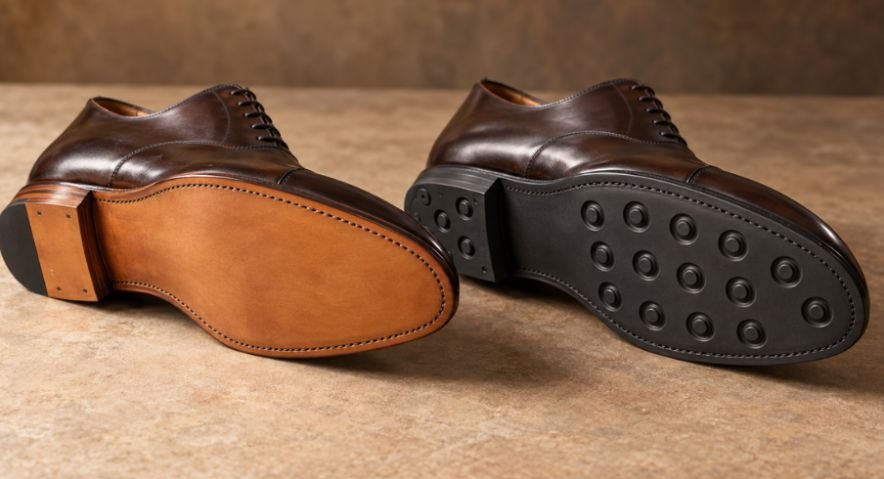
A Blake-stitched shoe loops a single thread through the insole, upper, and outsole. It produces a razor-thin profile and needs almost no break-in time. However, moisture can seep through the bottom stitch channels in wet weather.
A Goodyear welt, pioneered by shoemakers documented by heritage platforms like Bespoke England, stitches the upper to a ribbed perimeter welt before attaching the outsole. It adds weight and stiffness out of the box, yet it yields a water-resistant barrier. You can resole a Goodyear welt multiple times across a decade of use.
For a closer look at how traditional craftsmanship compares with industrial production, this guide to hand-welted bespoke leather dress shoes vs. factory-made explains the differences in construction, precision, and long-term value that can influence a dress-shoe investment.
The Deep Red Advantage: Burgundy vs. Oxblood and Bordeaux
Burgundy carries a unique visual temperature. It contains blue and purple undertones that interact differently with natural light compared to reddish-brown oxblood or deep plum bordeaux.
High-end tanneries audited by the Leather Working Group treat these leathers to preserve natural grain depth. The hue remains dark enough to read as formal under artificial office fluorescent bulbs, yet it reveals deep red depth in outdoor daylight.
[Burgundy Palette]
/ | \
[Navy Suits] [Charcoal] [Olive Chinos]
Color Theory Across Wardrobe Staples
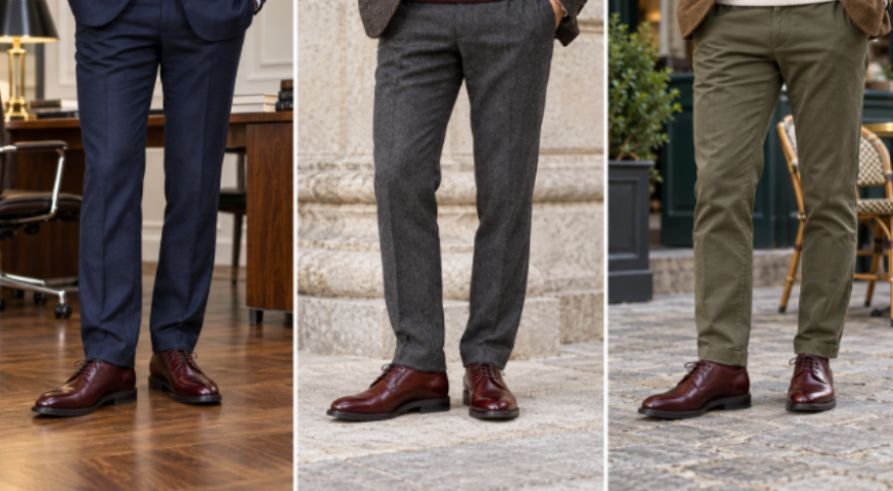
Burgundy harmonizes with virtually every trouser fabric in a modern rotation:
- Navy and Slate Blue: Navy sits directly opposite red-purple tones on the color wheel. The visual tension sharpens tailored suits without looking loud.
- Charcoal and Light Grey: Grey is neutral, meaning it absorbs surrounding shades. Burgundy brings warmth to cool wool flannels that black shoes leave sterile.
- Olive and Earth Tones: Burgundy cuts cleanly through earthy greens, khakis, and tan whipcords.
My 18-Month Wear Test: Aging and Crease Mechanics
To test how plain toe derbies age without a toe cap to hide vamp movement, I tracked two pairs over an 18-month rotation.
Pair A used 1.8mm French box calf. Pair B featured a chromexcel pull-up leather sourced from The Horween Leather Company. Both pairs walked roughly 8,000 steps weekly across pavement, carpet, and tiled transit halls.
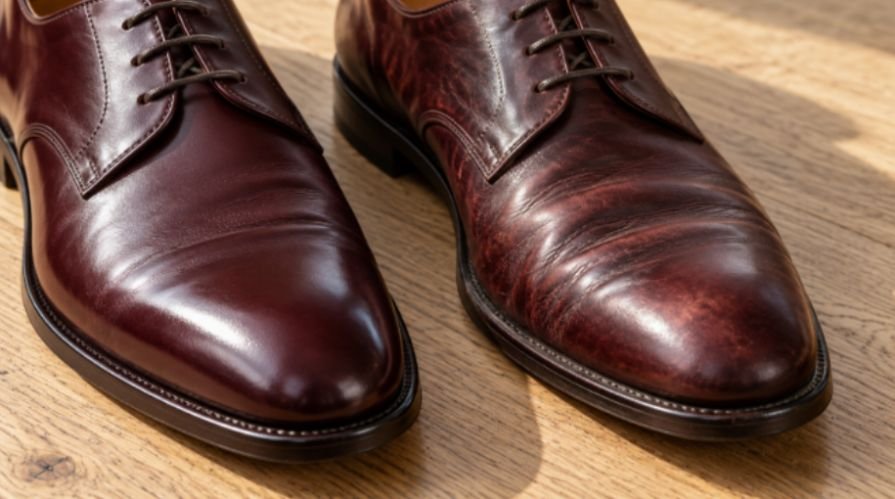
The French box calf held a mirror gloss across the stiff toe box and produced tight, hairline micro-ripples across the throat. It held a formal, uniform deep ruby tone throughout the trial, though wet weather demanded a full twenty-four hours resting on shoe trees to smooth out the grain.
The chromexcel pull-up leather broke in with soft, rolling waves rather than sharp creases. The pull-up effect created dynamic color shifts, lightening along stress points and darkening inside folds. It resisted rain effortlessly with a quick wipe down, though its rich oil saturation resisted hard mirror waxes in favor of a soft satin glow.
Because plain vamps showcase creasing clearly, inserting unfinished cedar shoe trees within ten minutes of taking your shoes off is mandatory. The cedar absorbs internal moisture and flattens out wrinkles before the leather fibers dry and set.
How to Style Burgundy Plain Toe Derbies
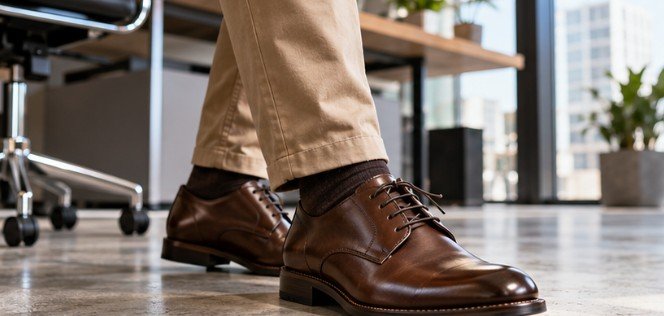
The plain toe derby transitions between formality tiers faster than almost any other shoe in a man’s closet. The absence of decorative brogue holes keeps it boardroom-ready, while the open lacing allows you to ground unconstructed casual wear.
[Black Tie] <— NEVER —> [ Burgundy Plain Toe Derby ]
[Business] <— PERFECT —> [ Navy Suits, Charcoal Flannel ]
[Smart-Cas] <— PERFECT —> [ Selvedge Denim, Khakis, Chinos ]
Executive Boardroom to Creative Business Casual
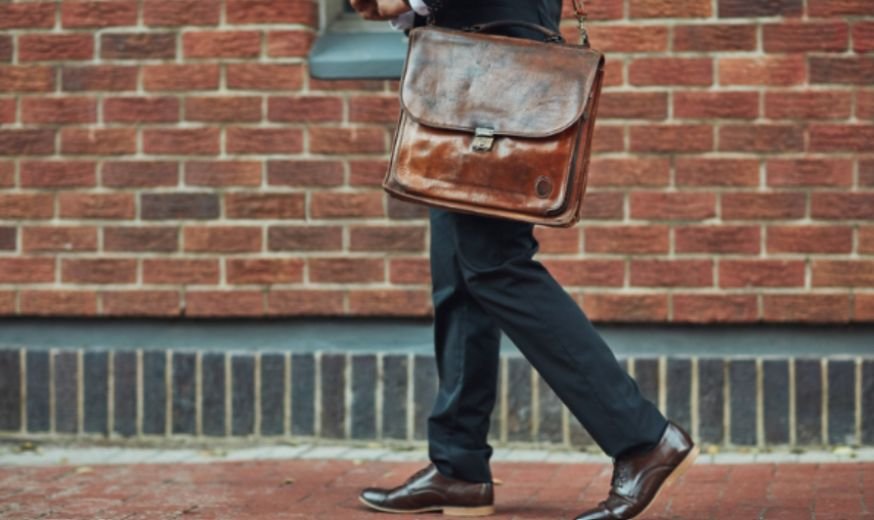
For formal business, pair your derbies with a navy two-piece worsted wool suit, a light blue poplin shirt, and a dark knit tie. The deep burgundy base complements the blue fabric while remaining fully within corporate dress codes.
For smart-casual days, swap the wool trousers for heavy 14oz indigo selvedge jeans or tapered olive chinos. Add a white Oxford cloth button-down and an unconstructed tweed or hopsack blazer. The clean plain toe maintains polish, while the derby silhouette prevents the shoes from looking out of place alongside denim.
Trouser Breaks and Hem Proportions
Plain toes expose the front third of the shoe. Avoid wide trouser cuffs that puddle over the laces.
- No-Break Hem: The trouser cuff hovers 1/4 inch above the shoe collar. This creates a continuous, sharp line down the leg directly into the clean vamp.
- Slight Break: The trouser hem rests gently on the top eyelets, forming a small indentation. This cut suits traditional corporate offices while showing off the rich patina of the leather.
Maintenance Protocol for High-Shine and Aniline Pull-Up
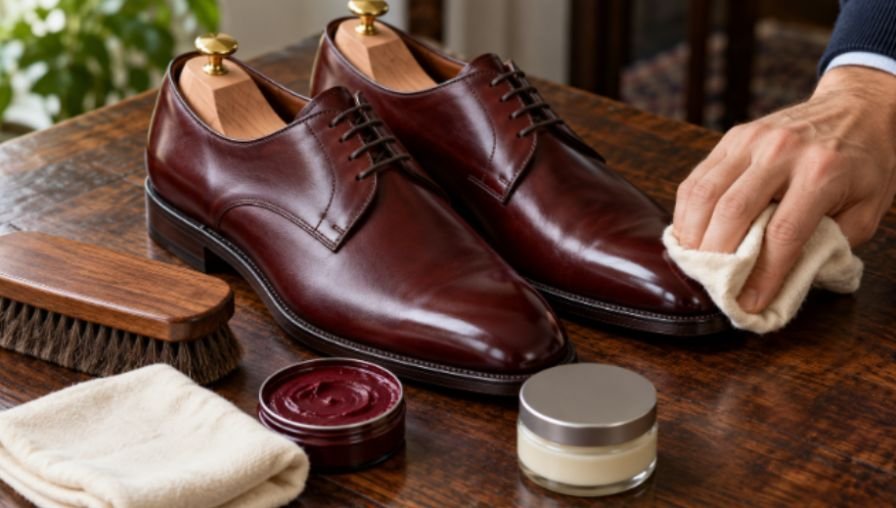
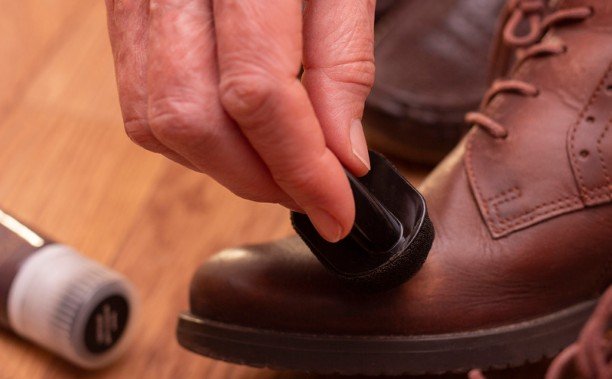
Caring for burgundy footwear requires restraint with pigmented polishes. Over-applying dark shoe creams can dull the natural red tones of the hide over time.
- Brush After Wear: Use a 100% horsehair brush to remove grit from the welt seams and vamp after every use.
- Condition Sparingly: Apply a thin layer of neutral, solvent-free leather balm every six to eight weeks. Let it sit for twenty minutes before buffing.
- Use Matching Pigment Creams: If the toe scuffs, use a cream polish matched specifically to burgundy or bordeaux rather than basic brown or black.
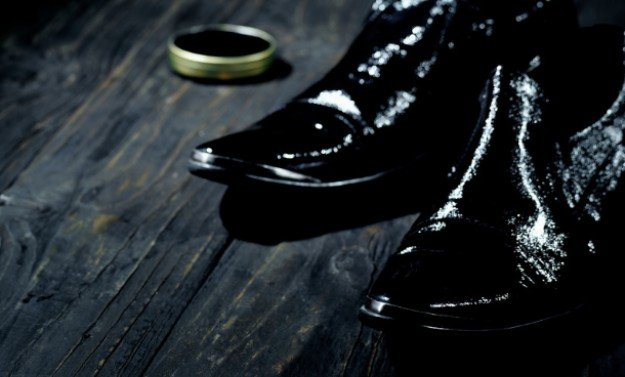
- Preserve the Toe Shine: Use hard carnauba waxes only on the non-flexing front half-inch of the toe. Never apply hard wax across the flexible vamp; it will crack into chalky white lines as you walk.
Frequently Asked Questions
1. Can I wear burgundy plain toe derbies to a black-tie event?
No, black-tie events require black patent leather or polished black calfskin oxfords and pumps.
2. How often should I condition burgundy leather dress shoes?
Condition your shoes once every two to three months, or after every ten to twelve full days of wear.
3. Do burgundy shoes pair well with black trousers?
Yes, deep burgundy pairs with black trousers by creating a subtle, high-contrast jewel tone effect.
4. What belt color should I wear with burgundy derbies?
Wear a matching burgundy or deep oxblood leather belt with simple brass or silver hardware.
Step Out of the Black-Shoe Rut
Relying entirely on black and dark brown footwear leaves most tailored outfits looking flat. A pair of men’s burgundy leather dress shoes plain toe derby introduces rich color depth without sacrificing business formality. Invest in a Goodyear-welted pair, keep a set of cedar trees in the vamps, and rotate them into your weekday suits. The leather will develop a handsome, customized patina that only gets better with every mile you put behind it.