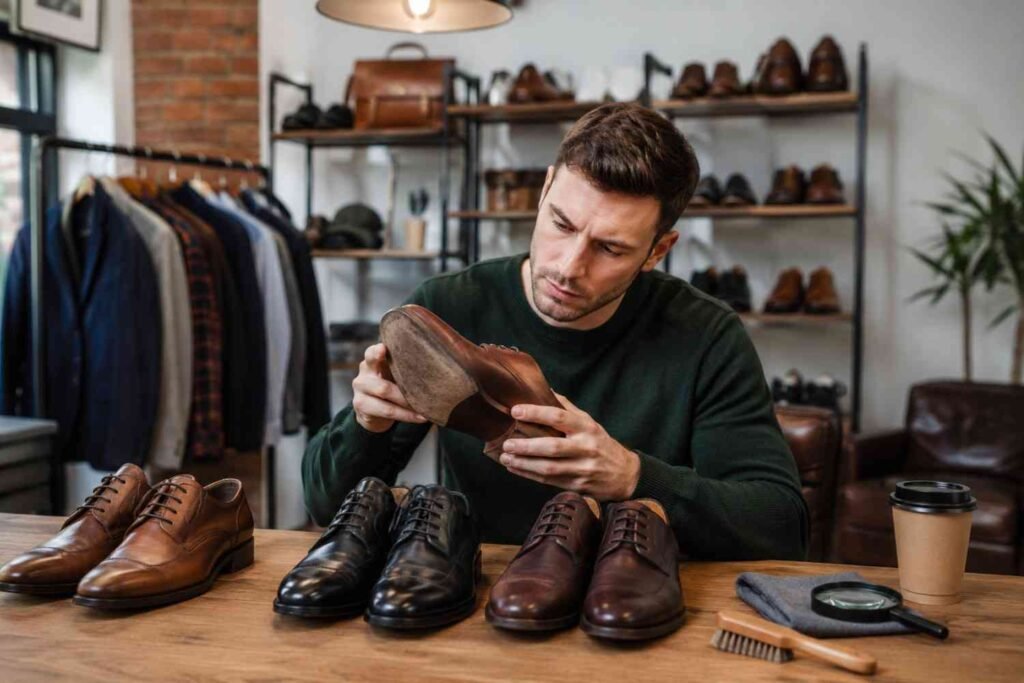
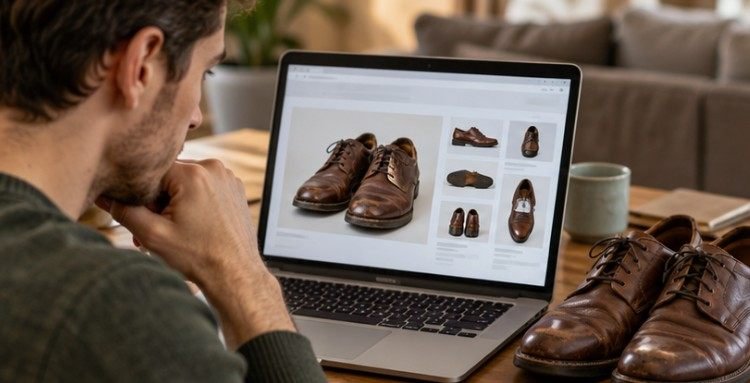
A polished upper can hide a nearly exhausted shoe. The most revealing evidence is often underneath it, behind the heel, or inside the footbed—areas sellers conveniently leave out of attractive marketplace photos.
Knowing what photos to ask for when buying used shoes online can help you spot worn-out soles, collapsed heel counters, questionable sizing, undisclosed repairs, and even listings that may not show an item the seller actually possesses. Before paying, I would rather ask for eight slightly boring photos than discover one expensive problem after delivery.
Why Listing Photos Rarely Tell the Whole Story
Used-shoe listings are designed to sell shoes, not inspect them.
A three-quarter photograph from above may show beautiful leather while concealing heel drag. A side profile may hide a worn-through outsole. Shoe trees can disguise distorted uppers, while removable insoles can cover deeply compressed footbeds.
The Federal Trade Commission advises buying from online marketplaces to examine actual-item photographs rather than relying on stock imagery and to question sellers when information is incomplete. It also recommends keeping transaction communications and understanding refund protections before purchasing. Treat the photos you request as a remote inspection.
The Eight Photos I Would Request Before Buying
You do not need dozens of images. You need photographs taken from angles that expose wear rather than hide it.
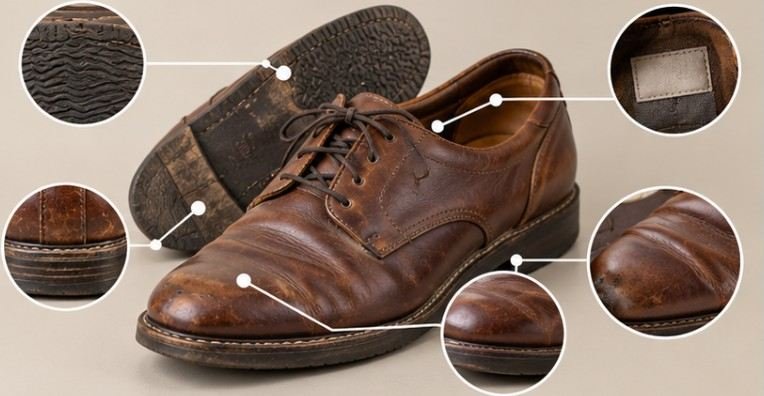
| Photo | What to inspect | Warning signs |
| Full outsoles | Tread and sole thickness | Bald areas, holes, severe heel drag |
| Both side profiles | Upper and sole junction | Cracking, separation, distorted shape |
| Toe boxes | Creasing and damage | Deep cracks, cuts, uneven collapse |
| Rear heels | Alignment and counters | Leaning, crushed heel structure |
| Footbeds/insoles | Internal wear | Deep impressions, staining, torn lining |
| Size labels | Size and product details | Missing or inconsistent information |
| Construction close-ups | Stitching and edges | Separation, loose stitches, poor repairs |
| Known flaws | Exact damage | Damage worse than listing description |
Do Not Ignore Photos Inside the Shoe
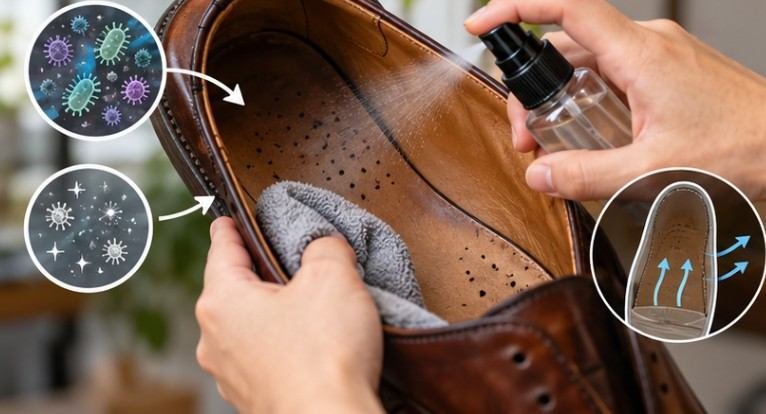
Interior photographs are often missing because taking them requires more effort. That is precisely why I ask. Request an overhead image of each footbed with removable insoles taken out when possible. Look for deep heel cups created by the former wearer, pronounced toe impressions, damaged lining, staining, exposed foam, and thinning material.
Heavy interior molding matters because your feet may not line up with the previous owner’s pressure points.
For someone buying several pairs to rotate through a professional wardrobe, condition can be more important than collecting more shoes simply because the price looks attractive. The same principle applies when deciding how many suits a man needs for work: usable quality usually matters more than raw quantity.
Photograph the Size Label, Not Just the Size in the Listing
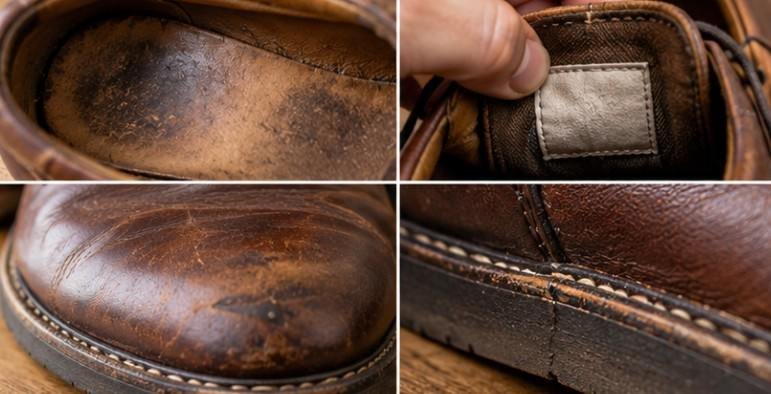
Never depend entirely on “US 10” typed into a product description. Ask for a sharp photograph of the manufacturer’s size label, tongue label, interior stamp, or printed model code.
This can confirm width, regional sizing, model information, manufacturing identifiers, and other details the seller may have entered incorrectly.
For collectible sneakers and expensive branded footwear, labels also provide another point to compare against known authentic examples.
Counterfeiting is a genuine online-marketplace concern. The U.S. Patent and Trademark Office explains information about counterfeit goods using brands or marks to mislead buyers into believing goods are genuine.
A label photograph alone cannot authenticate a shoe, but refusing to provide one is useful information.
Ask Sellers to Photograph Every Disclosed Flaw
“Minor wear” is almost meaningless without scale.
Ask the seller to photograph every stain, scrape, loose stitch, repaired area, tear, crack, or separated edge closely. For expensive footwear, request one wider photograph showing where that defect sits on the shoe.
That prevents a macro close-up from making tiny damage look catastrophic—or a distant photograph from making serious damage disappear.
Research from San Jose State University examining footwear tread wear also demonstrates an important principle: outsole wear develops as material and tread are progressively lost with use. San Jose State Photos should therefore show enough detail to judge actual material loss, not merely dirt.
For Expensive Shoes, Request a Timestamped Ownership Photo
If the shoes are rare, heavily counterfeited, or unusually expensive, ask for one additional image.
Have the seller place the shoes beside a handwritten note containing their marketplace username and the current date.
This does not prove authenticity. It does help demonstrate that the seller can produce a new photograph of the particular pair being offered.
Be cautious if the seller repeatedly avoids simple custom-photo requests while pressuring you to pay quickly.
The FTC also warns buyers not to leave marketplace payment systems when doing so sacrifices platform protections.
A 60-Second Photo Check Before Paying
Before completing the purchase, compare both shoes against each other rather than evaluating each photograph separately.
Check whether heel wear is roughly comparable, both toe boxes have similar structure, the soles appear equally worn, stitching follows the same pattern, labels are consistent, and the photographed flaws match the written description.
Then save the listing and your seller messages.
Photos cannot tell you whether a shoe smells, feels comfortable, fits your exact foot shape, or contains hidden deterioration beneath inaccessible layers. That is why a reasonable return policy remains valuable even after a careful visual inspection.
Frequently Asked Questions
1. What photos to ask for when buying used shoes online?
Request outsoles, both side profiles, toe boxes, rear heels, interiors, size labels, construction details, and close-ups of flaws. For valuable shoes, request a timestamped ownership photo too.
2. Can outsole photos tell how worn used shoes are?
They can reveal tread loss, heel drag, holes, thinning and uneven wear. However, photographs cannot reliably show every internal cushioning or structural problem.
3. Should I buy used shoes if the seller refuses extra photos?
Usually, I would move on. A reasonable seller should be able to provide basic condition photographs, especially when the existing listing omits important wear areas.
4. Can photos prove that designer or collectible shoes are authentic?
Not conclusively. Detailed labels, stitching, construction and ownership photos help, but sophisticated counterfeits may require professional authentication or a marketplace authentication program.
Final Take
The best used-shoe photographs are rarely the prettiest ones. They are the unflattering images of the sole, heel, lining, label, seams, and damage that show what you are actually paying for.
A seller’s willingness to provide those photographs is useful evidence in itself. Before sending money, build a visual record that lets you judge wear, compare both shoes, verify basic product details, and document the seller’s description. Ten extra minutes spent requesting the right images can separate an excellent secondhand bargain from a pair that arrives needing immediate repair—or one that should never have been purchased.