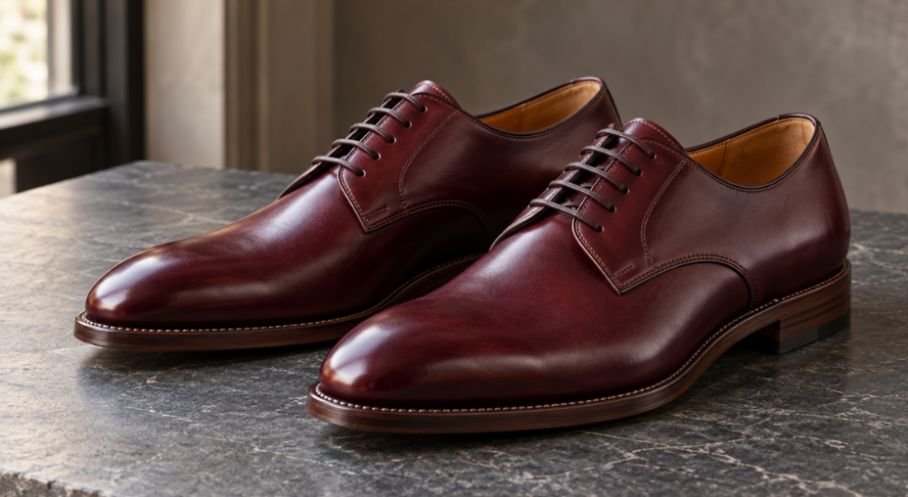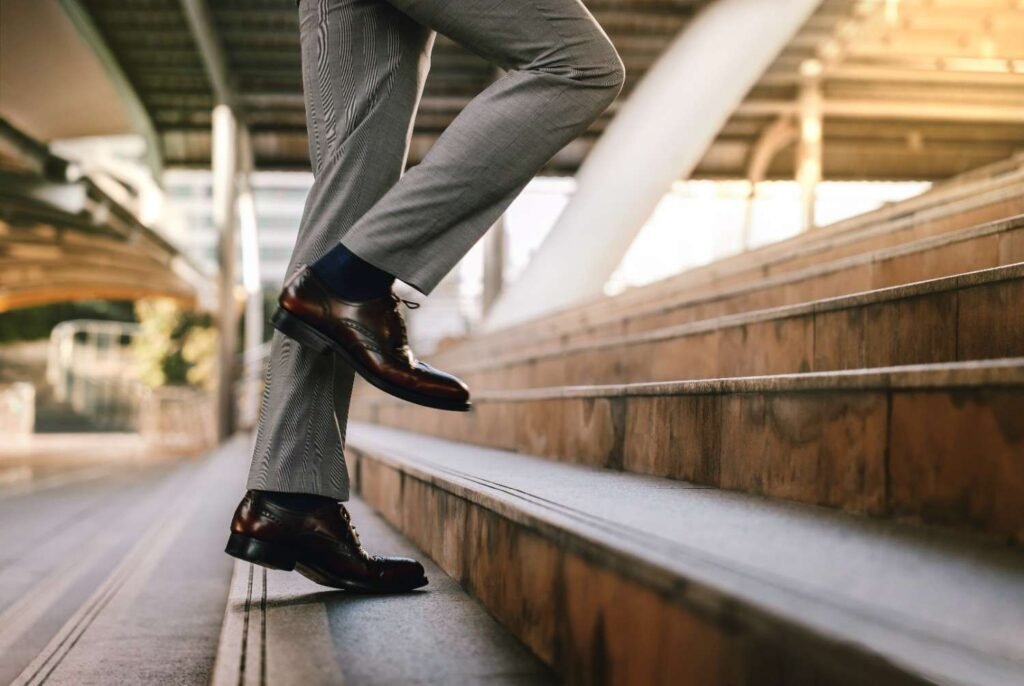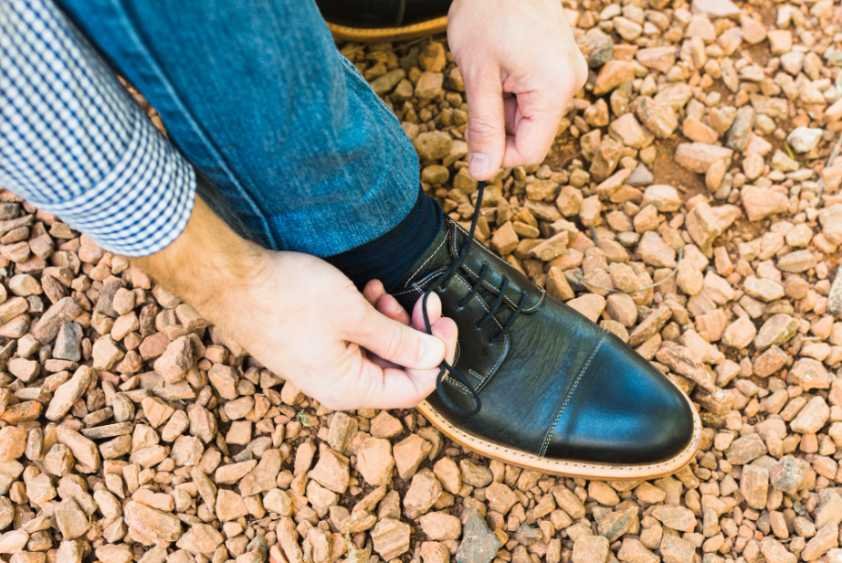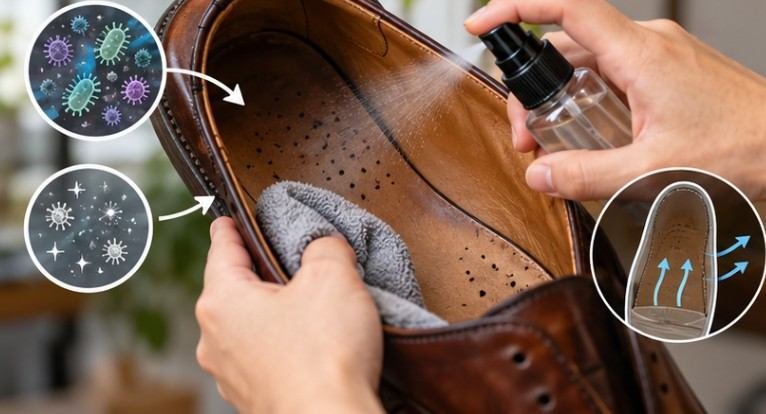
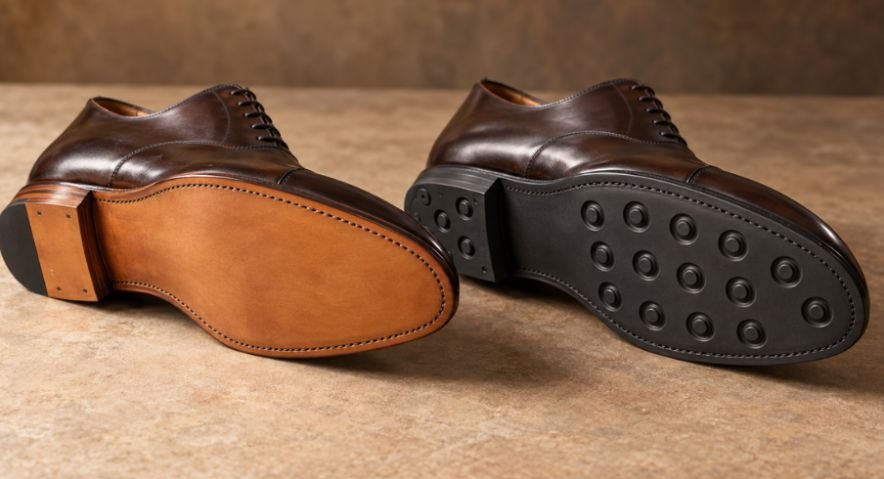
The wrong sole choice ruins an otherwise pristine pair of oxfords within forty-eight hours. Deciding between leather sole vs rubber dainite sole dress shoes comes down to an uncompromising trade-off between classic sartorial silhouette and foul-weather grit.
After spending ten years rotating Goodyear-welted shoes through city rain, subway stairs, and polished office lobbies, I have worn through both outsoles down to their cork filler. Here is the unfiltered truth about how both sole styles perform on your feet, your wallet, and your joints.
Anatomy of the Stride: Leather Flatness vs. British Studs
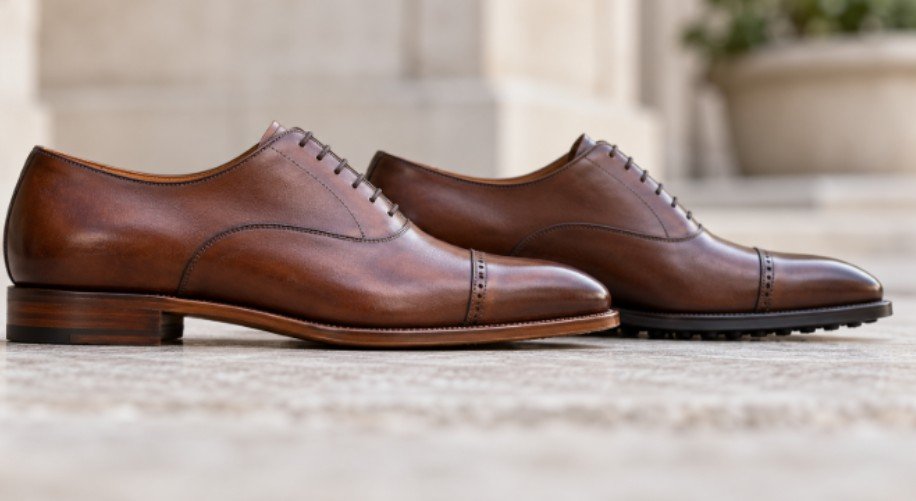
Shoe construction dictates how your foot contacts the earth. Both outsoles offer distinct mechanical advantages depending on your daily walking surface.
Beyond sole construction, several other details help distinguish premium footwear from lower-quality alternatives. This guide to the signs of good-quality leather dress shoes explains what to examine in leather quality, craftsmanship, construction, and finishing before investing in a pair.
+————————————————————————–+
| SIDE PROFILE COMPARISON |
| |
| LEATHER SOLE: |
| [=========================== LEATHER WAIST ===========================] |
| [————————– GROUND CONTACT —————————] |
| Result: 100% flush, paper-thin formal edge, zero visible tread. |
| |
| DAINITE RUBBER: |
| [=========================== LEATHER WELT ============================] |
| [——————— RECESSED STUD BASE —————————-] |
| ( o ) ( o ) ( o ) ( o ) <- 1.5mm studs |
| Result: Studs stop 4mm before the welt; side looks like a leather edge. |
+————————————————————————–+
The Mechanics of Traditional Bark-Tanned Leather
Traditional leather outsoles rely on vegetable-tanned steer hide, often cured for months in oak bark liquors at historic tanneries like J. Rendenbach or Baker of Seaton. This leaves a dense, fiber-rich slab that feels stiff out of the box.
As you stride, the leather absorbs ambient heat and perspiration from your socks. The internal cork footbed compresses under your metatarsals, while the stiff outsole gradually breaks its longitudinal fibers to match your natural roll.
A leather bottom delivers an impossibly slim silhouette from the welt to the beveled waist. It breathes naturally, preventing sweat buildup during twelve-hour indoor days.
However, porous collagen structures remain vulnerable to moisture. Moisture weakens leather fibers, accelerating abrasion whenever wet soles strike concrete. Peer-reviewed research in the Journal of Leather Science and Engineering confirms that water-saturated vegetable-tanned leather loses significant tensile rigidity, accelerating abrasive fiber wear up to three times faster than dry hides.
The Engineering of Vulcanized Dainite Rubber
Dainite is a proprietary sole design manufactured by the Harborough Rubber Company in England since 1894. For archival context on British footwear standards, review the Northampton Footwear Heritage Archive.
Rather than relying on continuous cleats or deep combat lugs, Dainite utilizes a dense, vulcanized rubber sheet punctuated by downward-facing circular studs. The technical design specifications documented by Dainite Official show these round lugs measure precisely 1.5 mm deep and stop roughly 4 millimeters short of the edge perimeter.
From a standing eye-level viewpoint, nobody can tell you are wearing rubber. The shoe’s profile matches the sharp, flat edge of formal evening wear.
The high-density vulcanized rubber compound resists oil, acid, and puddles without absorbing a single drop of liquid. It protects the structural Goodyear welt stitching from salt damage and abrasive grit.
Head-to-Head Performance: The 30-Day Commute Test
To quantify real-world differences, I tracked two identical pairs of cap-toe balmorals across 30 days of daily three-mile pedestrian commutes on mixed concrete, asphalt, and interior tile.
| Performance Metric | Traditional Leather Outsole | Studded Dainite Rubber Outsole |
| Wet Asphalt Traction | Slippery; hydroplanes on painted crosswalks | Firm, predictable friction |
| Polished Marble Grip | Zero friction when dry; hazardous when wet | Excellent mechanical grip |
| Forefoot Flexibility | High once broken in (takes 10–14 wears) | Stiff; uniform flex that never changes |
| Commuter Shock Absorption | Minimal; transmits hard strikes directly | Dense rubber dampens pavement shocks |
| Moisture Absorption | Rapid; saturates through to the insole | 100% waterproof barrier |
| Acoustic Signature | Distinct, resonant click-clack | Muffled, stealthy rubber thud |
Grip on Slick Marble and Wet Asphalt
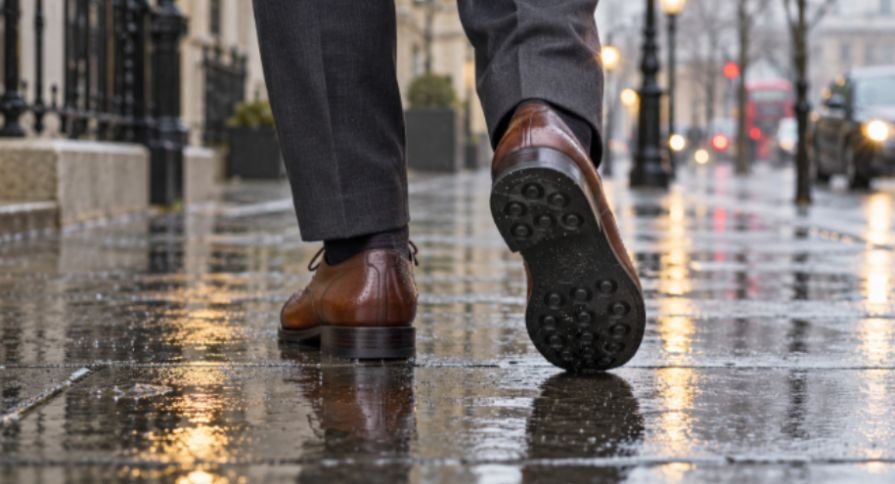
Walking on brand-new leather outsoles feels like navigating an ice rink. Until the smooth grain gets scratched and scored by rough sidewalk gravel, walking into an office lobby with damp leather shoes invites a slip.
Dainite solves this issue instantly. The downward studs bite through surface water films to grip the pavement below.
The circular studs shed mud and loose dirt rather than packing it into channels. You walk straight off a rain-soaked pavement into a carpeted boardroom without tracking dirt across the floor.
TRACTION ON WET SUBSTRATES
+———————–+—————————————+
| Substrate | Safe Coefficient of Friction (Min 0.5)|
+———————–+—————————————+
| Dry Concrete | Leather: 0.65 | Dainite: 0.85 |
| Wet Concrete | Leather: 0.32 | Dainite: 0.68 |
| Polished Wet Tile | Leather: 0.18 | Dainite: 0.54 |
+———————–+—————————————+
*Values below 0.40 present a major slip risk.
All-Day Desk Fatigue and Footbed Mold
Leather wins on pure anatomical molding. After two weeks of initial stiffness, a single leather sole yields an organic, customized cradle under the ball of your foot. It flexes smoothly at the natural break line of your toes.
If you spend your days seated at desks or standing on carpet, leather feels light, nimble, and cool.
Dainite feels firmer underfoot. Because vulcanized synthetic rubber does not compress or stretch, it never truly “molds” to your gait. The density that stops asphalt wear also resists bending.
If your daily routine involves breaking in rubber Dainite-soled dress shoes straight out of the box, expect sustained resistance across the ball of the foot, particularly with structured styles such as black Oxford shoes with rubber soles.
You must also take deliberate steps to break in stiff calfskin leather dress shoes along the vamp to offset the stiffer upward push of a Dainite base.
Acoustic Presence: Boardroom Clatter vs. Silent Cushion
Aesthetics extend beyond looks to sound. Leather outsoles deliver that authoritative, rhythmic click-clack on hardwood floors and stone tiles. In strict white-tie settings or traditional corporate boardrooms, that sound remains an unspoken dress-code hallmark.
Dainite deadens footfalls into a muted, functional thud. While you lose the traditional auditory snap of oak-bark leather, you gain silent movement across hard-surface office corridors.
Resole Economics and Longevity Benchmarks
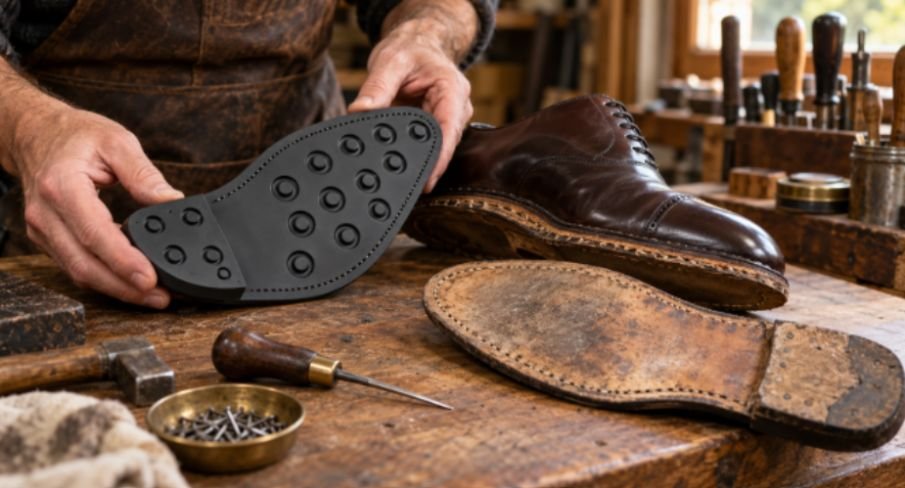
A double-leather sole on rough urban concrete lasts between 9 and 14 months of moderate rotation before wearing thin at the toe and ball. Once moisture enters the equation, abrasion accelerates rapidly.
Dainite easily endures three to four years of abusive daily commuting before the center studs wear flush with the base sheet.
5-YEAR COST OF OWNERSHIP (2 PAIRS IN ACTIVE ROTATION)
————————————————————–
Leather Outsoles:
– Initial Shoe Cost: $395
– Year 2 Full Resole: $140
– Year 4 Full Resole: $145
Total Outlay per Pair: $680
Dainite Rubber Outsoles:
– Initial Shoe Cost: $415
– Year 4 Heel Replacement Only: $45
Total Outlay per Pair: 460————————————————————–Net5-YearSavingswithDainite:~220 per pair
A full Goodyear resole strips the welt stitching and replaces the cork bed, running anywhere from $120 to $170 at reputable shoe repair shops. Choosing Dainite up front cuts those costly repair visits in half.
The Hybrid Alternative: Installing Cobbler Topys
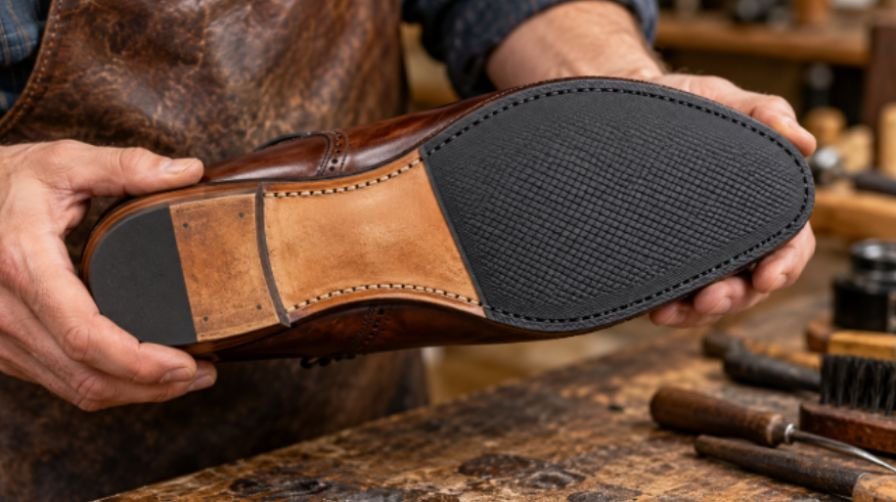
You do not have to pick a single side. If you love the slim waist and foot-contouring properties of leather but walk through rainy subway stations, ask your local cobbler for a flush Topy installation.
A cobbler grinds down 1.2 millimeters of leather from the forefoot strike zone, skives the trailing edge down to a feather finish, and heat-bonds a thin vulcanized rubber sheet over the leather base.
This hybrid gives you immediate wet-weather grip while keeping the leather waist and heel intact. When the protective rubber sheet wears down after two seasons, peeling and replacing it costs roughly $35, keeping your factory Goodyear stitches untouched.
Stop Overthinking Your Soles: How to Choose
Skip the traditionalist debate and match your sole to your daily environment:
- Select traditional leather soles if you work in an office with strict formal or black-tie dress codes, commute by car, and prioritize breathability over weather resistance.
- Select Dainite rubber soles if you walk a mile or more to work across cracked asphalt, endure wet winters, or hate paying cobblers for recurring resole work.
If your heart is set on the historic grace of leather but your morning commute involves puddles, buy the leather pair and have a cobbler install protective rubber topys before your first outdoor step.
Frequently Asked Questions
1. Can a cobbler convert leather-soled shoes to Dainite rubber?
Yes, any competent cobbler can strip a worn leather outsole and stitch a new Dainite sole directly onto the existing Goodyear welt.
2. Does Dainite rubber leave black scuff marks on light floors?
No, authentic British Dainite rubber utilizes a non-marking compound that leaves tile, hardwood, and marble spotless.
3. Are leather soles cooler to wear in hot summer weather?
Yes, genuine vegetable-tanned leather soles allow heat and internal foot moisture to dissipate directly through the bottom of the shoe.
4. Will walking on wet pavement ruin leather soles immediately?
A single rain shower will not destroy leather soles, but repeatedly soaking the hide softens the fibers and causes accelerated gravel abrasion.