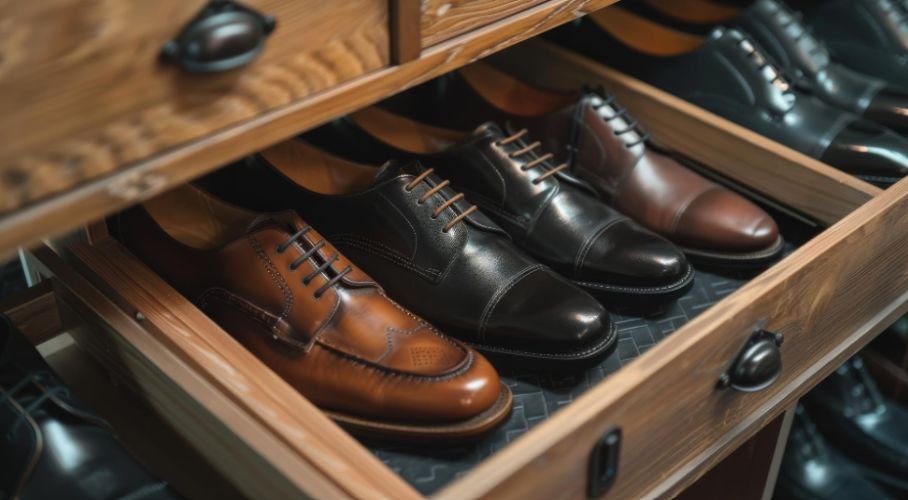
The place beside the front door might seem harmless, but it can leave good dress shoes crowded, dusty, and slow to dry. When I think about how to store leather dress shoes between wears, I focus on what happens after they come off: removing dirt, supporting their shape, and giving moisture somewhere to escape.
You do not need an elaborate shoe cabinet. A suitable brush, correctly fitted shoe trees, and a ventilated shelf cover most everyday needs. The important part is knowing when to leave shoes exposed to airflow and when protective storage makes sense.
1. What Should You Do Immediately After Removing Dress Shoes?
Loosen the laces before taking off Oxfords or Derbies instead of forcing your heel through a tight opening. Avoid stepping on the heel counter to pull the shoe off.
Give smooth leather uppers a gentle brushing with a clean horsehair brush. Remove loose grit around the welt and sole edges, where debris can collect.
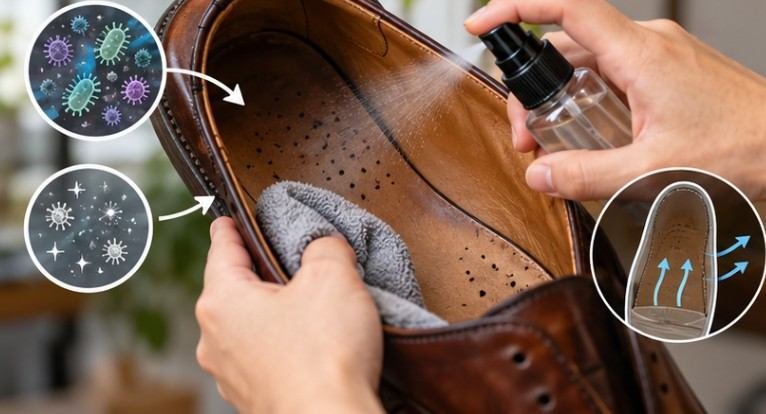
While brushing removes dirt from the exterior, the lining also needs occasional attention to prevent sweat and residue from accumulating inside frequently worn footwear. Learn how to clean the inside of leather dress shoes to maintain a fresher interior without exposing the leather to excessive moisture or unsuitable cleaning products.
If the shoes have muddy splashes or winter road-salt residue, follow the manufacturer’s cleaning instructions before storage. Avoid scrubbing delicate finishes or assuming every leather shoe tolerates the same cleaner.
Should You Polish Shoes After Every Wear?
Usually, no. Daily storage does not require fresh conditioner or wax polish. Apply suitable products when the leather or finish needs attention, rather than building up layers after every outing.
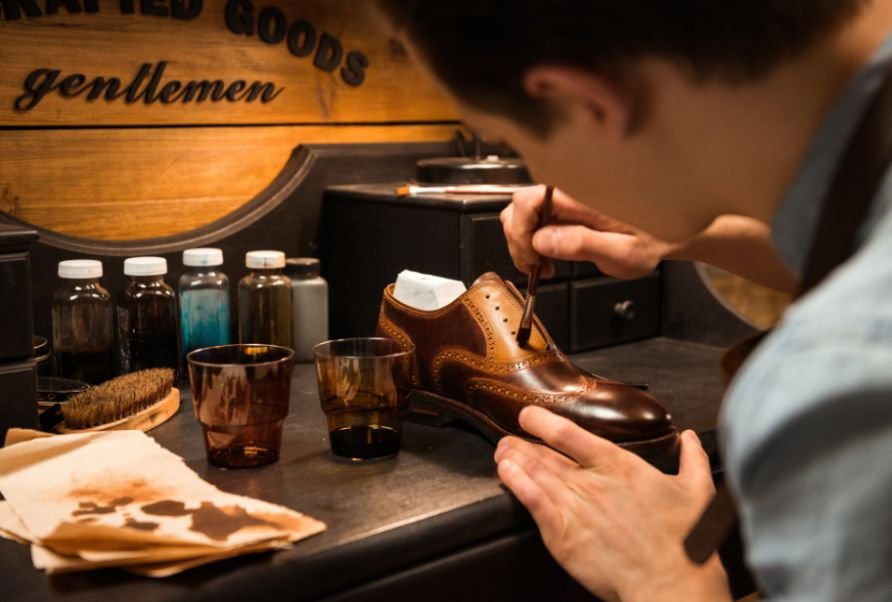
Although polishing after every wear is unnecessary, occasional attention to the leather’s finish can help preserve a well-maintained appearance. If your dress shoes begin to look dull or develop uneven pigmentation, learn how to restore faded color on leather dress shoes to refresh their color with suitable products and careful application.
2. Should You Insert Shoe Trees After Each Wear?
For normally worn, structured leather shoes, correctly fitted shoe trees help support the uppers while the pair rests. Unfinished cedar is a useful option because it can absorb some residual moisture.
However, shoe trees cannot replace ventilation, eliminate established creases, or repair cracked leather. Their main purpose is maintaining shape without stretching the shoe.
How Can You Tell Whether Shoe Trees Fit Correctly?
Insert the toe section first, then gently position the heel block. The tree should support the shoe without making the vamp bulge or pushing the heel counter outward.
Match the tree to the shoe’s width, toe shape, and internal volume. A labeled size alone does not guarantee a good fit. Reduce the size or tension if insertion requires force.
3. How Long Should Shoes Rest Before You Wear Them Again?
Allowing roughly a full day of rest is a useful starting point, but actual drying time depends on perspiration, weather, construction, and room conditions.
Check the lining before wearing the pair again. If it still feels damp, give it longer. Rotating two pairs makes this easier without requiring a large collection.
Understanding how to store leather dress shoes between wears means treating dryness as the goal, rather than assuming a fixed number of hours always works.
What Changes When Shoes Are Soaked?
Blot excess water gently and follow the maker’s drying advice. Loose, plain absorbent paper can help support the shape; replace it when damp. Avoid forcing tensioned trees into saturated shoes, and never speed drying with a radiator, hair dryer, or heating vent.
4. Is an Open Rack Better Than a Shoe Box?
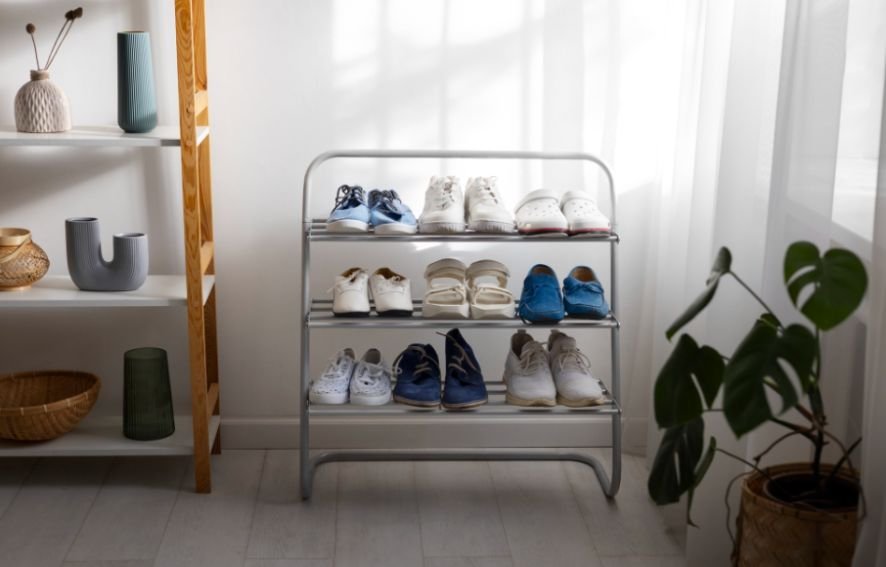
An open shelf or ventilated rack works well for frequently worn pairs because air can circulate around them. Place shoes sole-down, with enough space that neighboring pairs do not press against the uppers.
Avoid stacking footwear or wedging dress shoes beneath heavy boots. Internal support does little to prevent damage from outside pressure.
Original cardboard boxes and breathable cotton dust bags are useful once shoes are completely dry. They protect occasional-wear pairs from dust and rubbing. Avoid putting freshly worn, damp shoes straight into sealed plastic containers.
5. Where Should You Keep Leather Shoes at Home?
Choose a stable indoor location away from direct sunlight, heaters, and damp walls. A bedroom closet shelf generally offers more consistent conditions than a garage, attic, or basement.
A closed shoe cabinet needs ventilation, particularly when it holds several recently worn pairs. Leave damp footwear outside it until dry.
In humid conditions, monitor the storage area rather than relying entirely on cedar. A suitable room dehumidifier or maintained desiccant packets may help, but neither substitutes for drying shoes before enclosing them.
6. What If You Do Not Own Shoe Trees?
Loosely placed, plain acid-free tissue can provide temporary shape support. Avoid packing it tightly or using printed newspaper that could transfer ink to damp linings.
Paper does not offer the same reusable support as a well-fitting tree, but it is preferable to crushing an unsupported pair beneath other shoes.
For brittle vintage leather or unusually delicate footwear, gentle stuffing may be more appropriate than spring-loaded inserts. Follow material-specific care guidance.
7. Which Storage Habits Help Prevent Persistent Odor?
Let the interiors dry, rotate pairs, and keep the storage space clean. Remove removable insoles only when the manufacturer permits it.
If unpleasant smells remain after the shoes have dried thoroughly, the interior may need more targeted attention. Learning how to remove odors from leather shoes can help you address lingering smells while choosing cleaning methods that are appropriate for leather linings.
Avoid masking dampness with repeated fragrance sprays or pouring powders into leather-lined shoes. Persistent odor deserves appropriate interior cleaning, while visible mold calls for isolating the pair and obtaining suitable cleaning advice.
Frequently Asked Questions
1. What is the simplest routine for how to store leather dress shoes between wears?
Brush away loose dirt, check for dampness, use correctly fitted shape support, and place the pair on a ventilated shelf away from heat.
2. Can shoe trees stay inside until the next wear?
Yes, properly fitted trees can remain in dry leather shoes between wears. Check that they exert gentle support without distortion.
3. Should I put shoes into dust bags immediately?
Let them dry first. Dust bags protect clean, dry footwear but should not replace post-wear airflow.
4. Will shoe trees remove existing creases?
They may soften the appearance of some folds by supporting the upper, but normal wear creases remain.
My Final Take
I would prioritize a simple routine I can repeat: brush away dirt, check for moisture, support the shape, and leave enough breathing room. Good storage protects the care already invested in a pair without requiring another product after every wear.
I would also choose the storage location carefully. A ventilated shelf away from sunlight and heating vents offers a practical place for everyday pairs to rest. For shoes I wear less often, I would wait until they are completely dry before placing them in breathable dust bags or their original boxes.