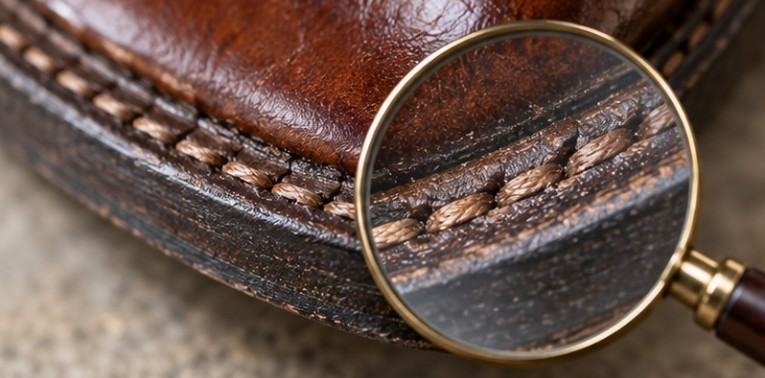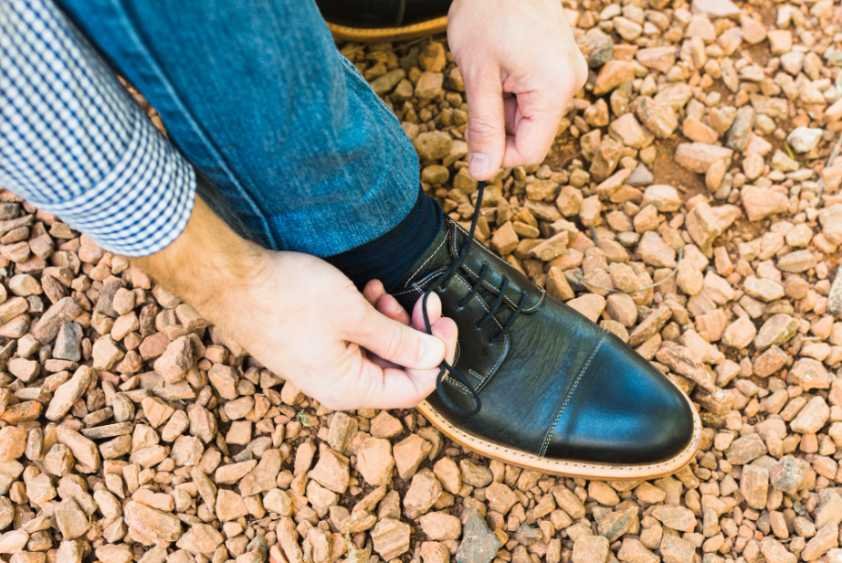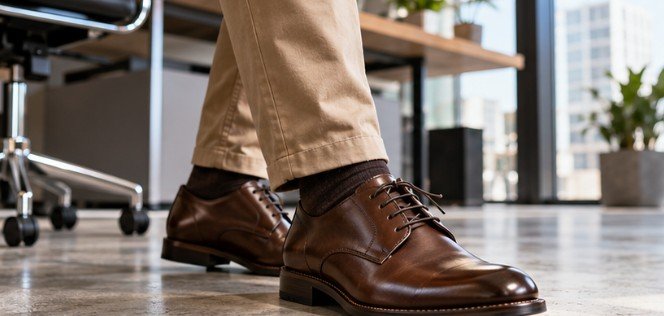
A 50-year-old pair of dress shoes can be a better buy than a nearly new pair—and sometimes by a wide margin. Older premium shoes were often built with substantial leather soles, replaceable welts, full leather linings, and uppers that can survive decades if they were stored properly.
But age can also hide brittle leather, weakened stitching, compressed insoles, and expensive repairs. That is why this vintage dress shoes buying guide focuses less on how attractive a pair looks in photographs and more on whether it still has a useful life ahead.
The goal is not simply to find old shoes. It is to recognize old shoes that remain structurally worth owning.
Why Vintage Dress Shoes Can Be Exceptional Value
The strongest argument for buying vintage footwear is construction.
Collector resource Vcleat notes that manufacturers such as Florsheim, Hanover, Johnston & Murphy, Alden, and Allen Edmonds produced premium lines distinguished from their cheaper shoes by better materials and construction. Florsheim Imperial, Hanover LB Sheppard, and Johnston & Murphy Aristocraft are particularly well-known examples.
A vintage Florsheim Imperial 93605, for example, used an all-leather construction, full leather lining, double leather sole, and heavily built heel. Models such as these demonstrate why judging a shoe by brand alone is insufficient: the specific product line and era matter.
Well-made vintage footwear can also be rebuilt. Goodyear-welted shoes are especially desirable because a cobbler can replace worn soles without routinely destroying the upper.
A low-priced cemented shoe with failing adhesive, by comparison, may offer little economic justification for restoration.
Start With the Leather, Not the Shine
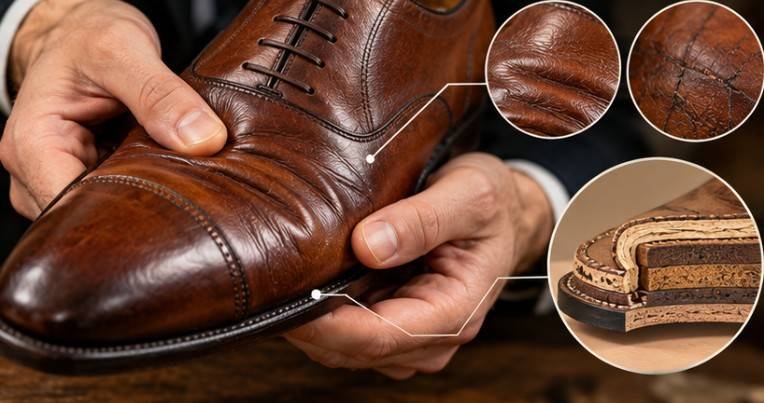
A seller can polish a tired shoe until it photographs beautifully. Polish cannot restore broken leather fibers. Look closely at the vamp—the section that bends behind the toe cap. Fine creasing is normal. Deep cracks that open when the shoe flexes are far more concerning.
Also inspect the quarters near the heel, the lace area, and edges where the upper joins the welt.
Surface scuffs, faded color, small scratches, and uneven polish are usually manageable cosmetic problems. If you encounter haziness after restoration, understanding why leather shoes can look cloudy after polishing can help distinguish residue from more serious deterioration. Do not assume that dry leather simply needs large amounts of oil.
The National Park Service reports that routine applications of leather dressings are no longer considered best practice for historic collection objects because repeated treatments can contribute to darkening, deterioration, and fatty deposits. Functional shoes are different from museum artifacts, but the lesson remains useful: aggressive conditioning is not a substitute for sound leather.
Read the Soles Like an Odometer
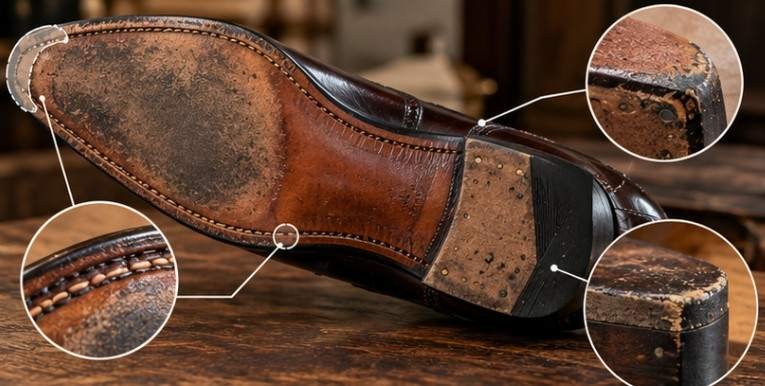
Turn the shoes over before becoming attached to the uppers. Leather soles reveal a surprising amount about previous use. Collector guidance from Shoegazing recommends examining the sole as well as wear around the heel and toe because these areas provide clues about how much walking a pair has actually seen.
On leather soles, press gently near the ball of the foot. A reasonably firm sole may have usable life remaining. A soft, excessively flexible, paper-thin, or spongy area suggests substantial deterioration or wear.
Then inspect the heel. If one outside corner is dramatically lower than the other, the previous owner’s gait has worn it unevenly. Mild heel wear is routine cobbler work. Severe wear extending into the heel stack adds cost.
Toe wear matters too. Someone who heavily scuffs the front of the shoe may have worn through considerably more sole material than listing photos initially suggest.
Use a Three-Level Condition Test
A simple grading system makes online buying much easier.
| Condition | What You See | Buying Decision |
| Green light | Firm upper, light creasing, solid sole, moderate heel wear | Strong candidate |
| Yellow light | Dryness, worn heel lift, thin sole, stains or interior wear | Buy only if repair cost is reflected in price |
| Red light | Deep cracks, crumbling sole, split welt, distorted upper | Usually skip |
The important distinction is between cosmetic wear and structural failure.
Cream polish can improve faded leather. A cobbler can replace heel lifts. Neither can economically reverse an upper that is splitting across its flex point.
The Smithsonian’s preservation of historic footwear illustrates just how complicated aging can become. Its conservators note that footwear can contain numerous organic and manufactured materials, each responding differently to humidity, pollutants, and storage conditions.
Vintage Brands Worth Recognizing
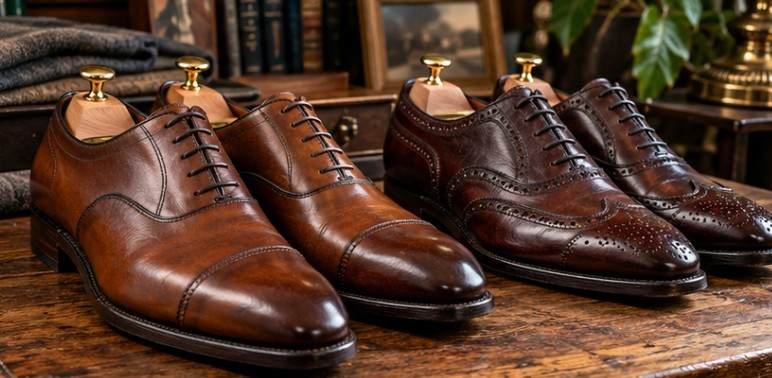
Alden is one of the safest American names to investigate because the company historically remained focused on better-grade footwear. Vintage pairs may carry an older AAAA marking.
Florsheim requires more selectivity. Imperial and Royal Imperial models are generally more desirable than ordinary later-market pairs.
Hanover’s LB Sheppard line is another collector favorite, particularly when a pair retains a sound welt and upper.
With Johnston & Murphy, Aristocraft and Crown Aristocraft models deserve closer examination. Historical catalog information shows that Johnston & Murphy operated multiple quality tiers, reinforcing why the label alone should never determine value.
Allen Edmonds can also provide excellent secondhand value. Older corrected-grain or heavily coated “polished cobbler” models, however, are less desirable to many collectors than traditional calfskin versions.
Remember that famous makers also produced shoes at different price points. Buy the shoe, construction, condition, and model—not merely the logo.
Measure Before You Buy
Vintage sizing may be the most expensive mistake in the entire process.
A marked 10D from decades ago does not guarantee the same usable fit as your current 10D. Last shapes vary by manufacturer, and decades of wear can further change the interior.
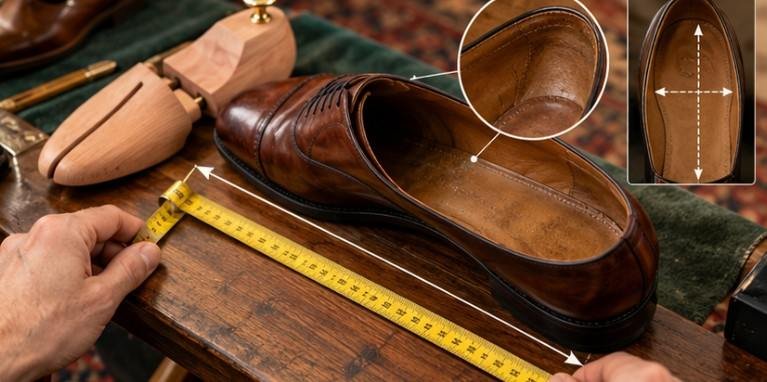
Ask for outsole length, outsole width at the widest point, and preferably interior measurements. Compare them with a well-fitting dress shoe you already own rather than relying only on your foot measurement.
Fit deserves serious attention. Research indexed by the National Library of Medicine has repeatedly associated poorly fitted footwear with discomfort and foot problems, particularly when shoes are too narrow. Review the footwear-fit research in PubMed
Do Not Ignore the Interior
A handsome exterior can distract from an unpleasant interior. Look for torn heel linings, exposed nails, curling insoles, heavy staining, odors, cracked sock liners, and compressed footbeds. A deeply molded footbed may reflect years of wear by someone whose foot shape differs considerably from yours.
Before wearing a secondhand pair regularly, clean it appropriately. This guide to cleaning the inside of leather dress shoes covers the interior separately from the finished leather upper.
Avoid experimenting with harsh chemicals simply because the shoes are old. The Natural History Museum of Utah describes highly specialized alcohol-and-water treatments used by professional conservators on archaeological leather, emphasizing controlled procedures tailored to individual objects—not casual household restoration recipes.
Calculate the Real Purchase Price
A $45 pair is not a $45 pair if it immediately needs $150 worth of cobbler work.
Before buying, mentally use this equation:
Purchase price + shipping + cleaning + heel work + sole work = true cost
That calculation changes the comparison dramatically.
A $120 vintage pair needing only conditioning and new heel lifts may be a far better purchase than a $50 pair requiring a complete rebuild.
Rare shell cordovan, unusual widths, discontinued lasts, and collectible models can justify greater restoration costs. An ordinary corrected-grain shoe usually cannot.
A Misconception About “Restoring” Vintage Leather
Restoration has limits. Conservators routinely distinguish between stabilization and making an old object new again. The Library of Congress similarly warns that valuable damaged leather objects may require professional treatment and that leather dressings are not universal preservation solutions.
Professional conservation literature goes even further, documenting specialized treatment of historic leather footwear involving controlled cleaning, impregnation, drying, and reconstruction. These are reminders that seriously degraded leather is a material problem, not merely a polishing problem.
Frequently Asked Questions
1. Are vintage dress shoes better than new shoes?
Some are. Premium vintage models may offer excellent leather and rebuildable construction, but inexpensive vintage shoes can be no better than inexpensive modern footwear.
2. Are cracks in vintage leather repairable?
Light surface creasing can often be improved cosmetically. Deep cracks through the leather fibers are structural damage and generally cannot be permanently reversed.
3. Should vintage shoes fit tighter because leather stretches?
No. Never buy painfully tight shoes expecting vintage leather to stretch enough. Correct length, width, and instep fit should exist from the beginning.
4. Is resoling vintage dress shoes worth it?
Usually only when the upper, welt, lining, and overall construction remain sound. Compare the total repair cost with the value and quality of the finished pair.
Final Take
The best vintage shoe purchase often looks surprisingly ordinary: healthy leather, an intact welt, predictable wear, sensible measurements, and no heroic restoration project hiding beneath fresh polish.
That is the real lesson of a vintage dress shoes buying guide. Do not chase age for its own sake. Look for construction that deserves another decade of use and condition that makes the economics work.
Turn the shoe over, inspect the flex points, study the heel, measure twice, and calculate repair costs before clicking Buy. A great vintage pair should reward careful inspection—not depend on wishful thinking.