
The safest first-day outfit is not necessarily a suit. It is an outfit that looks slightly more polished than what you expect your coworkers to wear. That distinction matters because American offices now range from traditional law firms where suits remain normal to software companies where a sport coat might make you look overdressed.
If you are wondering what to wear on first day of office men, the smartest approach is to read the workplace first, then dress toward the more professional end of its normal range. Your goal is simple: look prepared without making your clothes the most memorable thing about you.
Use the “One Step Sharper” Rule
First-day dressing becomes easier when you stop asking, “What is the perfect office outfit?” and instead ask, “What is one step sharper than the everyday standard here?”
Temple University’s Career Center advises employees to research a company’s expectations beforehand and, when uncertain, ask about the dress code before the first day. It also suggests observing how coworkers dress once you arrive.
Suppose employees normally wear chinos and polos. Your first-day version might be chinos, an Oxford shirt, loafers and an optional unstructured blazer.
If employees regularly wear suits, however, chinos would be too relaxed.
Georgia Tech’s Career Center similarly distinguishes business professional clothing—such as suits, collared shirts and dress shoes—from business casual pieces such as polos, button-down shirts and less formal trousers.The lesson is not “dress formally.” It is “match the level of formality correctly.”
First-Day Office Outfits by Workplace Type
| Workplace | Safe first-day outfit | Shoes |
| Law, banking, accounting, consulting | Navy or charcoal suit, white/light-blue shirt, conservative tie | Leather Oxfords or Derbies |
| Standard corporate office | Dress trousers or chinos, button-down shirt, optional blazer | Derbies, loafers or Oxfords |
| Creative agency | Chinos, Oxford shirt, knit polo or sport coat | Loafers or clean leather sneakers |
| Tech/startup | Dark chinos or clean dark jeans, button-up or polo | Minimal sneakers or casual leather shoes |
Traditional Corporate Offices
Finance, law, insurance, government relations and certain client-facing professional services still justify conservative clothing.
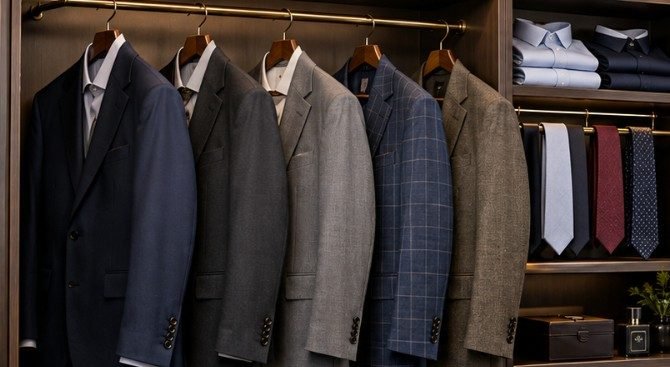
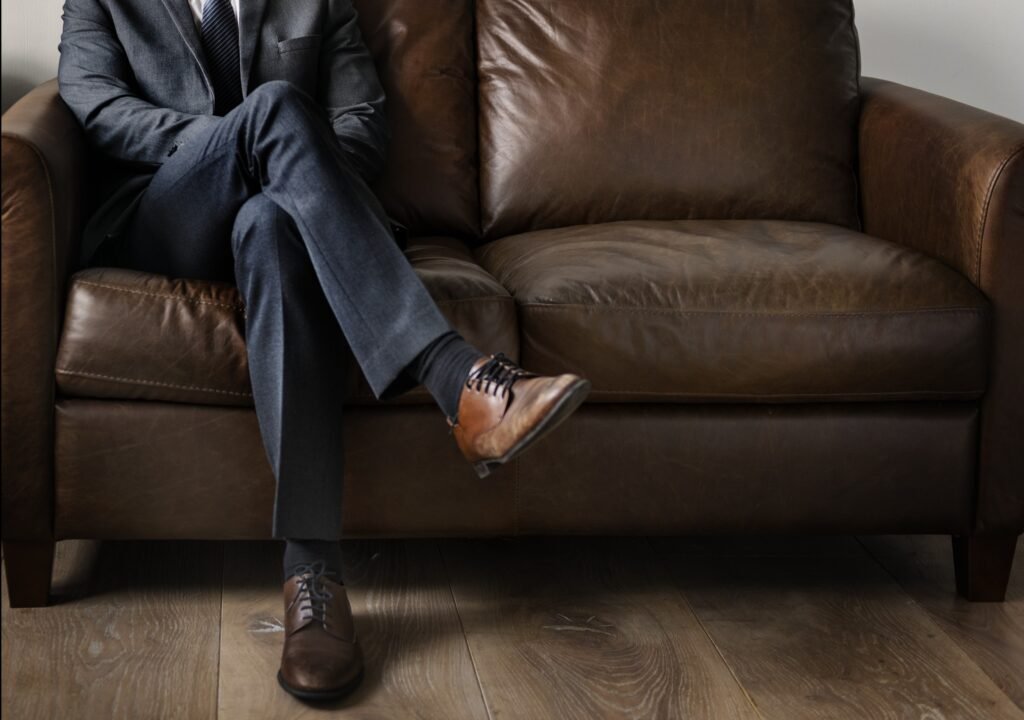
A navy or charcoal suit is generally easier to wear during the day than a highly formal black suit. Add a white or pale-blue shirt, subdued tie and polished leather shoes.
Creighton University’s career guidance describes professional men’s dress around conservative suiting, traditional long-sleeved shirts and restrained styling. Fit matters more than price. A modest suit with clean shoulders, correct trouser length and properly sized sleeves looks more professional than an expensive suit that hangs badly.
Business Casual Offices

This is where most young office workers face uncertainty because “business casual” can mean almost anything.
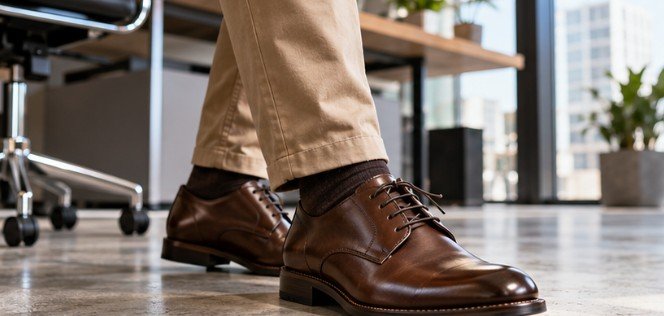
The dependable combination is tailored chinos or wool trousers, an Oxford cloth button-down and leather shoes. Navy, gray, stone, brown and light blue create combinations that are difficult to get wrong.
Southern Utah University’s career guidance lists pressed slacks, chinos or khakis, collared shirts, loafers and Oxfords among appropriate men’s business-casual choices.
Skip the tie unless the company appears more conservative. A lightweight blazer gives you another advantage: you can remove it once you see how everyone else is dressed.
Tech Companies and Relaxed Startups
Do not interpret “casual” as “weekend.”
For day one, choose dark, undamaged jeans or chinos with a crisp polo or button-up. Minimal sneakers may work if they are spotless and stylistically simple.
Avoid athletic running shoes, graphic tees, distressed denim and hoodies until you know they genuinely fit the company culture.
The safest first-day strategy is to leave yourself room to dress down tomorrow.
What Matters More Than the Brand on Your Clothes
A recognizable label will not rescue poor fit, wrinkled fabric or dirty shoes.
Before leaving home, perform a five-point check:
- Shoulders: Shirt and jacket seams should sit near your natural shoulder.
- Trousers: Avoid fabric pooling heavily around the ankles.
- Shirt: Check the collar, cuffs and front for wrinkles.
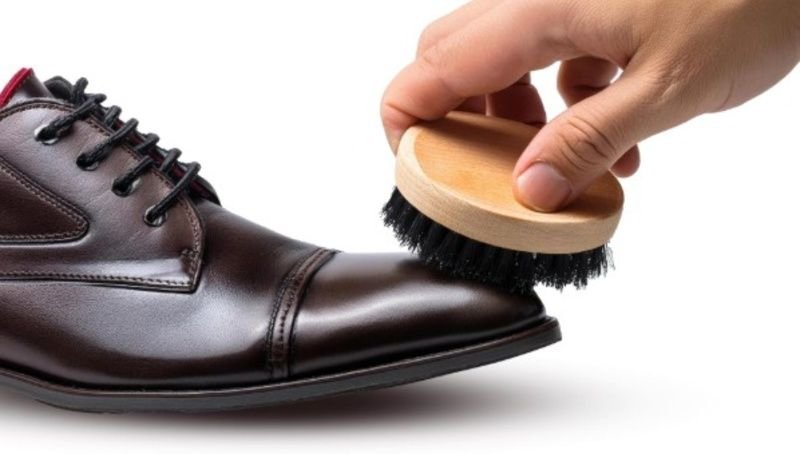
- Shoes: Remove dust and visible scuffs.
- Grooming: Keep hair, facial hair, nails and fragrance neat and restrained.
This is also why your first-day outfit should be tried on the evening before. Sit down, walk around and raise your arms.
A shirt that looks excellent while standing in front of a mirror may become uncomfortable after eight hours at a desk.
Dress for the Weather Without Looking Casual
Summer creates a particular problem in U.S. cities: the commute may be hot while the office air conditioning feels cold.
Instead of abandoning professional clothing, change the fabric.
Lightweight wool, cotton, linen blends and breathable dress shirts can make tailored clothing considerably easier to wear. Our guide to summer formal fabrics for men explains which materials work best when temperatures rise.
Layer strategically as well. A lightweight jacket that can be removed gives you more flexibility than arriving in an outfit that already looks too casual.
Shoes Quietly Decide Whether the Outfit Works
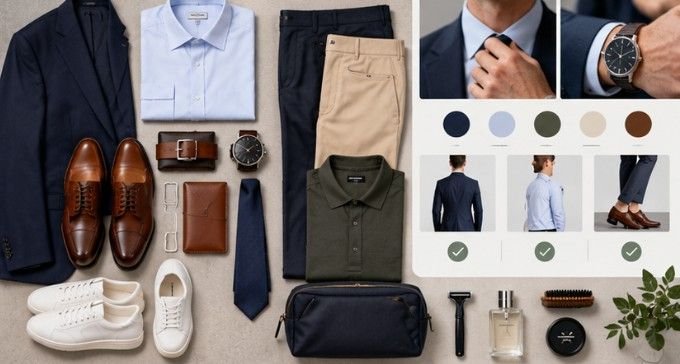
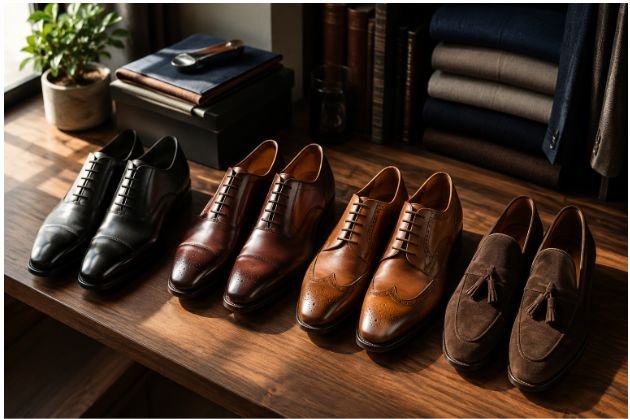
Footwear frequently determines whether an outfit reads as professional or merely neat. For formal workplaces, leather Oxfords and Derbies remain dependable. Loafers work especially well with business casual clothing.
With navy trousers, dark brown shoes offer versatility. Charcoal trousers pair easily with black or dark brown leather.
Avoid wearing brand-new dress shoes for the first time on your first workday. Breaking them in beforehand prevents blisters during office tours, introductions and lunchtime walks.
Accessories Should Be Almost Boring
Day one is not the best time to deploy every accessory you own. A restrained leather belt, understated watch and simple work bag are enough. Match your belt reasonably closely to your leather shoes rather than worrying about achieving an identical shade.
Watches should complement the level of formality rather than dominate it. That principle becomes even more important at higher levels of dress, as explained in our guide to whether you can wear a watch with a tuxedo. Save novelty ties, oversized jewelry and attention-grabbing designer logos until you understand the culture.
Know When the Dress-Code Rules Have Exceptions
Office dress codes are not absolute.
The U.S. Equal Employment Opportunity Commission notes that employers can generally establish workplace dress codes, but accommodations may be required when a policy conflicts with an employee’s religious practices or disability, subject to applicable legal standards.
Religious dress and grooming can include head coverings, facial hair and other practices. The EEOC specifically explains that employees can request religious accommodations concerning workplace dress and grooming requirements.
So “professional” should never automatically be interpreted as “everyone must look identical.”
FAQ
1. Should a man wear a suit on his first day of work?
Wear one for conservative industries or when the company specifies business professional attire. For most business-casual offices, tailored trousers, a button-down shirt and optional blazer are usually safer.
2. Can I wear jeans on my first office day?
Only if you already know jeans are accepted. Choose dark, clean, non-distressed denim and pair it with a collared shirt and polished footwear.
3. Should I wear a tie on the first day?
A tie makes sense in formal corporate environments. In business-casual workplaces, it is usually unnecessary unless your manager or company dress guidelines suggest otherwise.
4. Are sneakers acceptable for an office?
They can be in casual and tech offices. Choose clean, understated lifestyle sneakers rather than running or gym shoes, and avoid them in conservative workplaces unless you know they are accepted.
The Outfit Should Stop Mattering Once You Walk In
The real answer to what to wear on first day of office men is not a particular shirt, shoe or suit color. It is to remove clothing as a source of uncertainty.
Dress slightly sharper than the expected norm, prioritize fit and cleanliness, and give yourself the ability to remove a jacket or tie if the office proves more relaxed. Then observe your coworkers. By the second week, you will understand the unwritten dress code far better than any employee handbook can explain it.
Your first-day outfit only needs to accomplish one thing: let people notice you before they notice your clothes.