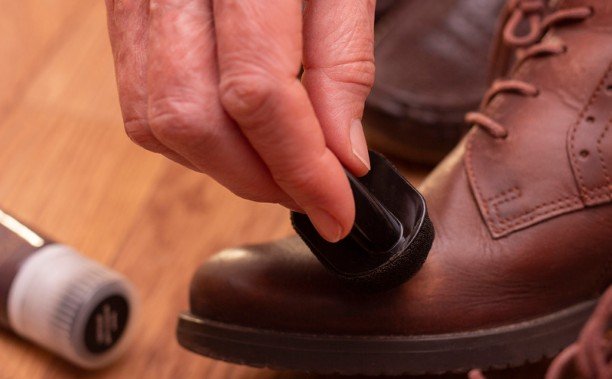

A $50 pair of secondhand dress shoes can quietly become a $200 purchase once a damaged heel, worn outsole, loose welt, and neglected leather enter the equation. That is why learning how to estimate shoe repair costs before buying used shoe listings is less about becoming a cobbler and more about recognizing which defects are inexpensive wear items and which are financial warning signs.
Before I buy used footwear online, I mentally price the repairs first. If the likely purchase price plus restoration cost approaches the price of a cleaner pair, I keep scrolling.
Start With the Parts a Cobbler Can Actually Replace
Not every worn area carries the same financial risk.
Soles, heel lifts, heel tips, zippers, eyelets, and some stitching are routine repair-shop work. The Shoe Service Institute of America notes that professional repairers commonly replace soles and heels, stretch footwear, replace hardware, apply protective soles, and replace zippers.
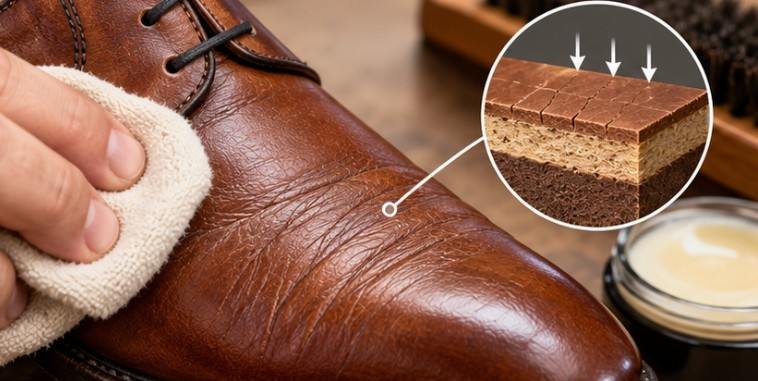
The upper is different. A scuff may need only cleaning and polish, but cracking through the leather fibers, torn panels, badly stretched quarters, or deteriorated lining can turn an otherwise attractive bargain into an expensive restoration project.
That distinction should drive your inspection: replaceable components are predictable expenses; structural leather deterioration is much harder to price.
Repairing instead of discarding worn products also fits the EPA’s waste hierarchy, which specifically encourages guidance on reuse and repair when an item can remain useful.
What Do Common Shoe Repairs Cost in the US?
Exact cobbler prices vary by city, shoe construction, material, and the amount of disassembly required. A 2026 US pricing estimate places general shoe-repair work around $45 nationally, while regional costs can be considerably higher in markets such as New York and San Francisco.
For shopping purposes, however, I would budget conservatively:
| Likely repair | Useful pre-purchase allowance |
| Heel tip or heel cap | 15–45 |
| Heel rebuild | 40–90 |
| Rubber half sole | 45–85 |
| Standard full resole | 80–165 |
| Premium/welted resole | 120–200+ |
| Boot zipper replacement | 40–95 |
| Cleaning and conditioning | 20–50 |
These figures are estimates, not quotes. A current Colorado repair shop, for example, lists heel caps around 18–32, rubber half soles at 45–75, welted resoles at 110–190, and boot zipper replacement at 55–95.
The safest approach is therefore to calculate toward the upper half of the expected range.
Use a Three-Step Repair Budget Before You Buy
1. Identify every visible defect
Do not look at the shoes as one object. Divide them into zones:
Upper leather
Sole
Heel
Welt or sole edge
Lining
Hardware
Insole
Zippers, if present
Zoom into marketplace photographs and look for uneven heel wear, thin soles, exposed stitching, cracking around flex points, torn linings, separating edges, and missing hardware. If photographs do not show the bottom of both shoes, ask for them.
2. Classify the repair as cosmetic, wearable, or structural
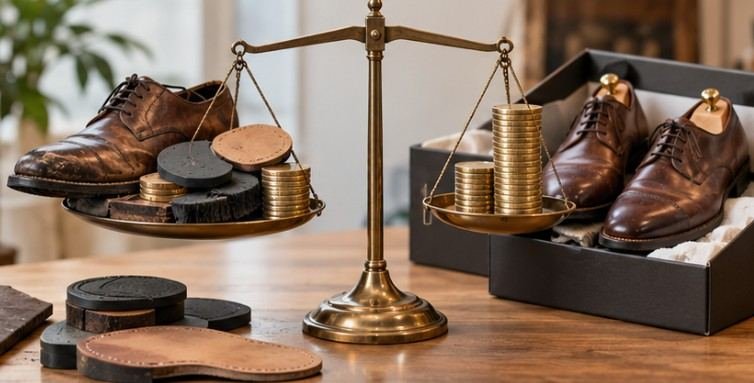
Cosmetic problems include light scuffs, faded polish, superficial scratches, or dirt. These rarely destroy the economics of a purchase.
Wear-item problems include heel caps, worn half soles, loose eyelets, and similar components designed to be serviced.
Structural problems deserve the highest risk allowance. These include cracked uppers, damaged welts, distorted heel blocks, deep sole holes extending into internal layers, torn seams around high-stress areas, and badly damaged lining.
Leather deterioration is particularly important. Leather preservation guidance from the Library of Congress—while written for leather-bound collections rather than shoes—illustrates a useful principle: once leather becomes badly deteriorated, stiff, cracked, or powdery, simple surface treatment cannot reverse the underlying structural damage.
3. Calculate your true purchase price
Use this simple formula:
Used price + shipping + expected repairs + uncertainty allowance = real cost
Suppose you find Goodyear-welted shoes for $65.
Shipping is $12. The heels appear nearly worn through, so you allow $45. The sole is thin enough that a resole may soon be necessary, so you reserve another $130.
Your realistic cost is already about $252 before tax.
If a similar pair in much better condition sells for $175, the supposedly cheaper listing is not the bargain.
I normally add another 15–20% repair cushion when photographs are poor or the seller cannot describe previous repairs.
Construction Can Change the Entire Calculation
Repairability matters almost as much as condition.
Goodyear-welted and Blake-stitched dress shoes are generally attractive secondhand candidates because their construction allows professional sole replacement. The Shoe Service Institute of America even uses Goodyear-welted, Blake-stitched, and cemented shoes in professional repair competitions, illustrating that several constructions can be repaired, although the methods differ.
A stitched sole does not automatically mean the shoes are worth buying, however. Look for previous aggressive sanding, damaged welts, sloppy replacement stitching, or soles that have already been replaced multiple times.
Cemented shoes can sometimes be resoled, but the economics depend heavily on the design and condition. I would rarely budget premium restoration money for inexpensive glued footwear.
Know the Repairs That Should Make You Walk Away
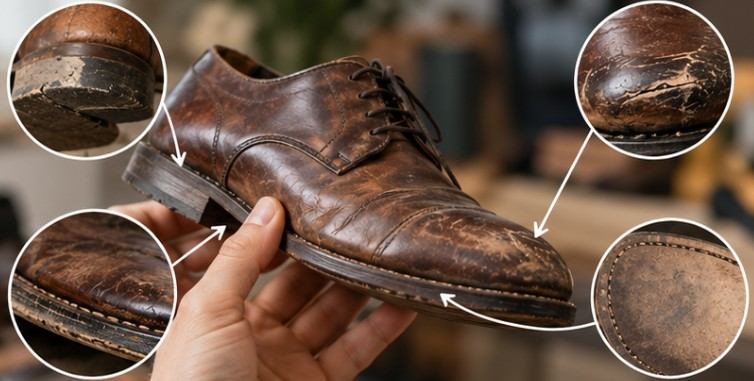
A worn heel is usually manageable. Leather splitting across the vamp is not.
I would be cautious about buying shoes showing:
deep cracks that open while flexing;
large tears near eyelets or seams;
severe salt or water damage;
mold or persistent interior contamination;
major heel-counter collapse;
warped or mismatched shoes;
or extensive separation accompanied by brittle upper leather.
The mistake is assuming conditioning will restore every dry-looking upper. Conditioning can improve healthy leather, but it cannot recreate fibers that have already fractured.
Organizations focused on footwear reuse make the same broader distinction between items worth repairing and footwear that has reached the end of its useful life. StopWaste’s RE program encourages repair and resoling where practical, while recognizing that recycling becomes appropriate when footwear is no longer a repair or reuse candidate.
Compare Repair Cost With Replacement Value, Not Original Retail Price
A seller may advertise shoes as “$500 when new,” but their original MSRP is largely irrelevant. Compare your finished cost with what the same model—or an equivalent pair—currently costs in good used condition.
For example, spending $160 restoring a $300-quality welted shoe may make sense if you intend to wear it for years. Spending the same amount repairing an ordinary cemented shoe that sells used for $90 does not.
Research into footwear reuse, repair and circularity has likewise found repair and maintenance models particularly practical for comparatively higher-value footwear, where the economics are more capable of absorbing service costs.
That same value-based thinking applies to your wider wardrobe. If you are gradually building professional clothing around good footwear, it helps to think in terms of long-term cost per wear, much as you would when deciding.
Ask a Cobbler Before Buying Expensive Used Shoes
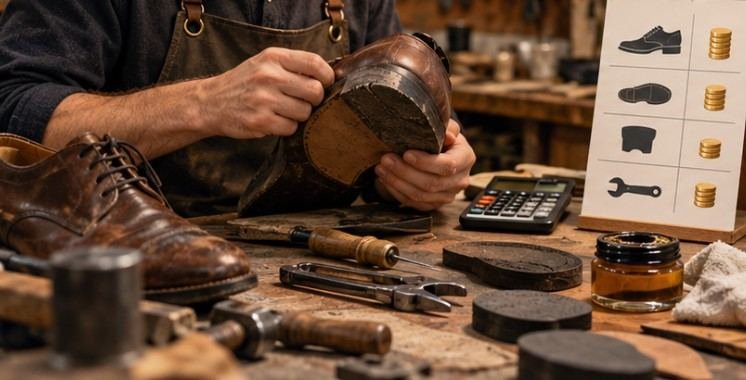
For a $40 marketplace purchase, estimating may be enough. For $300 vintage shell cordovan shoes, rare boots, or luxury footwear requiring significant work, photographs sent to an experienced repairer can prevent an expensive mistake.
The Shoe Service Institute of America maintains a directory of member repair shops, making it easier to locate specialists who can assess questionable construction or damage.
Keeping repairable footwear in circulation also has benefits beyond price. Soles4Souls describes sorting, recommerce, repairing, repurposing, and responsible end-of-life handling as ways to extend footwear usefulness and reduce waste.
Frequently Asked Questions
1. How much should I budget for repairing used dress shoes?
Allow roughly 20–50 for minor work and 100–200 or more if a quality welted pair may require a complete resole or structural bottom repair.
2. Is it worth resoling secondhand shoes?
Usually, if the upper remains strong, the construction is repairable, and the purchase price plus repair cost stays comfortably below the cost of an equivalent pair in better condition.
3. How can I tell whether used shoes need resoling?
Look for extremely thin sole areas, holes, soft spots, exposed stitching, edge separation, or heavy wear concentrated beneath the ball of the foot.
4. What is the safest way to learn how to estimate shoe repair costs before buying used shoe listings?
Identify each damaged component, assign a realistic local repair price, add shipping and a 15–20% uncertainty buffer, then compare the total against better-condition alternatives.
Final Take
The price shown on a resale listing is only the entry fee. The real number is what the shoes will cost after they are stable, wearable, and ready for another several years of service.
I treat heel caps, half soles, and routine conditioning as predictable expenses. I become far more cautious once cracking uppers, damaged welts, distorted structure, or multiple simultaneous repairs appear.
That single habit—pricing the repair before pricing the bargain—changes used-shoe shopping completely. A genuinely good secondhand purchase is not simply cheap. It is repairable, structurally sound, and still financially sensible after the cobbler has finished.