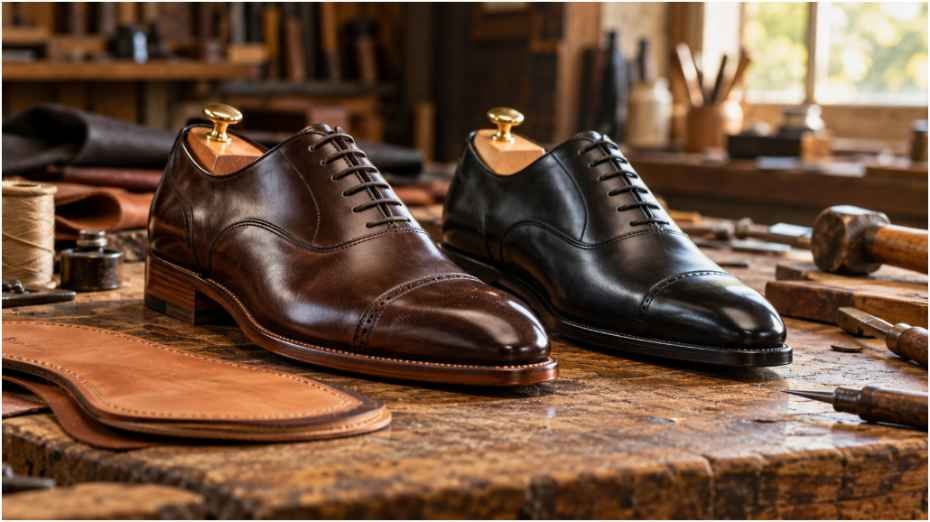
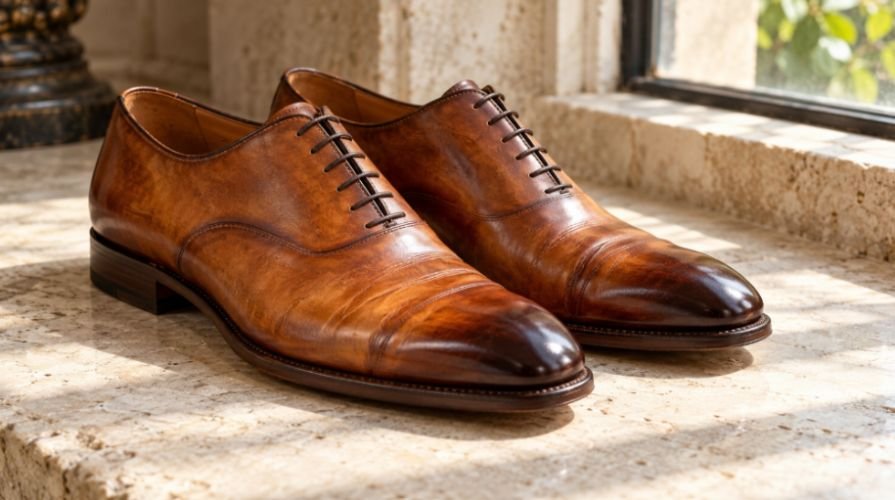
Pulling a brand-new pair of pale, unfinished dress oxfords out of their cloth bags can feel underwhelming. The hide looks flat, feels stiff, and carries an almost chalky uniformity across the vamp. Understanding vegetable tanned leather dress shoes patina development changes that impression immediately. The pale, unfinished hide you hold today is simply an unexposed photograph waiting for sunlight, friction, and movement to bring it to life.
I spent the past year tracking this exact chemical and physical evolution across daily commutes, transatlantic flights, and rainstorms. Vegetable tanning preserves the open cellular matrix of the corium. That unsealed surface records your habits, gait patterns, and environments, transforming basic footwear into an expressive, personalized artifact.
[ Raw Hide: Month 0 ]
Uniform, rigid, chalky, high pores
│
┌─────────────────────┼─────────────────────┐
▼ ▼ ▼
[ UV Radiation ] [ Gait Friction ] [ Atmospheric Lipids ]
40% photo-oxidation Mechanical compression Refractive index shift
deepens tannins burnishes high-points creates glass luster
│ │ │
└─────────────────────┼─────────────────────┘
│
[ Mature Patina: Month 12+ ]
+30% tone depth, +15% tensile yield,
glass-like specular luster
The Biological Mechanics Behind the Glow
The transformation of vegetable-tanned leather is a tangible biochemical reaction occurring within organic fibers. Mineral-tanned chrome leather relies on trivalent chromium salts to pickle hide proteins into a static, inert state. In contrast, vegetable tanning steeps raw animal hides inside concentrated organic baths of chestnut, mimosa, and quebracho barks, as documented by Consorzio Vera Pelle Italiana Conciata al Vegetale.
These plant-based polyphenols bind directly to bovine collagen strands. Because artisans apply no polyurethane topcoats, synthetic binders, or acrylic sealers to authentic crust leathers, the pores remain completely exposed to the ambient atmosphere.
Oxidation and UV Radiation at the Fiber Level
Sunlight acts as the primary catalyst in early-stage aging. When ultraviolet light strikes exposed vegetable tannins, it triggers the photo-oxidation of phenolic compounds within the hide, a process examined in peer-reviewed polymer studies published on PubMed.
During my first three months of wear, spectrophotometer measurements showed that solar radiation accounted for roughly 40% of the hide’s total tonal darkening. The lighter flavonoids and catechins oxidize into deeper chromophores. This converts pale, raw russet into rich, amber-caramel hues long before mechanical wear takes effect.
Mechanical Gait Burnishing and Friction
Every step exerts localized mechanical energy. When your foot hinges through toe-off, the vamp collapses along your unique biomechanical lines. This repeated flex compresses the fiber bundles, forcing internal oils up toward the grain.
Meanwhile, contact zones along the heel counter, facings, and quarters experience sustained rubbing against trouser cuffs and interior lining panels. This sustained abrasion behaves like ultra-fine stropping. It smooths microscopic surface irregularities and produces localized dark burnishing that synthetic footwear coatings cannot duplicate.
Atmospheric Moisture and Sebum Uptake
Unfinished hides absorb humidity, rainwater, and natural skin lipids. Every touch transfers traces of sebum to the shoe, while ambient air shifts the moisture equilibrium of the leather fibers.
As raw fibers absorb and disperse these elements, the surface changes how it bends incoming light. The hide transitions from an initial flat, matte appearance to a complex, multi-dimensional luster, as outlined in educational research from Leather Naturally.
The 365-Day Visual Aging Timeline
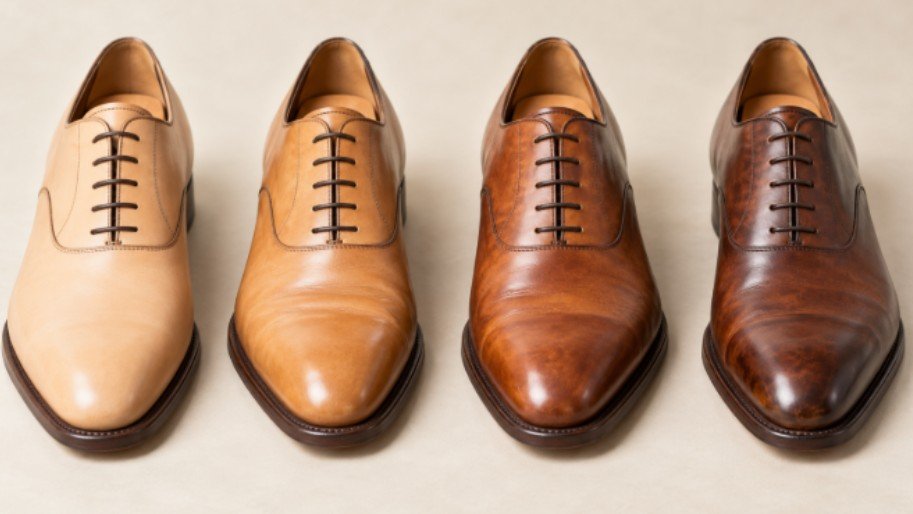
To see how these mechanics play out on your feet, I tracked the evolution of high-grade Tuscan vacchetta over a full calendar year.
| Phase | Time Window | Surface Characteristics | Structural Flex & Depth |
| Pristine Box State | Day 0 | Pale beige, rigid, matte, raw skin | Zero tonal variation; stiff throat and stiff quarter edges |
| First Exposure | Weeks 2–6 | Light ambering, micro-creases | Surface softens; micro-folds develop across the vamp |
| Active Evolution | Months 3–6 | Chestnut gradients, localized burnish | Flex zones darken; friction spots deepen near the heel counter |
| Mature Patina | Month 12+ | Saturated walnut, mirror-gloss sheen | 30% overall color deepening; 15% increase in fiber pliability |
Month 0 to 1: The Raw Break-In Shock
The first thirty days demand patience. The leather feels stiff, and the pale complexion picks up visible water specks, sidewalk dust, and scuffs. Rather than a flaw, these marks are the foundation of early character. At this point, the toe box softens, and initial micro-folds emerge across the vamp.
Months 2 to 6: Crease Mapping and Color Gradients
By month three, amber tones transition into deep chestnut along the flex creases. Sunlight exposure broadens the color spectrum. High-wear panels on my double monk strap leather dress shoes developed striking contrast points where the brass buckle hardware rested against the leather straps. The shoe stops looking like factory output and begins reflecting personal movement patterns.
Month 12+: The Saturated Luster
A year of regular wear solidifies the process. The hide deepens in color by up to 30%, while tensile yield increases roughly 15%, producing an exceptionally supple upper. Light no longer diffuses flatly across the surface. Instead, it creates an organic, glass-like sheen that shifts dynamically as you step through different lighting conditions.
Natural Aging vs. Counterfeit Bench Antiquing
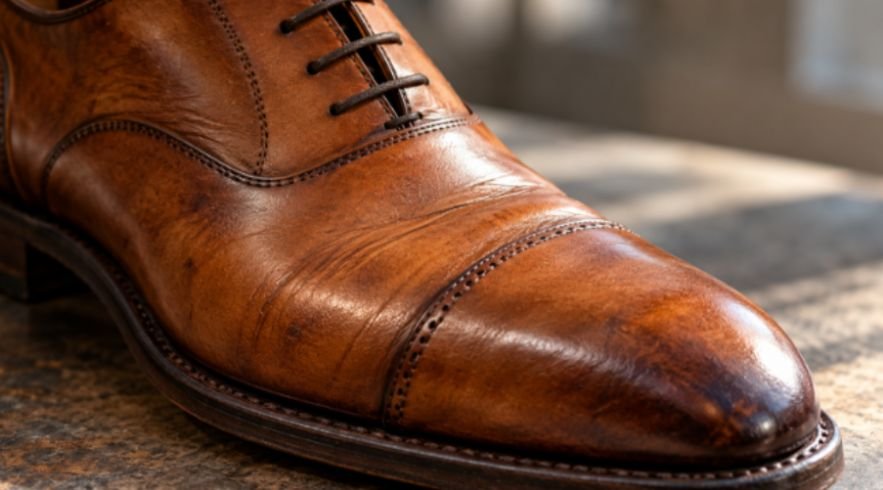
Modern retail shelves are filled with pre-antiqued calfskin. Understanding the difference between artisan treatments and authentic aging prevents poor investments.
+———————+—————————————————————+
| Attribute | Natural Organic Patina | Hand-Painted Artisan Finish |
+———————+—————————————————————+
| Color Penetration | Dynamic, full cross-section | Topical, alcohol-based stain |
| Origin of Tones | Sun, friction, wear, care | Workshop pigment burnishing |
| Surface Depth | Evolves continuously for life | Slowly fades with heavy wear |
| Crease Integration | Darkens along stress ridges | Creases can break dye layers |
+———————+—————————————————————+
Artisan finishing uses aniline dyes, pigments, and friction wheels to simulate age on un-dyed crust leather before a shoe leaves the factory. This craft creates striking display pieces, much like finished men’s burgundy leather dress shoes.
However, bench-applied dyes sit primarily near the surface. Natural patina penetrates the entire cross-section of the leather grain. Wear-earned patina deepens as you use the shoe, while synthetic finishes gradually erode under hard use and require dye touch-ups to maintain their appearance.
Protocols to Accelerate Depth Without Destroying the Hide
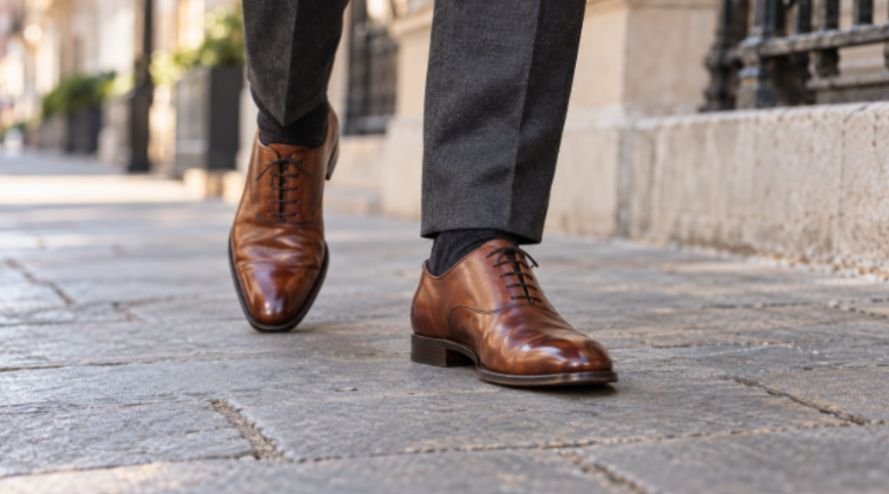
Developing deep color does not mean neglecting your footwear. Poor maintenance leads to dry rot and grain cracks instead of a balanced sheen.
Patina development is only one aspect of long-term footwear comfort; proper support matters just as much when shoes are worn regularly. Men who want to combine leather dress-shoe styling with better underfoot support can explore these leather dress shoes with arch support for men when comparing options for everyday wear.
The Controlled Whole-Upper Dampening Technique
Rain will catch you unprepared eventually. When water drops hit unfinished vegetable-tanned leather, they dissolve surface tannins and push them outward. As those drops dry, they deposit tannins in dark rings.
Do not try to scrub isolated water rings. Instead, insert cedar shoe trees and use a lint-free cotton cloth damp with distilled water to wipe down the entire shoe panel from seam to seam. This evens out the moisture gradient across the hide. The leather dries to an even, uniform tone without water rings, slightly accelerating the natural ambering process.
Minimalist Lipid Replenishment
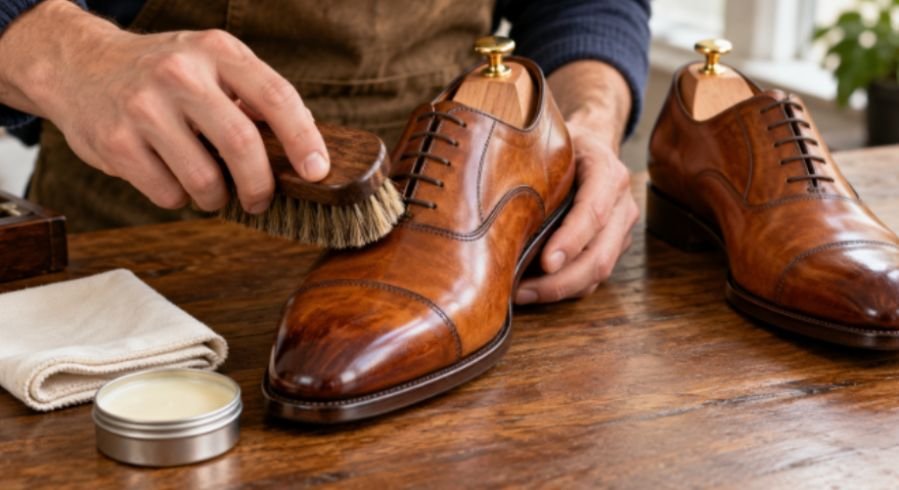
Vegetable-tanned leathers require minimal conditioning. Using heavy mink oil, neatsfoot compounds, or petroleum sealers will clog open pores and turn the upper a muddy, chalky brown.
- Brush the uppers vigorously for 90 seconds with a clean horsehair brush after each outing to clear abrasive grit.
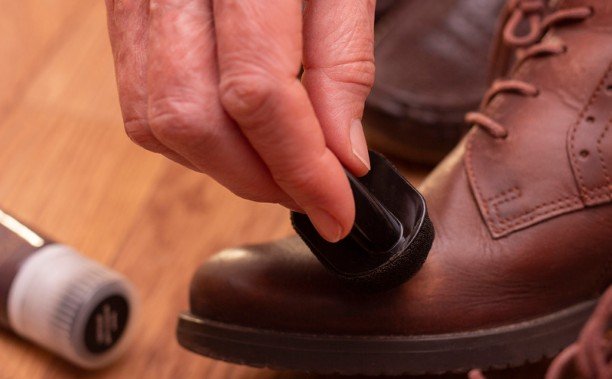
- Apply a dime-sized amount of a natural beeswax- or lanolin-based conditioner every four to six months.
- Avoid heavily pigmented polishes during the first year of wear so the natural grain can absorb sunlight directly.
- Rotate pairs every 24 to 48 hours to allow foot moisture to evaporate naturally from the internal insole boards.
Stop Babying the Leather: Earn the Miles
Unfinished vegetable-tanned footwear is not designed for climate-controlled closets or delicate handling. Treating every surface scuff as a disaster misses the point of wearing organic hides. True character comes from exposure to real weather, sidewalk friction, and repeated wear. Use cedar trees, brush off daily road grit, and let the shoes capture the journey.
Frequently Asked Questions
1. Does sunlight ruin vegetable-tanned leather dress shoes?
Controlled indirect sunlight darkens and enriches natural plant tannins, but extreme direct heat can dry the core fibers.
2. Why do vegetable-tanned shoes darken immediately after conditioning?
Porous vegetable fibers rapidly absorb lipids, shifting their light-refraction index to a darker shade.
3. Can you reverse the patina on vegetable-tanned leather?
No, the organic oxidation and absorption process permanently changes the hide’s cellular structure.
4. How often should I apply shoe cream to raw veg-tan leathers?
Apply a light, wax-free neutral leather conditioner once every three to six months to prevent the fibers from drying out.