A blazer and chinos can look sharper than a suit—or like two unrelated pieces grabbed from opposite ends of a closet. The difference is rarely price. It comes down to matching the formality, texture, color contrast, and proportions of both pieces.
That is the central rule behind how to wear blazer with chinos men should understand: neither half of the outfit should overpower the other. A soft navy blazer with tailored khaki chinos makes sense. A glossy corporate suit jacket with rumpled casual chinos usually does not.
The combination works particularly well in American offices because it sits neatly between business professional and everyday casual. The University of Kansas School of Business, for example, specifically includes jackets and chinos among acceptable business-casual pieces.
Why Blazers and Chinos Work So Well Together
A traditional suit is designed as a matching unit. The jacket and trousers share the same cloth, color, texture, and level of formality.
Blazers and chinos work differently. Their strength comes from deliberate contrast.
Chinos bring cotton texture and a slightly relaxed character. A blazer adds structure through its lapels, shoulders, and tailored shape. Put them together correctly and you get an outfit appropriate for business-casual offices, dinner dates, networking events, presentations, casual weddings, and upscale weekend gatherings.
Harvard’s Mignone Center for Career Success advises matching clothing to the culture of the organization, noting that professional expectations can differ dramatically between industries such as technology and finance. That matters because blazer-and-chino outfits occupy a flexible middle ground rather than representing one fixed dress code.
Start With a Blazer That Does Not Look Like Half a Suit
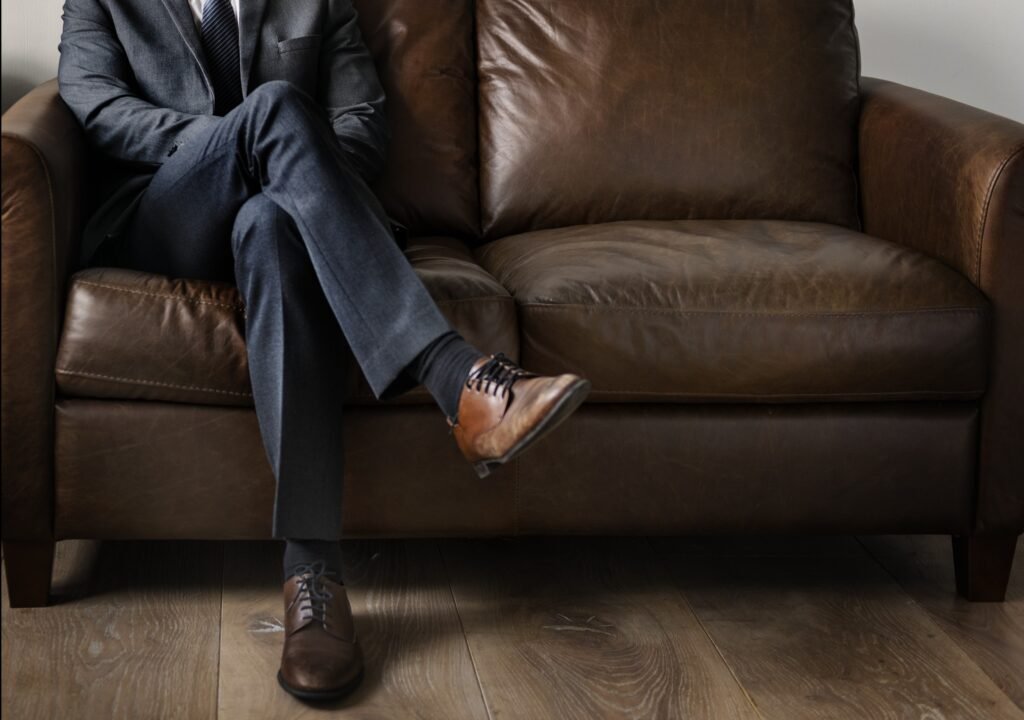
One of the easiest mistakes is taking the jacket from a formal business suit and wearing it over chinos.
Some suit jackets can work as separates, but highly structured versions usually look wrong. Shiny worsted wool, padded shoulders, matching-suit styling, and formal detailing can make your chinos appear noticeably underdressed.
Instead, look for a blazer or sport coat with softer construction.
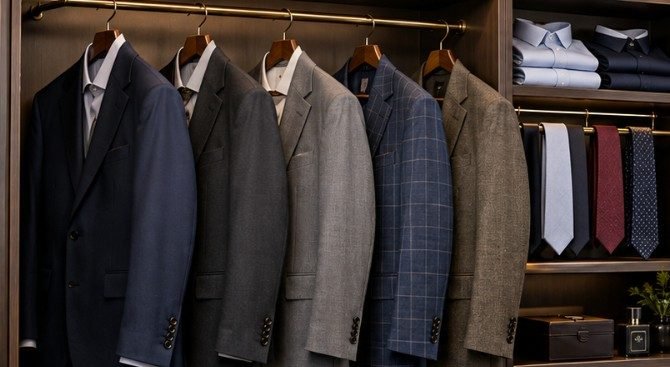
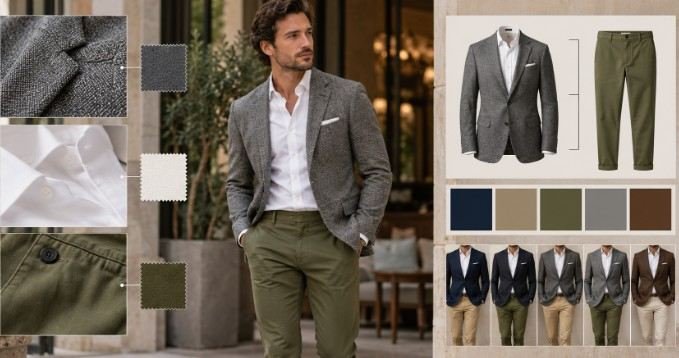
Cotton, hopsack wool, linen blends, flannel, tweed, and textured wool all pair naturally with chinos because their surfaces appear less formal. Patch pockets also make a jacket feel more relaxed.
Navy remains the safest first choice. Medium gray, brown, camel, olive, and subtle checks become useful once you already own the basics.
Use the Shoulder Test
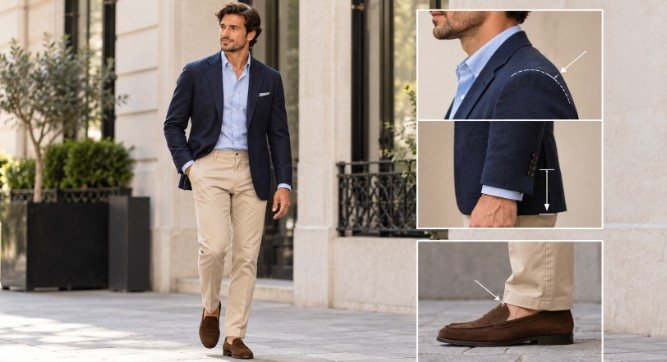
Blazer fit starts at the shoulders. The shoulder seam should end close to where your natural shoulder ends. If the fabric collapses beyond that point, the jacket is probably too large. If the sleeve head pulls inward or creates a noticeable dent, it may be too small.
The jacket should also cover most of your seat without hanging unusually long. With a dress shirt underneath, roughly half an inch of cuff showing at the wrist usually creates a polished proportion. For a two-button jacket, button the top button while standing and leave the bottom one open.
Your Chinos Need to Look Tailored, Not Skinny
Chinos become smart-casual when they hold a clean silhouette. That does not mean squeezing into extremely narrow pants. Choose trousers that skim rather than cling to your thighs, taper gradually toward the ankle, and create little or no bunching above your shoes.
Penn State’s career guidance recommends clothing that is fitted without being excessively tight or loose and identifies khakis, jackets, blazers, and sport coats as appropriate business-casual options.
A mid-rise chino is usually the easiest choice because it visually connects with the natural waist of a blazer.
Avoid excessive stacking around the ankles, cargo-style pockets, drawstrings, exaggerated skinny fits, and heavily washed fabrics when your goal is a polished appearance.
The Color Formula That Prevents Most Mistakes
You do not need complicated color theory. The easiest rule is simple: create visible separation between jacket and trousers.
| Blazer | Chinos | Best Use |
| Navy | Beige or khaki | Office, dinner, networking |
| Gray | Olive | Modern smart casual |
| Brown | Navy | Autumn and winter |
| Tan | Charcoal | Warm-weather events |
| Olive | Stone or cream | Relaxed weekends |
Navy with khaki is the safest starting point because the darker upper half adds structure while lighter trousers keep the outfit approachable.
Avoid trying to create an almost-suit by pairing two slightly different shades of navy or charcoal. If the fabrics do not match exactly, the difference often looks accidental rather than sophisticated.
What to Wear Under the Blazer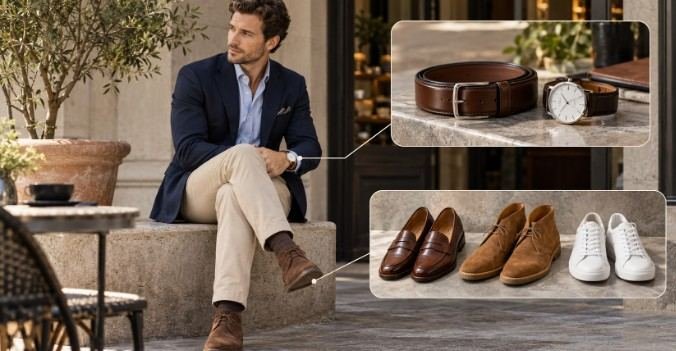
Once the jacket and trousers work together, your shirt determines how formal the finished outfit feels.
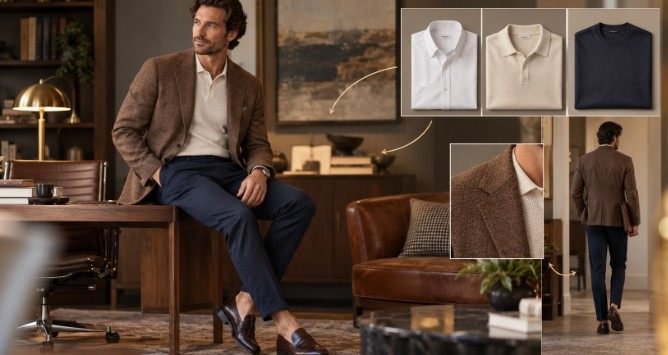
An Oxford cloth button-down is arguably the most dependable choice. White and light blue work with almost every blazer-and-chino combination.
For a slightly more contemporary outfit, use a knitted polo. Its collar maintains structure while the softer knit keeps the outfit away from corporate territory.
During fall and winter, a fine merino crewneck or turtleneck under a textured blazer can create a cleaner, more minimal silhouette.
A plain T-shirt can also work, but the rest of the outfit needs restraint. Choose a substantial, well-fitting tee without graphics, logos, stretched necklines, or athletic detailing.
The University of Illinois Career Center recognizes button-downs, crewnecks, sweaters, blazers, and chinos within its business-casual guidance while emphasizing that clothing should be clean, fitted, and wrinkle-free.
Shoes Decide Whether the Outfit Feels Formal or Relaxed
Footwear can move the same blazer-and-chino combination through several dress codes.
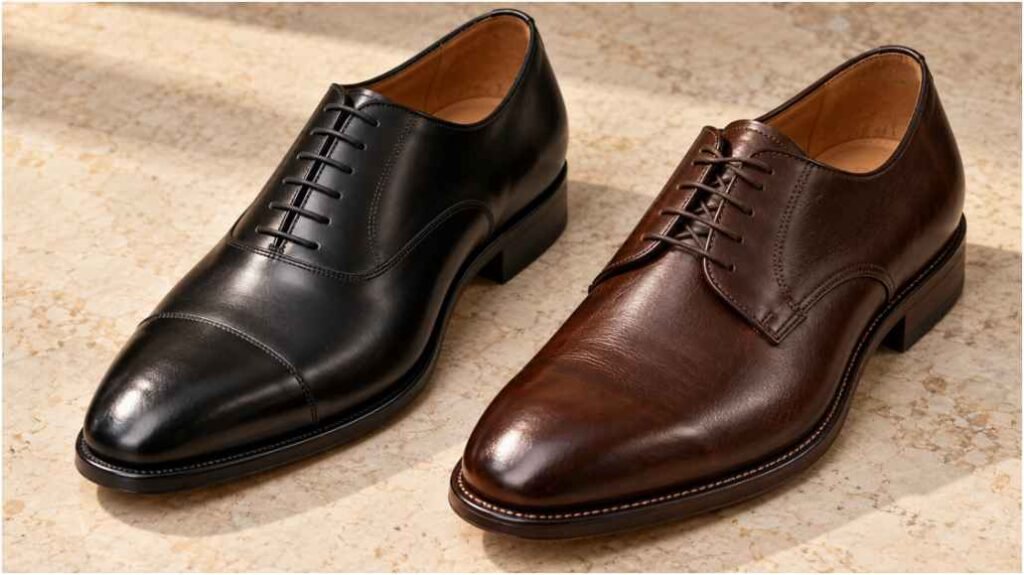
Brown leather loafers make navy blazers and beige chinos suitable for many offices and restaurants. Derbies and brogues increase formality slightly without creating the stiffness of highly polished black Oxfords.
Suede chukka boots work especially well during cooler months because their texture complements cotton chinos and softer jackets.
Clean minimalist leather sneakers can work for smart-casual environments, although they depend heavily on workplace culture. Southern Utah University’s professional-dress guidance lists Oxfords and loafers as conservative business-casual options while noting that dressier sneakers or boots may be acceptable depending on the employer.
The 30-Second Blazer-and-Chinos Check
Before leaving home, check five things.
First, stand naturally. The blazer should lie smoothly across your shoulders without pulling.
Second, look at your waistband. Your shirt should remain neat without large amounts of fabric ballooning around it.
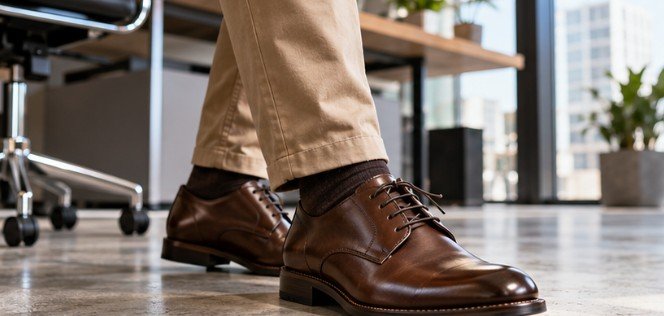
Third, check your trouser hem. Chinos should touch or nearly touch your shoes rather than forming several folds.
Fourth, compare textures. If your jacket looks dramatically shinier and more formal than everything else, swap it.
Finally, check your shoes. They should look intentional, clean, and appropriate for the destination.
This simple test catches more problems than adding another accessory ever will.
How Formal Should You Make the Outfit?
Context matters more than fashion rules. For a conservative office, pair a navy blazer with gray or beige chinos, a white or blue button-down, and brown leather loafers or Derbies.
For a creative workplace, try an unstructured brown blazer, olive chinos, knit polo, and suede loafers.
For a weekend dinner, a navy blazer, stone chinos, fitted crew-neck T-shirt, and minimalist sneakers can work.
For interviews, research the employer first. The University of Texas at Austin Career Services recommends learning the company’s culture and generally dressing one degree more formally when an environment is known to be casual.
A blazer and chinos should not automatically replace a suit for traditional finance, law, executive interviews, formal ceremonies, or events specifically marked business professional.
If the occasion requires considerably more formality, understanding what a three piece suit is can help you recognize when coordinated tailoring is the more appropriate choice.
Small Details That Make the Combination Look Intentional
Accessories should support the outfit rather than rescue it. Match brown leather shoes with a brown belt in a reasonably similar tone. You do not need laboratory-level color matching; simply avoid obvious clashes.
Keep watches understated. Pocket squares are optional and should not perfectly duplicate another pattern in your outfit.If you choose a bow tie for an event that allows more personality, knowing how to tie a bow tie properly matters more than buying an elaborate one.
The biggest misconception is that smart casual requires more accessories. Usually the opposite is true. Strong fit and thoughtful proportions make decorative extras less necessary.
FAQ
1. Can men wear a blazer with chinos to work?
Yes. The combination suits many business-casual workplaces. Choose tailored chinos, a restrained blazer, a collared shirt, and polished shoes. More conservative industries may still require a matching suit.
2. What color chinos look best with a navy blazer?
Beige, khaki, stone, light gray, and olive are dependable options. Lighter chinos create the clearest contrast and make a navy blazer easier to style.
3. Can I wear sneakers with chinos and a blazer?
Yes, in casual or smart-casual environments. Choose simple, clean leather sneakers rather than running shoes or bulky athletic footwear.
4. Should chinos have a break with dress shoes?
A slight break or no break generally looks cleanest with a blazer. Excess fabric pooling around the ankle makes an otherwise tailored outfit appear less polished.
The Outfit Should Look Natural, Not Calculated
Learning how to wear blazer with chinos men actually comes down to controlling contrast. The jacket should be tailored without looking ceremonial. The chinos should be neat without feeling like suit trousers. Your shirt and shoes simply determine where the final outfit lands on the casual-to-formal scale.
Start with the combination that is hardest to get wrong: navy textured blazer, light blue Oxford shirt, beige chinos, and brown loafers. Once you understand why those pieces cooperate, experiment with olive, gray, brown, knitwear, suede, and sneakers. The best blazer-and-chinos outfit should look considered for five minutes and effortless for the rest of the day.