
By the end of a long shift, a dress shoe reveals everything that was easy to ignore in the morning. A thin sole starts to feel harder, a narrow toe box becomes more noticeable, and weak cushioning can turn a polished Oxford into the wrong choice for the job.
That is why I look at Oxford shoes for standing at work all day very differently from shoes meant mainly for meetings, dinners, or occasional formal wear. For people working long hours in US offices, retail stores, hotels, schools, restaurants, and other professional environments, the shoe needs to do more than look sharp.
It should provide enough cushioning, support, toe room, stability, and traction to remain comfortable on concrete, tile, and other hard surfaces throughout the day.
The best work Oxfords combine classic styling with modern comfort technology, allowing you to maintain a professional appearance without relying on a thin, rigid dress-shoe construction.
What Makes Oxford Shoes Comfortable for Standing All Day?
Traditional dress shoes often use thin leather outsoles and relatively firm footbeds. They can look excellent in a formal office, but that construction may provide limited cushioning when someone spends most of a shift standing.
Modern comfort Oxford shoes solve this problem by borrowing technology commonly found in athletic footwear. EVA midsoles, polyurethane cushioning, removable footbeds, flexible rubber outsoles, and supportive contours can make a substantial difference during long shifts.
The goal is not simply to find the softest shoe. I look for a combination of cushioning and stability so the foot remains supported instead of sinking into an overly soft sole.
Why Does Midsole Material Matter on Concrete and Tile?
Look for EVA Foam or Polyurethane Cushioning
A shock-absorbing midsole creates a protective layer between the foot and the floor. EVA, or ethylene-vinyl acetate, is lightweight and commonly used to soften repeated impact. Polyurethane tends to feel somewhat denser and may offer durable cushioning in work footwear.
For employees who spend much of the day on concrete or commercial tile, these materials usually make more sense than a thin, rigid sole with minimal padding.
Pay Attention to Sole Thickness
Midsole material is only part of the equation. Stack height, or the amount of material underneath the foot, also matters.
A very low-profile Oxford may place little cushioning between your body weight and a hard surface. A moderately thicker sole can create more separation from the floor while still looking professional.
That does not mean buying an Oxford with an oversized sneaker sole. The ideal work shoe provides enough underfoot protection without becoming unstable or visually inappropriate for the workplace.
How Much Arch Support Should Work Oxford Shoes Have?
Standing for several hours places continuous load on the feet. A completely flat footbed may provide little structural assistance as fatigue develops.
I prefer Oxfords with a contoured footbed or supportive midfoot structure. Some shoes incorporate a shank through the midfoot to improve stability and limit excessive twisting. This type of structure can help the shoe maintain its shape and provide more consistent support during a long shift.
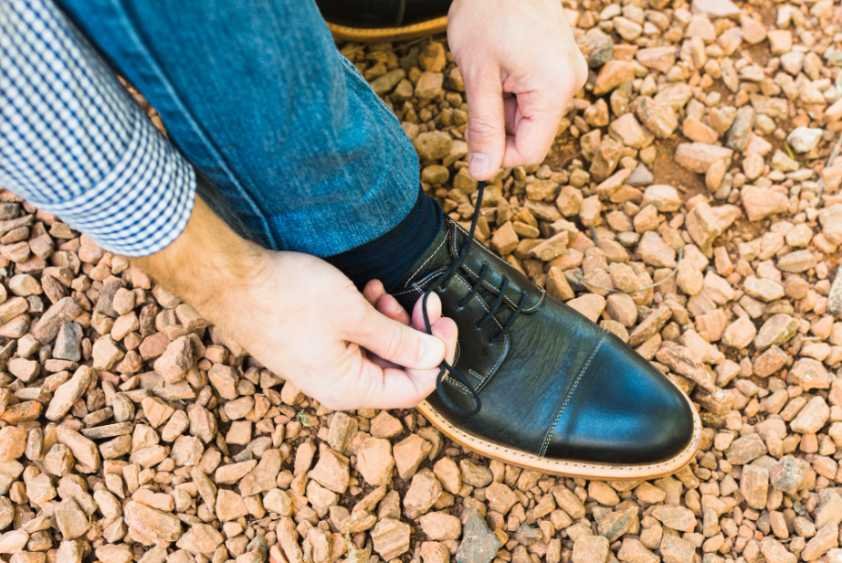
The same principle also matters when evaluating formal styles such as cap toe oxford shoes, especially if they will be worn for hours of standing, walking, and socializing.
People who experience significant overpronation or recurring foot discomfort should not assume that a shoe alone will solve the underlying problem. However, selecting supportive footwear rather than a completely flat dress shoe can make prolonged standing more manageable.
Are Removable Insoles Worth Having?
Removable factory insoles are particularly useful.
They allow workers to replace the original sock liner with an aftermarket or custom orthotic when additional support is needed. This can be valuable for people who already use professionally prescribed inserts.
The shoe still needs enough internal depth. Installing a thick orthotic in a shallow Oxford can raise the heel and instep too high, making the upper uncomfortable.
Why Is a Roomy Toe Box Important During Long Shifts?
Feet can feel wider and fuller after spending hours standing or walking. A shoe that feels acceptably snug in the morning may feel noticeably tighter toward the end of the shift.
For that reason, I avoid sharply pointed or heavily tapered dress shoes for jobs that involve prolonged standing. These shapes can concentrate pressure around the forefoot and increase rubbing as the feet expand.
A rounded or gently tapered toe shape usually gives the toes more room to sit naturally. Workers with broader feet should also look for brands offering dedicated wide or extra-wide sizing rather than simply purchasing a longer shoe.
Correct width matters because excess length can introduce heel movement while doing very little to solve forefoot pressure.
Are Rubber-Sole Oxfords Better for Standing at Work?
For most everyday US workplaces, rubber is the more practical outsole material.
Traditional smooth leather soles look refined, but they generally provide less grip and less impact absorption than modern rubber. A treaded rubber outsole can improve traction on polished floors while adding another layer of cushioning between the foot and the ground.
Workers in offices, hotels, restaurants, retail environments, schools, and other settings with tile or slick flooring may particularly benefit from slip-resistant tread.
When comparing oxford shoes for standing at work all day, I would give a well-designed rubber outsole serious priority unless a strict formal dress code requires traditional leather soles.
Does Heel Height Affect Comfort When Standing?
Heel geometry often gets overlooked when people shop for dress shoes.
A relatively low, stable heel keeps the foot closer to a neutral position and can distribute load more evenly than an aggressively elevated heel. Higher heels shift more pressure toward the forefoot, which may become uncomfortable during prolonged standing.
For work, I prefer a broad, stable heel with a modest heel-to-toe difference rather than a sharply raised dress heel.
The outsole should also remain flexible enough at the forefoot to allow natural movement when walking between desks, departments, meeting rooms, or customer areas.
Traditional Oxfords vs Comfort Oxfords: Which Are Better for Work?
Traditional leather-soled Oxfords remain appropriate for law offices, formal corporate environments, executive meetings, weddings, and workplaces where conservative dress standards matter.
Comfort-focused Oxfords are usually better suited to jobs that combine professional dress with long hours on the feet.
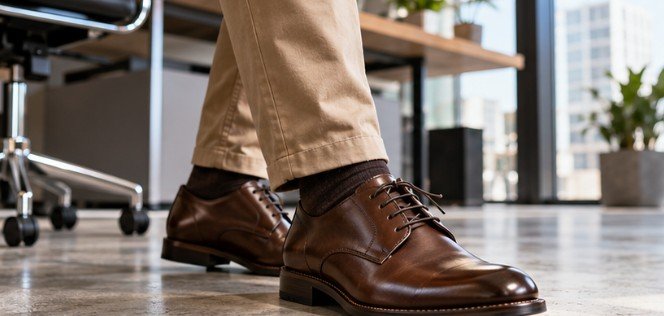
Many modern designs hide their comfort technology surprisingly well. A leather upper can sit above an EVA or PU midsole, cushioned footbed, supportive shank, and low-profile rubber outsole. From a normal viewing distance, the shoe can still look like conventional business footwear.
That balance is often more useful than choosing solely for tradition.
How Should Oxford Shoes Fit for an Eight-Hour Shift?
A work Oxford should feel secure at the heel without squeezing the toes or instep.
I would not buy a painfully tight pair expecting the leather to solve every fit problem. Leather can soften and adapt somewhat, but the shoe will not suddenly become significantly longer or dramatically wider.
Trying shoes later in the day can provide a more realistic sense of fit because your feet have already experienced several hours of activity.
Workers who wear orthotics should try the shoes with those inserts before deciding on the final size whenever possible.
Should You Rotate Oxford Shoes Between Workdays?
I recommend rotating work shoes when practical.
Footwear absorbs moisture throughout a shift, and allowing a pair to rest gives the interior time to dry. Rotation also prevents the same pressure points from contacting the feet every single day.
Shoe trees can help leather Oxfords retain their shape between wears, while regular outsole inspections can reveal uneven heel wear before it becomes severe enough to affect stability.
Frequently Asked Questions (FAQs)
1. What are the best Oxford shoes for standing at work all day?
The best oxford shoes for standing at work all day generally include an EVA or PU midsole, supportive footbed, roomy toe box, stable low heel, and rubber outsole. Removable insoles and wide-width availability add versatility for workers with specific fit requirements.
2. Are Oxford shoes suitable for standing on concrete?
Yes, but construction matters. Choose cushioned Oxfords with enough sole thickness to separate your feet from the hard surface. Thin leather-soled dress shoes may feel much harsher over a full shift.
3. Should work Oxfords have removable insoles?
Removable insoles are useful because they let you install supportive aftermarket or custom orthotics. Make sure the shoe also has sufficient depth to accommodate the replacement insert comfortably.
4. Are pointed Oxford shoes bad for long shifts?
A heavily tapered shape can create more forefoot pressure, particularly as the feet feel fuller later in the day. Rounded or moderately shaped toe boxes generally provide more usable space.
My Final Take
When I choose dress shoes for a long workday, I no longer treat comfort as an optional extra. A polished upper matters, but the engineering underneath it determines how the shoe feels after hours of standing.
I look for EVA or polyurethane cushioning, adequate sole thickness, structural midfoot support, removable insoles, natural toe room, a stable low heel, and a rubber outsole with dependable traction. Those features create a much stronger foundation for demanding American work environments.
A good work Oxford should not force you to choose between looking professional and feeling comfortable. The best designs quietly combine both.