A shoe can look badly tilted at the heel and still need only a relatively simple repair. The surprise is that the angle itself is not always the problem; what matters more is how far the wear has traveled into the shoe’s structure. So, can uneven heel wear on used shoes be repaired? In many cases, yes. A cobbler can replace a worn heel lift, rebuild missing heel material, or level the heel assembly. But once wear reaches the heel block, midsole, welt, or upper, the job becomes more complicated and may no longer make financial sense.
For anyone shopping secondhand, knowing the difference can turn a questionable pair into a bargain—or prevent an expensive mistake.
Why Heels Rarely Wear Perfectly Evenly
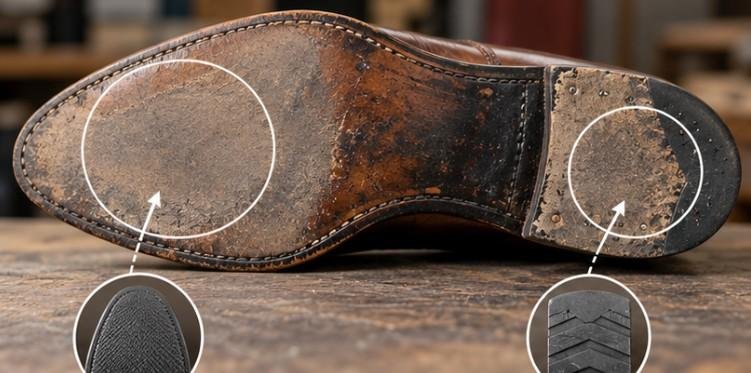
The heel is normally one of the first parts of a shoe to contact the ground, so it absorbs repeated impact every time you walk. Some wear at the rear edge or outer corner is therefore common rather than automatically defective.
Harvard Health notes that the heel typically contacts the ground first during ordinary walking before weight rolls forward through the foot. Harvard Health’s guidance on walking footwear
The concern begins when one side has been ground dramatically lower than the other.
Uneven wear can reflect the previous owner’s gait, foot structure, walking surfaces, worn-out footwear, or compensation for an old injury. It does not automatically mean the person had a medical problem.
The American Podiatric Medical Association specifically recommends avoiding shoes with excessive wear on the heels or soles because worn footwear may no longer provide appropriate support.
What a Cobbler Can Actually Repair
A traditional dress shoe heel is usually made from multiple components rather than one solid piece. That construction is good news because the lowest, fastest-wearing layer can often be replaced without rebuilding the entire shoe.
A worn heel top lift is usually straightforward
On many leather dress shoes, the rubber or leather piece touching the ground is called the heel lift or top lift.
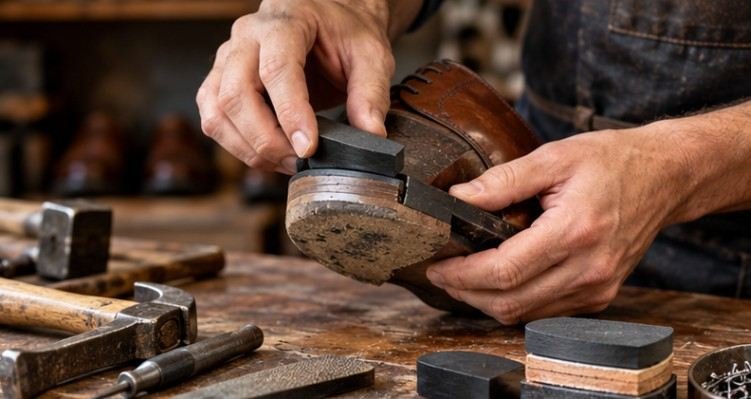
If uneven wear is confined to this replaceable section, a cobbler can remove it and install a new pair of lifts. Replacing both heels at the same time helps restore equal height and balance.
This is the kind of wear I would generally consider repair-friendly when evaluating secondhand shoes.
Deeper damage may require rebuilding
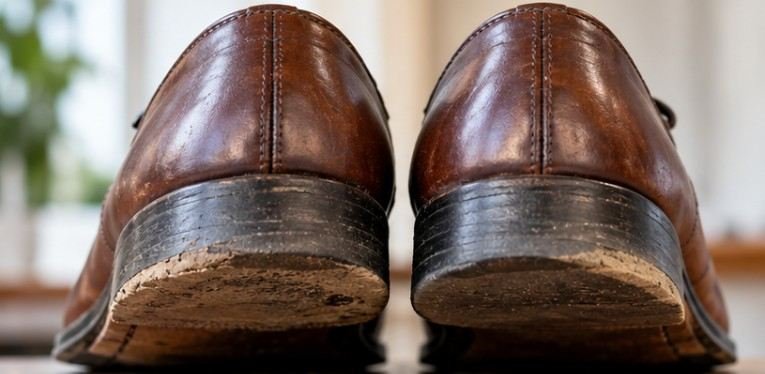
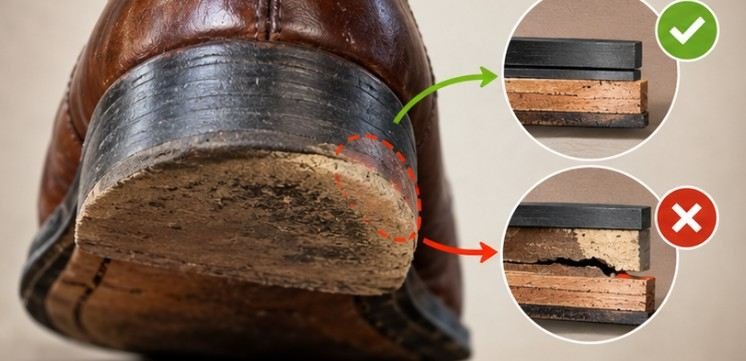
Waiting too long changes the job. If one corner has worn completely through the top lift, the stacked leather, rubber heel base, or surrounding material may begin disappearing as well. A repairer may have to build that area back up before fitting the replacement heel.
That can still be worthwhile on well-made shoes, especially welted leather footwear, but the purchase price should reflect the additional work.
Structural distortion is a different problem
A new heel lift does not magically straighten a shoe whose entire rear section has twisted. If the heel counter has collapsed, the upper permanently leans sideways, the welt is damaged, or the sole has become distorted, replacing the bottom heel piece treats only part of the problem.
The American College of Foot and Ankle Surgeons advises inspecting older shoes for cushioning, arch support, and wear around the sole edges because footwear loses supportive properties as it deteriorates
The 60-Second Used-Shoe Heel Test
Before buying, use this quick evaluation rather than judging the shoe from one listing photograph.
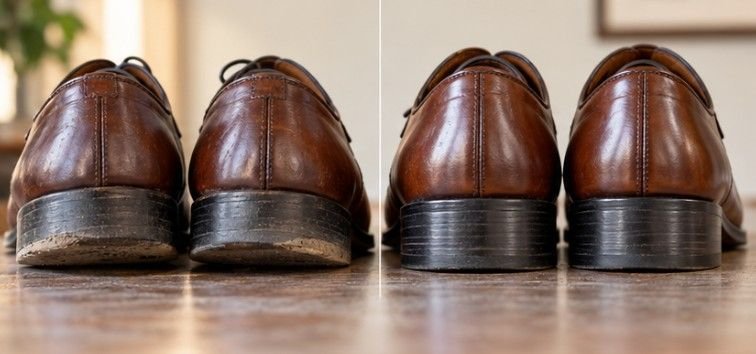
1. Put both shoes on a flat surface
View them directly from behind.
A minor difference at the outer edge may simply indicate normal heel striking. A shoe that visibly tilts while sitting unloaded deserves closer inspection.
2. Locate the deepest worn point
Determine whether the damage remains within the bottom heel layer.
Once you see missing material above the replaceable lift, exposed nails, damaged stacked leather, or an irregular heel base, assume the repair will require more than routine heel replacement.
3. Compare left and right shoes
One severely worn heel combined with a relatively untouched opposite heel tells you more than symmetrical wear.
Large left-to-right differences can indicate that the previous wearer loaded the shoes differently. Mayo Clinic notes that healthcare professionals may examine shoe-wear patterns because they can reveal useful information about foot mechanics.
4. Check the shoe from heel to toe
Look beyond the heel.
Inspect the outsole, welt, heel counter, midsole and upper. Press gently around the back of the shoe. You want firmness rather than a rear section that folds or twists easily.
5. Check whether the old footprint fits yours
Pre-owned shoes can retain impressions from another person’s feet.
An inexpensive heel repair makes little sense if the footbed is deeply compressed in uncomfortable locations or the shoe’s shape fights your own foot.
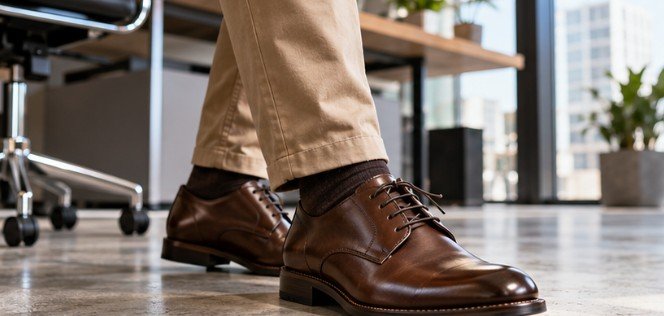
If you are choosing footwear for work, the same principle matters when selecting dress shoes appropriate for business-casual outfits: structural condition matters just as much as appearance.
Repairable or Walk Away?
| Condition | Likely decision | Why |
| Slight outer-corner wear | Usually keep or buy | Often normal and repairable later |
| Top lift significantly worn | Good repair candidate | Replaceable component |
| Wear entering heel stack | Possibly repair | Requires rebuilding and higher labor |
| Heel visibly tilts on a flat surface | Inspect professionally | Damage may extend beyond the lift |
| Cracked heel base or separated sole | Proceed cautiously | Structural repair may be required |
| Collapsed counter plus heavy sole wear | Usually skip | Multiple components are compromised |
This distinction answers can uneven heel wear on used shoes be repaired more accurately than a simple yes or no. The wear pattern matters, but the depth and surrounding condition matter more.
Should You Correct the Previous Owner’s Wear Pattern?
Yes. I would not simply continue wearing a secondhand pair with a heavily sloped heel.
Your foot should not have to adapt to an angle created by somebody else’s walking pattern. Repair the heel first, then judge how the shoes feel on your feet.
That does not mean everyone with uneven wear automatically needs orthotics. Shoe wear alone cannot diagnose overpronation, supination, leg-length differences, or another biomechanical condition.
For persistent discomfort or unusually rapid uneven wear across your own shoes, professional assessment is more useful. The American Podiatric Medical Association explains that podiatrists can evaluate gait and lower-extremity mechanics when determining whether shoe inserts or prescription orthotics are appropriate. APMA information on orthotics and shoe inserts
MedlinePlus likewise notes that orthotics may help some adults experiencing painful flexible flat feet and orthotics.
When the Shoes Are Not Worth Repairing
Repairability and value are different questions. A cobbler might technically be able to restore heavily worn shoes, but several simultaneous problems can make replacement smarter. Be cautious when you see cracking uppers, separating soles, badly compressed interiors, deteriorated foam, damaged welts, loose heel blocks, or severe asymmetry throughout the shoe.
Fit matters too. The American Academy of Orthopaedic Surgeons emphasizes that footwear fit recommendations should accommodate the shape of the foot and provide appropriate stability and space.
For dress shoes you plan to wear professionally, condition should complement—not undermine—your formal office clothing combinations.
FAQs
1. Can uneven heel wear on used shoes be repaired completely?
Usually, if wear is limited to the replaceable heel lift or repairable heel stack. Damage involving the heel base, welt, upper, or badly distorted structure may be harder to restore.
2. Is outside heel wear normal?
Some outer-rear heel wear is common because many people initially contact the ground near that area. Severe slanting, rapid deterioration, or major differences between shoes deserve closer evaluation.
3. Should both heel lifts be replaced?
Often, yes. Replacing both helps maintain consistent heel height, traction, and balance rather than combining a fresh heel with a significantly worn opposite one.
4. Does uneven heel wear prove that someone overpronates?
No. Wear patterns provide clues, not a medical diagnosis. Foot structure, walking habits, surfaces, injuries, shoe design, and other factors can influence outsole wear.
Final Take
A slanted heel is not automatically a reason to reject a good pair of secondhand shoes. I would first identify exactly which layer has worn away. If the damage stops at the heel lift, the repair can be one of the simplest ways to extend a quality shoe’s useful life.
What changes my decision is structural damage. Once uneven wear has spread into the heel stack, welt, counter, sole, or upper, I factor both repair cost and remaining shoe life into the purchase. The best used shoe is not the one with zero wear. It is the one whose wear is understandable, repairable, and priced accordingly.