A pale toe cap can make an otherwise polished outfit feel unfinished. Before replacing a pair, I would check whether the problem is lost color, dry leather, or old polish hiding the finish.
Understanding how to restore faded color on leather dress shoes starts with that distinction. Matching shoe cream often improves mild fading, while deeper discoloration may require professional recoloring. The goal is an even, natural appearance without covering the leather in unnecessary products.
Can Faded Leather Shoes Regain Their Original Color?
Many smooth leather shoes can regain a richer appearance through cleaning and colored cream polish. However, restoration does not guarantee an exact factory-color match.
Look at both shoes in natural daylight. Dusty surfaces and cloudy polish can resemble fading. Dry leather may look lighter, while abrasion can remove pigment from toes and heels. Peeling coatings, deep cracks, and exposed fibers require more than routine polishing.
Check the material before starting. This routine suits compatible smooth leather Oxfords, Derbies, and loafers. Suede, nubuck, patent leather, shell cordovan, and painted finishes need appropriate products and separate instructions.
Should You Use Shoe Cream, Wax Polish, or Leather Dye?
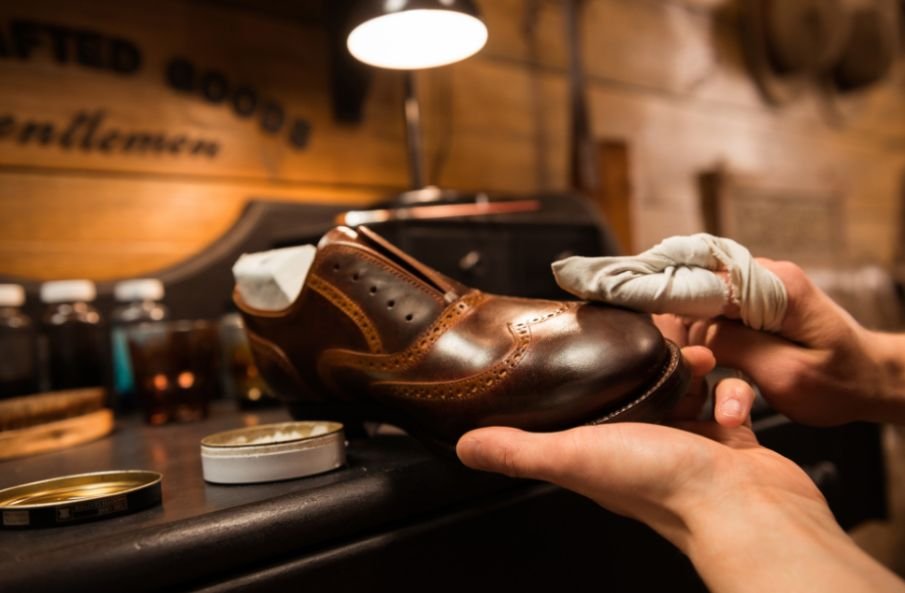
Colored shoe cream is usually the starting point for light fading and superficial scuffs. Its pigment helps refresh the tone, while its conditioning ingredients can improve the leather’s appearance.
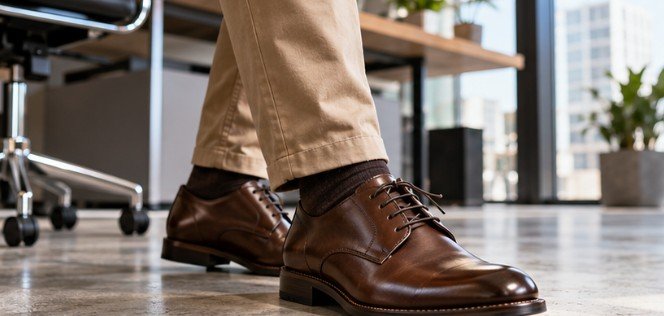
For leather dress shoes worn to the office every day, choosing suitable cleaning and polishing products is only one part of maintaining a consistent finish. Understanding how to care for leather shoes worn to work every day can help you establish a practical routine that preserves their appearance while minimizing unnecessary product buildup.
Wax polish mainly adds shine and surface protection. Although colored wax can disguise small imperfections, building thick layers over faded areas may produce an uneven finish.
Neutral polish adds no matching pigment, so it cannot replace missing color.
Leather dye provides more substantial recoloring on suitable leather. Existing coatings can prevent absorption, making preparation essential. Dyeing also introduces a greater risk of permanent shade changes and patchiness.
How Do You Prepare Dress Shoes for Color Restoration?
Remove Dirt and Check for Polish Buildup
Remove the laces and insert properly fitted shoe trees. Brush away loose grit with a clean horsehair brush, including around the welt and seams.
Wipe the uppers with a barely damp cloth if the manufacturer allows it. For stubborn residue, choose a compatible leather cleaner and test it first. Avoid soaking the shoes or automatically stripping the entire finish.
Let the leather dry naturally, away from radiators, hair dryers, and direct sunlight.
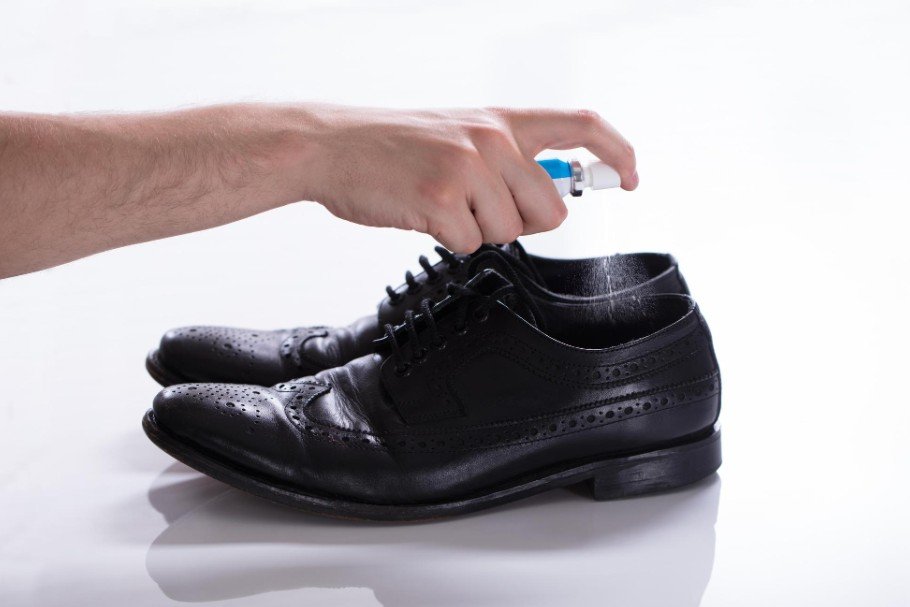
Allowing leather shoes to dry thoroughly after cleaning also helps prevent lingering moisture from contributing to unpleasant smells inside the footwear. If odors persist despite proper drying, these tips on how to remove odors from leather shoes can help you freshen the interior without unnecessarily damaging the leather.
Condition Only If the Leather Needs It
If the cleaned leather feels dry or stiff, apply a small amount of compatible conditioner. Follow its directions, allow absorption, and remove excess.
Heavy conditioning can darken some finishes or leave greasy residue. Check the shoe cream’s instructions too: a separate conditioning step may be unnecessary.
How Do You Restore Color Without Leaving Patches?
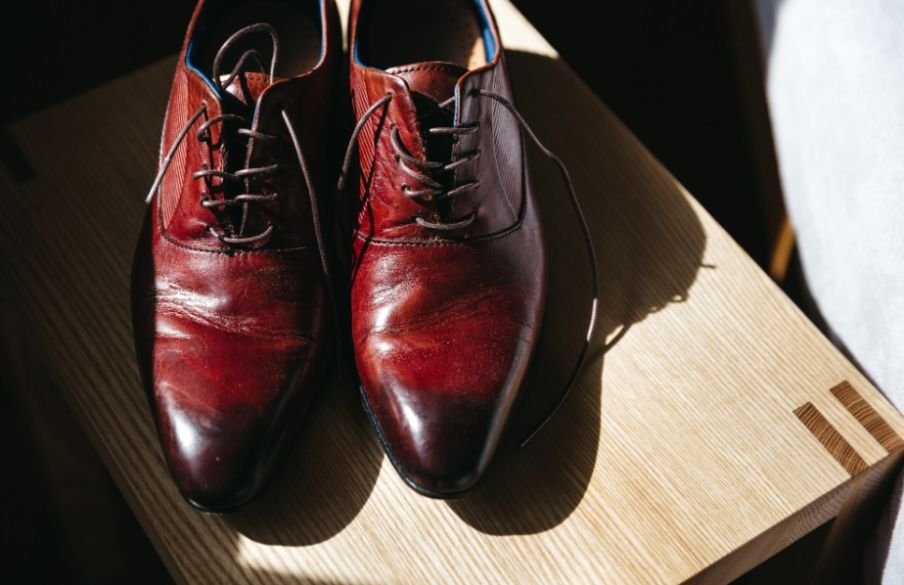
Match the Cream to the Existing Leather
Choose a shade close to the original color, using a less-worn section as your reference. Brown, chestnut, tan, burgundy, and oxblood can have noticeably different undertones.
Avoid automatically choosing a darker cream for better coverage. It may alter lighter leather or flatten intentional burnishing.
Test the cream on a small, inconspicuous area. Let it dry and buff it before judging the match.
Apply Thin Layers and Blend Carefully
The practical answer to how to restore faded color on leather dress shoes is controlled application rather than heavy coverage.
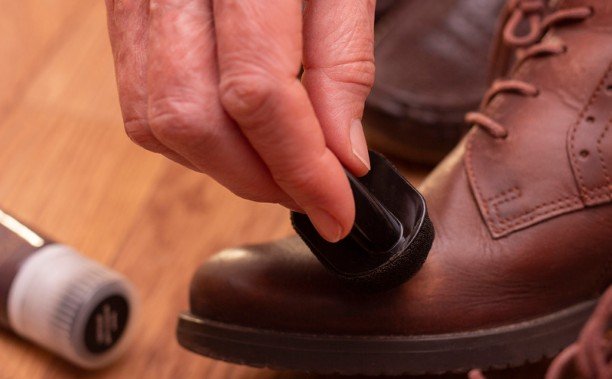
Use a soft cloth or dauber to spread a thin layer across the affected leather panel. Blend beyond the faded spot so the correction does not resemble a painted patch.
Protect contrasting stitching and keep pigment away from linings. Allow the cream to rest according to its label, then brush lightly. Assess the result before adding another thin layer.
Buff Before Adding Optional Wax
Buff with a clean horsehair brush and soft cloth until the finish looks even. If desired, add a little compatible wax to the toe caps.
Avoid thick wax layers across flexing creases. Treat faded sole edges separately with suitable edge dressing, keeping it off the uppers.
When Should You Use Dye or Visit a Cobbler?
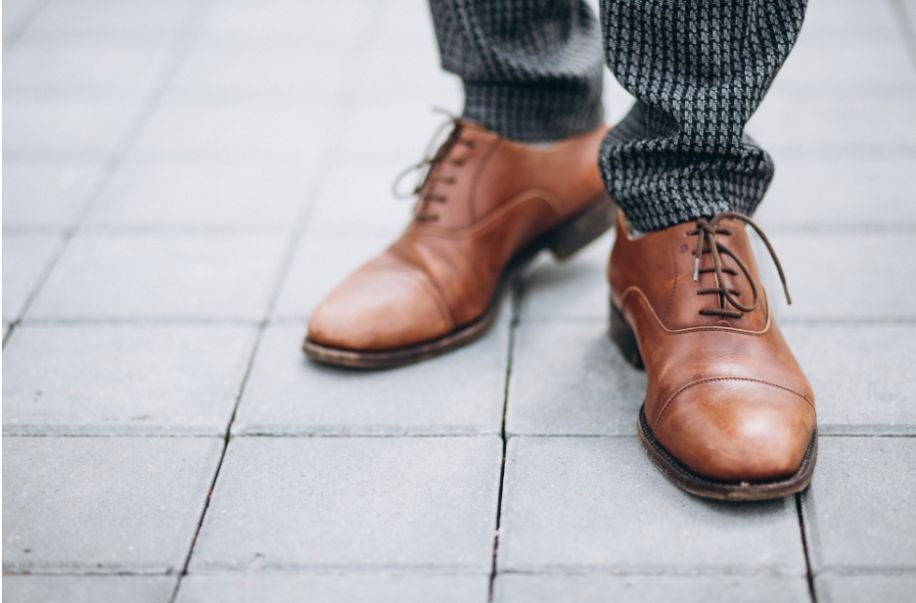
Consider professional help when matching cream leaves pronounced pale patches, the finish is peeling, or the shoes have valuable antiqued details.
Dyeing requires a compatible preparation, dye, and finishing system. Follow the product instructions rather than improvising with household solvents. Protect stitching, soles, and interiors, and use suitable ventilation.
Do not apply conditioner immediately before dye unless the dye system specifically permits it. Surface oils and coatings can interfere with absorption.
How Can You Keep Restored Color Looking Even?
Brush shoes after wear and rotate pairs so they can dry between outings. Use shoe trees and store them away from prolonged sunlight and heat.
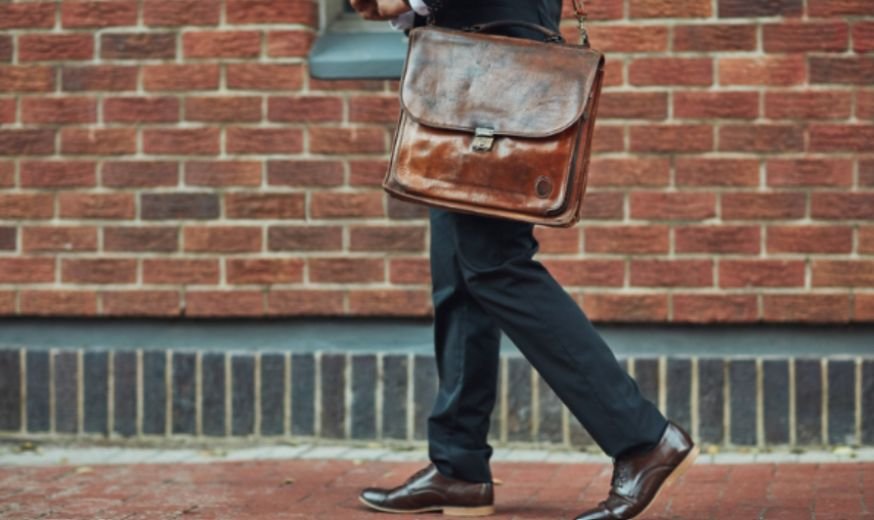
Beyond daily care, proper storage helps preserve the finish and maintain the color of restored leather shoes between wears. Following these recommendations for how to store men’s leather dress shoes can help limit exposure to excessive heat, sunlight, and moisture that may contribute to fading or deterioration.
If you need to stretch synthetic shoes, use gentle methods suited to the material and avoid excessive heat.
Remove dirt promptly, maintain weather protection where recommended, and refresh colored cream when needed. Repeated heavy applications can obscure the finish and create buildup.
Frequently Asked Questions
1. Can I Learn how to restore faded color on leather dress shoes Without Dye?
Yes. Compatible colored cream often improves mild fading. Clean, test, apply sparingly, and buff before deciding whether stronger treatment is necessary.
2. Will Conditioner Bring Back Missing Color?
Conditioner may improve dryness-related dullness, but it does not replace missing pigment. Test it because some products darken leather.
3. Why Does the Restored Color Look Uneven?
Residue, uneven absorption, excessive cream, or a mismatched shade can cause patchiness. Stop adding product and reassess the surface.
4. Can Black Polish Restore Brown Shoes?
It can darken them unevenly rather than restore their original shade. Use a close brown match instead.
My Final Take
I would start with careful assessment and matching cream before considering permanent recoloring. A faded toe or dull upper does not automatically mean the shoes need replacing. Cleaning away residue, conditioning only when needed, and applying thin layers of compatible colored cream can make a noticeable difference without overwhelming the original finish.
I would also judge the result after drying and buffing rather than immediately adding more product. A hidden-area test helps check the shade, especially on tan, burgundy, or intentionally burnished leather. My goal would be a balanced, natural appearance rather than covering every variation with heavy polish.