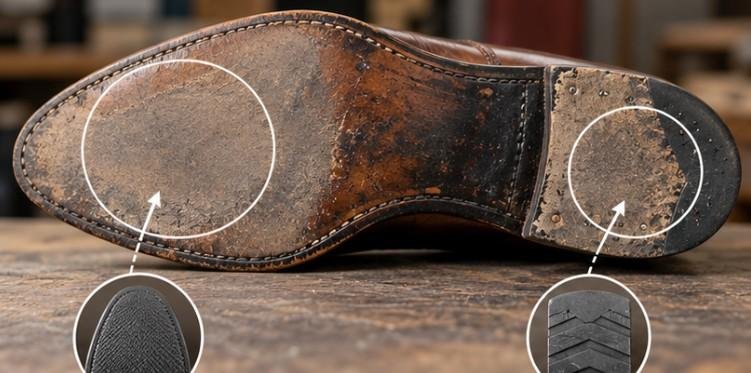
A used shoe can look polished on top while the part touching the pavement is already near failure. That matters because outsole wear does more than make a shoe look old: worn tread can reduce traction, alter how the shoe sits underfoot, and eventually expose structural layers that were never meant to contact the ground.
Knowing how to tell if used shoes need resoling therefore starts underneath the shoe, not with scratches, wrinkles, or faded leather. Before wearing a thrifted loafer, vintage Oxford, work boot, or secondhand welted shoe, I would inspect tread depth, heel balance, sole thickness, edge wear, and the condition of the welt.
Research on footwear traction gives us an especially useful lesson: the size of a worn-smooth area can matter more than the shoe’s age alone.
Why Sole Wear Deserves More Attention Than the Upper
Leather uppers often survive much longer than outsoles. Creasing, scuffs, discoloration, and minor dryness may look dramatic yet remain largely cosmetic.
The outsole takes a different kind of punishment. Every step subjects it to friction, compression, flexing, and shear forces.
Research archived by the Centers for Disease Control and Prevention found that heavily worn footwear can lose friction because worn tread becomes less capable of moving liquid away from the shoe-floor interface. Instead, liquid pressure can build beneath the sole and reduce traction.
That is particularly relevant for used shoes because you rarely know how many miles they have already covered.
The Five-Minute Used-Shoe Resole Test
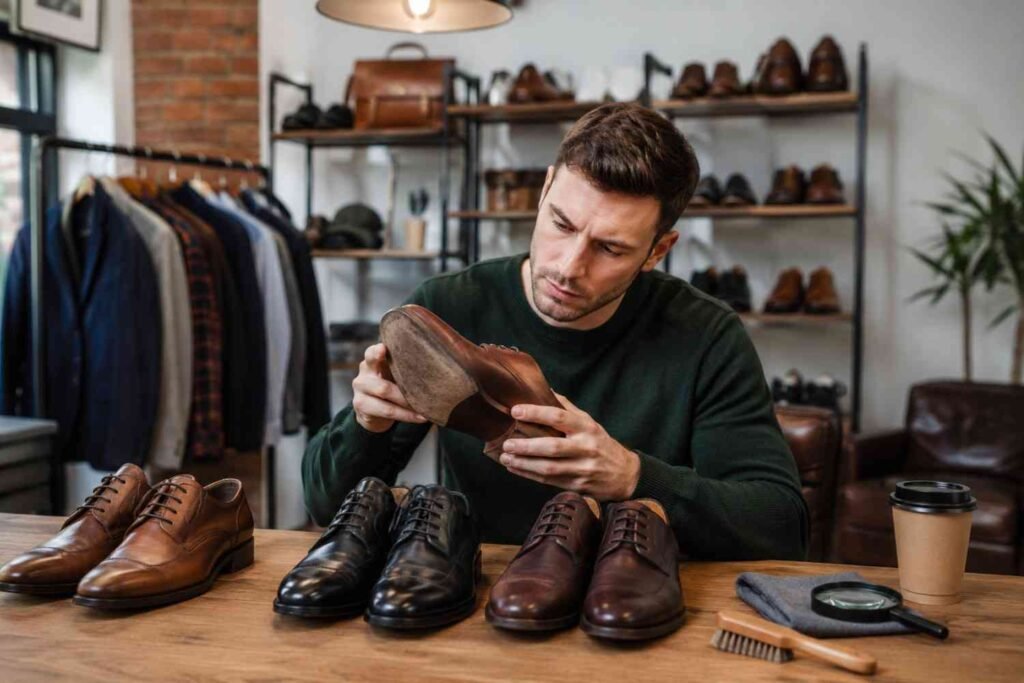
You do not need specialist tools to perform a useful first inspection. Put both shoes upside down under good lighting and compare them side by side.
1. Look for a Large Smooth Patch
Tread does not have to disappear across the entire outsole before performance deteriorates.
University of Pittsburgh researchers developed an observational test for slip-resistant footwear based on the size of the worn region. Their simple method compares the worn patch with the base of an AA battery; once the smooth region grows beyond roughly that size, traction performance may be meaningfully compromised. University of Pittsburgh explains the test and the research behind it.
That measurement was developed for slip-resistant footwear rather than every type of dress shoe, so it should not be treated as a universal cobbler’s rule. It is still an excellent reminder that one concentrated bald patch matters.
2. Check Whether the Sole Has Become Paper-Thin
Press the outsole around the ball of the foot, where dress shoes commonly receive heavy wear.
A leather sole may naturally be thinner there than elsewhere, but extreme softness, obvious thinning, or a depression that feels dramatically different from the surrounding material can indicate that little usable outsole remains.
If you can see or feel the layer beneath the original sole, stop wearing the shoes until a cobbler evaluates them. Waiting until a hole develops can turn a straightforward resole into a more extensive repair.
3. Compare Heel Wear on Both Shoes
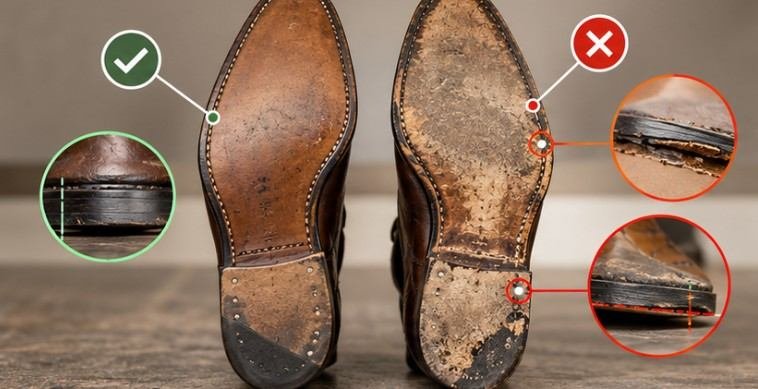
Set the shoes on a level table and look at them from behind.
Some wear on the outside edge of the heel is common. The problem begins when one heel is substantially lower on one side, the shoe noticeably leans, or the heel rubber has worn through into the harder material beneath it.
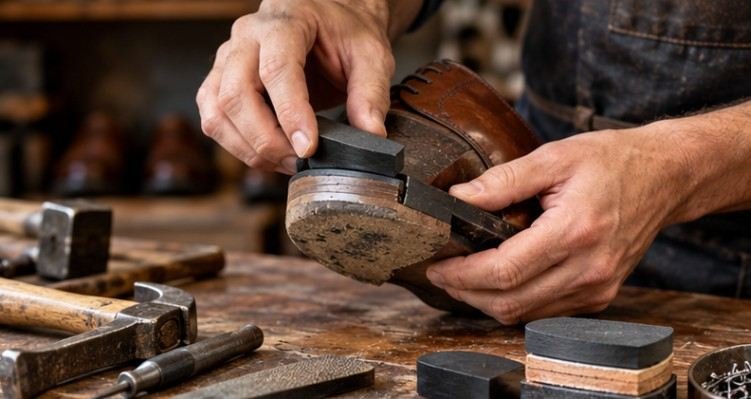
Uneven wear does not automatically mean the shoes are ruined. Heel lifts are among the components cobblers routinely replace.
However, severe unevenness deserves attention because shoe abrasion patterns can reflect individual gait mechanics. Research examining shoe wear has found relationships between gait characteristics and where abrasion develops.
For secondhand shoes, this matters even more: you may be inheriting a wear pattern created by someone else’s stride.
4. Inspect the Forefoot Flex Area
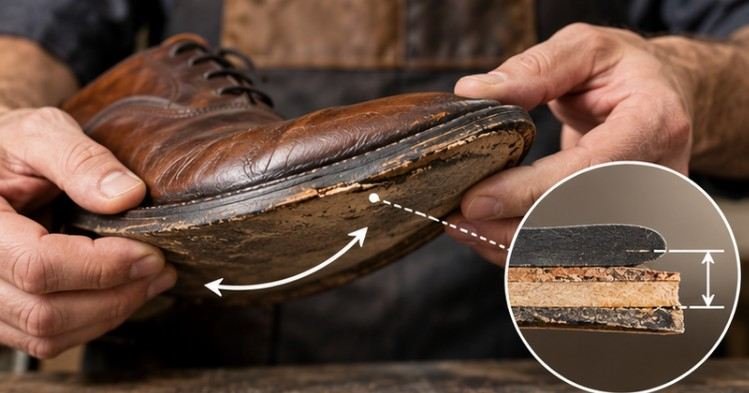
Bend the shoe gently where your toes would naturally flex.
Small surface creases are normal. Splits running through the outsole, chunks separating from rubber, or leather that opens when flexed indicate deterioration rather than ordinary wear.
Also look around the perimeter for separation between the sole and upper.
A small section of loose edge material may be repairable. Widespread separation, crumbling foam, or deteriorated adhesive may mean more than a conventional resole is required.
5. Examine the Welt and Stitching
With Goodyear-welted or other stitched footwear, the condition of the welt is almost as important as the outsole itself.
The welt is the strip that helps connect the upper to the sole structure. A cobbler needs sound material to work with.
Look for deep cuts, missing chunks, pulled stitches, cracking, or obvious separation around the perimeter. Dirt can make damage harder to judge, so cleaning the area first is useful. Our guide to cleaning shoe welts and stitching explains how to expose these areas without aggressively scraping them.
Resoling Cannot Fix Every Worn Shoe
A new outsole does not magically rebuild the rest of the shoe. Before paying for repair, check whether the upper remains structurally sound. Fine leather creases, dryness, and superficial scratches are different from cracks that split completely through the material.
Deep tears near the welt are especially problematic because a repairer may have difficulty securing a new sole to damaged surrounding material.
You should also inspect the interior. Collapsed heel counters, torn linings, hardened cushioning, strong contamination, or misshapen insoles can change the economics of restoration.
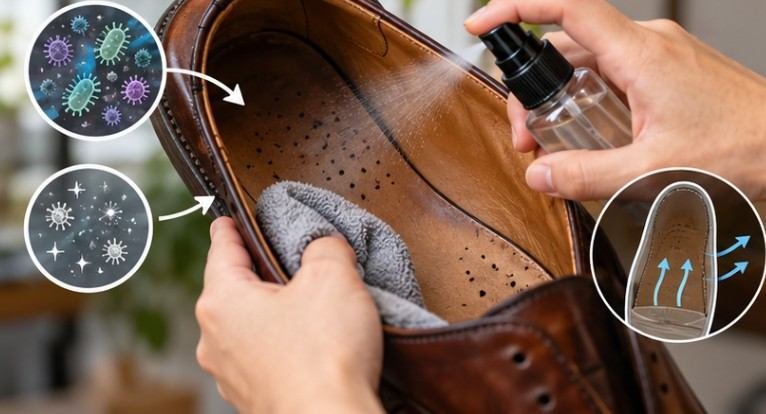
Odor alone is not necessarily structural damage. If the pair is otherwise worth saving, proper cleaning may solve the problem; see our guide on removing odors from leather shoes.
Do Used Shoes Need Resoling Just Because the Tread Looks Worn?
Not necessarily. Appearance alone can be misleading. A shallow pattern may have been part of the original design, particularly on smooth leather dress soles. Conversely, a rubber outsole may still show tread around its edges while the highest-pressure zone has become smooth.
That is why how to tell if used shoes need resoling is best answered by combining several observations: remaining thickness, concentrated wear, exposed layers, heel balance, separation, and the overall structural condition of the shoe.
The Occupational Safety and Health Administration recommends slip-resistant soles for slippery working conditions, while OSHA-supported training material advises replacing footwear before soles become worn smooth.
For everyday footwear, that is a sensible principle as well: do not make a visible hole your first warning sign.
What Research Says About Waiting Too Long
A study involving 57 participants found that larger worn regions on shoe outsoles were associated with greater slip occurrence. The proposed mechanism is straightforward: worn tread removes channels that normally help liquid escape beneath the shoe.
Another longitudinal study found that traction performance declined as footwear accumulated natural wear. At a worn-region size of 800 square millimeters, researchers reported friction reductions ranging from 16% to 38% in the tested footwear.
Foot health is another consideration. MedlinePlus advises replacing shoes once they become uncomfortable or their soles visibly wear, while the American Academy of Orthopaedic Surgeons notes worn, poorly cushioned footwear as a potential risk factor in bone stress injuries.
These findings do not mean every worn dress shoe is dangerous. They do show why sole condition should be judged functionally, rather than by age alone.
Is Resoling a Used Pair Worth the Money?
Resoling makes the most sense when the upper, welt, and basic shoe structure remain good.
Quality stitched leather shoes can be particularly strong candidates because the sole was designed to be serviced. A well-kept upper paired with an exhausted outsole is exactly the situation where repair can extend usable life.
Cheap cemented shoes with deteriorating synthetic uppers, compressed midsoles, damaged linings, and failing adhesives may be less economical.
Before buying a used pair online, ask the seller for clear photographs of the entire outsole, both heels, the welt edge, toe area, interior heel, and flex point. Those images usually reveal more about future repair costs than a freshly polished upper.
FAQs
1. Can you resole shoes after a hole appears?
Often, yes. However, repairing them before the hole reaches deeper structural layers usually simplifies the job and can reduce additional repair work.
2. How much outsole wear is too much?
There is no universal measurement for every shoe. Large smooth patches, extreme thinning, exposed underlying layers, holes, or badly uneven heels are stronger warning signs than age alone.
3. Can uneven heel wear be repaired without a full resole?
Often it can. A cobbler may replace the heel lift or worn heel section while leaving a serviceable forefoot sole intact.
4. Should I wear used shoes before deciding whether to resole them?
Avoid extended wear if the outsole is extremely thin, split, bald, unstable, or separating. Have a cobbler inspect questionable footwear first.
Final Take
The smartest time to resole a shoe is usually before the outsole completely fails. Once tread disappears, the sole becomes extremely thin, or wear reaches deeper structural components, what could have been routine maintenance can become a larger restoration job.
That is why I judge secondhand footwear from the ground up. Check the worn patch, compare heel height, press the forefoot, inspect the welt, and look for separation before worrying about cosmetic scuffs. Learning how to tell if used shoes need resoling can turn a risky thrift-store gamble into a repairable pair with years of useful wear left.