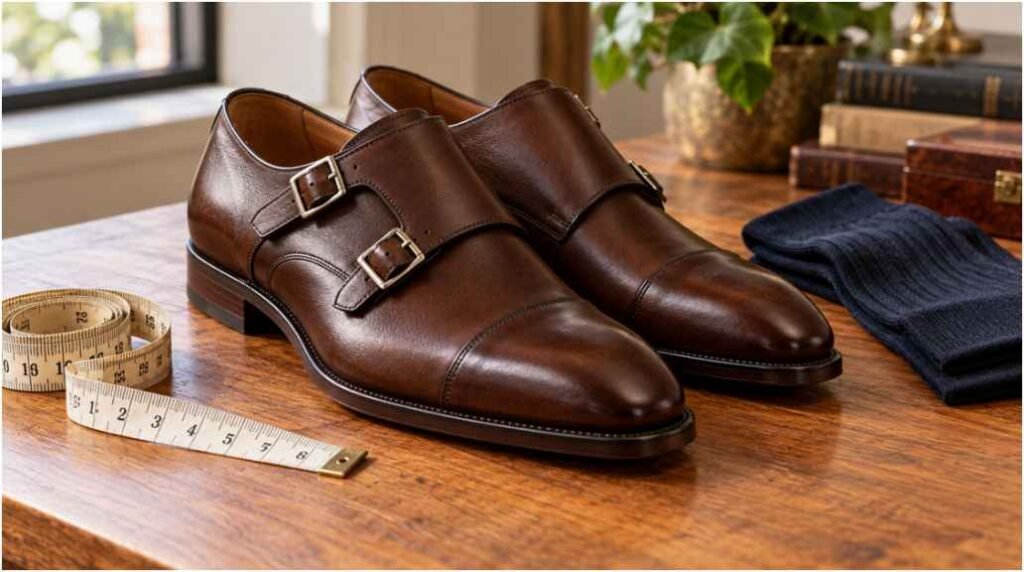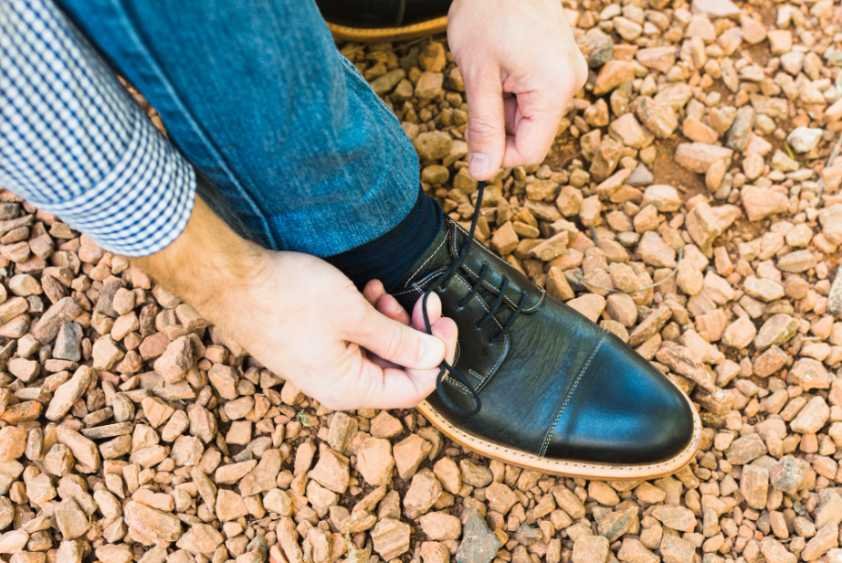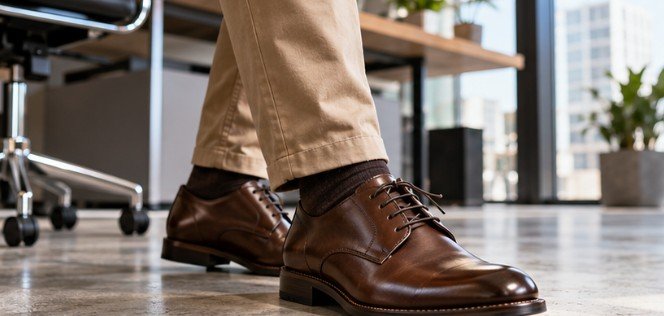
Oxford shoes for men with flat feet can look sharp on the outside while hiding serious fit problems underneath. That contrast is what makes shopping for them so frustrating. A polished cap toe may seem perfect for work or formal events, but once the foot starts spreading under body weight, a narrow last, weak heel structure, or flat insole can quickly turn elegance into discomfort.
I look at these shoes differently now. Instead of asking whether an Oxford looks formal enough, I first check whether its shape and internal structure can actually support a low arch. Contoured footbeds, firm heel counters, roomy toe boxes, stable midsoles, and enough depth for orthotics matter far more than decorative broguing or premium leather alone.
The right pair should give me both sides of the equation: the clean, professional appearance expected in American offices and formal settings, plus enough structure to make a full workday feel manageable. That is the standard I use when comparing supportive Oxfords for flat feet.
Are Oxford Shoes Good for Men With Flat Feet?
They can be, but Oxford construction creates an important fit challenge.
An Oxford uses closed lacing, meaning the eyelet facings are stitched beneath the vamp. This produces the sleek profile that works so well with suits, but it gives the shoe less adjustment across the instep than an open-laced Derby or a more flexible minimalist shoe.
When an arch lowers under load, the foot can become broader through the midfoot and forefoot. A narrow Oxford last may therefore squeeze the foot even when the numerical size appears correct.
Men who experience pressure across the top of the foot as well as reduced arch support should also consider instep volume when choosing formal footwear. This guide to the best Oxford shoes for high-instep men explains how shoe construction, lacing, and fit affect comfort around the instep.
I prefer Oxfords built on a more generous last, with sufficient depth above the midfoot and a rounded or moderately almond-shaped toe. Men who need additional room should consider true wide widths rather than simply buying a longer shoe.
What Features Should Flat-Footed Men Look for in Dress Oxfords?
Contoured Arch Support Should Do More Than Feel Soft
A thick layer of foam is not automatically supportive. I look for a contoured footbed that follows the shape beneath the medial arch and provides a stable platform.
Vionic’s current Lombard Oxford, for example, uses the company’s built-in VIO MOTION footbed with contoured arch support, cushioning, and a deep heel cup. Its EVA midsole is also designed to absorb shock and improve overall heel-shoe interactions during walking and prolonged standing.
That distinction between support and softness matters. Memory foam can improve immediate comfort, but the underlying structure must still help stabilize the foot.
A Firm Heel Counter and Deep Heel Cup Improve Stability

The heel counter is the reinforced structure around the back of the shoe. I prefer a heel that does not collapse easily when I squeeze it.
A deeper heel cup can add another layer of stability by seating the heel more securely. Together, a firm counter and properly shaped heel cup may help limit excessive rearfoot movement associated with overpronation.
I would not claim that any shoe can completely prevent overpronation, but stable construction can provide a more controlled platform than an extremely soft, unstructured dress shoe.
A Wide Toe Box Gives the Forefoot Room to Spread
Flat feet often spread under body weight. That makes narrow pointed Oxfords particularly difficult for some men.
I want enough room for my toes to sit naturally without pressing against one another or against the sides of the shoe. A wider toe box does not have to look bulky. Many modern comfort dress shoes retain a formal silhouette while providing more usable forefoot space.
Men who need extra room across the forefoot can also explore these comfortable wingtip shoes for wide feet for options that combine a roomier fit with polished styling suitable for work and formal occasions.
A Structured Midsole Should Resist Collapsing in the Center
This is one feature I would check before cushioning.
The sole should flex primarily near the ball of the foot rather than folding freely through the arch. Excessive midfoot twisting can indicate that the shoe provides little structural resistance.
A supportive midsole does not need to feel like a rigid board. It simply needs enough density and torsional stability to maintain its shape under body weight.
Which Oxford Brands Offer Flat-Foot-Friendly Features?
Vionic Lombard Oxford
Vionic is one of the more relevant options for US shoppers because its men’s Oxford collection explicitly emphasizes built-in orthotic support. The Lombard Oxford combines brogue styling with a deep heel cup, contoured arch support, shock-absorbing cushioning, and a lightweight EVA midsole. It is also offered in medium and wide widths.
For me, its biggest advantage is that the supportive components are integrated without making the shoe look obviously orthopedic.
OrthoComfoot Orthopedic Dress Shoes
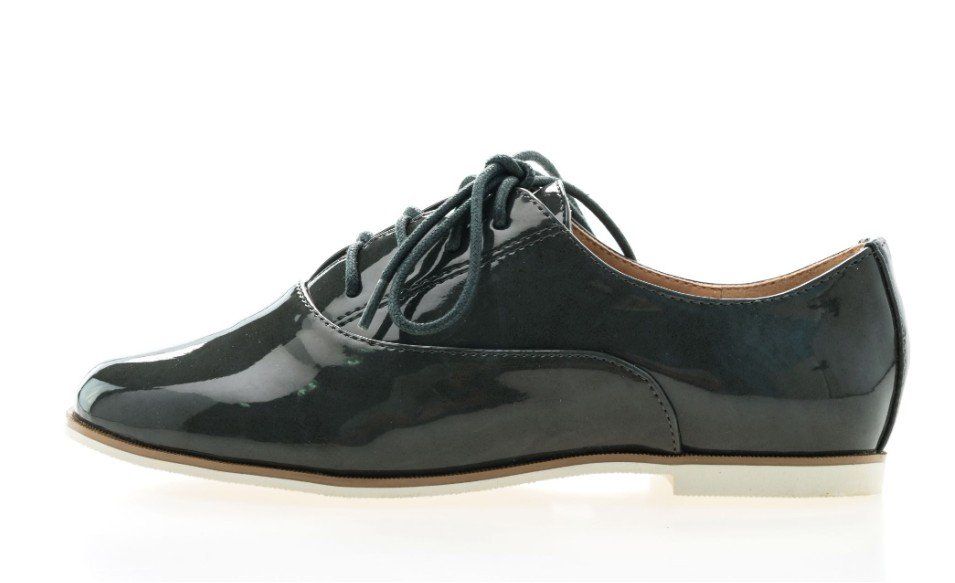
OrthoComfoot takes a more orthopedic approach. One of its men’s formal leather models is marketed for conditions including flat feet and extra-wide or swollen feet. The design incorporates detachable TPU support, allowing users to adjust the amount of structural assistance inside the shoe.
This type of construction is worth considering when conventional dress-shoe insoles feel too soft or when additional internal support matters more than achieving the slimmest possible Oxford silhouette.
Frido Comfort Formal Shoes
Frido currently lists Comfort Formal Shoes as well as a separate Comfort Formal Shoes with Arch variant. Its formal-shoe range emphasizes wide toe-box options, which can be useful for feet that spread under load.
Frido also markets zero-drop construction in parts of its wider footwear range. However, I would verify the exact specifications of the formal model before assuming that a particular dress shoe is zero-drop, because the current formal-shoe listings do not clearly apply that feature to every model.
Costoso Italiano Woodford Balmoral
Costoso Italiano sells Woodford Balmoral toe-cap Oxfords specifically labeled for flat feet and arch support. The brand also offers Woodford versions in additional widths, including extra-wide options in parts of its Oxford collection.
The Woodford is especially interesting for men who want a more traditional Balmoral appearance rather than a comfort-shoe aesthetic.
Are Removable Insoles Important for Flat Feet?
If I use prescription or aftermarket orthotics, removable insoles become one of my highest priorities.
Putting a thick orthotic on top of a fixed factory footbed can raise the foot too high inside an Oxford. Because closed lacing already limits instep adjustment, the added volume may create pressure across the vamp.
The best solution is enough internal depth plus a removable footbed that can be replaced with the intended orthotic.
OrthoComfoot’s detachable TPU components demonstrate how customizable internal support can work, while Vionic’s men’s Oxford range also highlights removable leather-covered EVA footbeds on supported models.
Oxford vs Derby Shoes for Flat Feet: Which Is Better?
A Derby usually wins for adjustability. Its open lacing lets the facings spread farther apart, which can better accommodate a broad midfoot, high-volume instep, swelling, or an orthotic.
An Oxford wins on traditional formality.
For conservative American offices, business presentations, weddings, and formal events, a cap-toe Oxford remains one of the safest choices. I would therefore choose the Derby when maximum adjustability matters and the Oxford when I need greater formality but can find the right last and width.
Are Rubber Soles Better Than Leather Soles for Flat Feet?
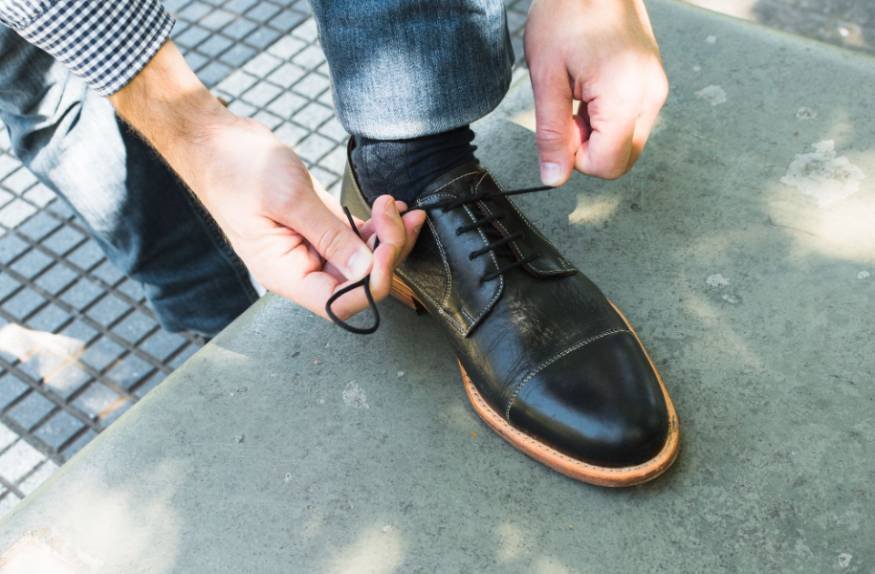
I generally prefer a well-designed rubber or hybrid outsole when I expect substantial walking.
Leather soles provide a classic dress-shoe appearance, but rubber can offer additional grip and shock absorption on concrete sidewalks, office tile, train platforms, and parking garages.
Vionic’s Lombard, for example, uses a synthetic outsole with an EVA midsole rather than relying on a traditional thin leather sole.
That can make practical sense for someone commuting on foot in New York, Chicago, Boston, Washington, D.C., or another walkable US city.
How I Choose Oxford Shoes When I Have Low Arches
I never judge fit only while sitting. I stand and walk long enough for my foot to spread naturally. I check whether the heel stays secure, whether the widest part of my foot lines up with the widest section of the shoe, and whether the closed lacing creates uncomfortable pressure over my instep.
When shopping for oxford shoes for men with flat feet, I also bring the orthotic I intend to wear. I would rather discover an internal-volume problem in the store than after an eight-hour workday.
I avoid extremely tapered toes, completely flat footbeds, weak heel counters, and shoes that twist easily through the center. I also do not assume that expensive full-grain leather or Goodyear welt construction automatically means better arch support. Craftsmanship and foot support are separate considerations.
Construction quality is another factor worth considering when comparing formal footwear, particularly for buyers weighing long-term durability against fit and support. This guide to hand-welted bespoke leather dress shoes vs. factory-made explains the key differences between these approaches to shoemaking.
Frequently Asked Questions
1. What are the best oxford shoes for men with flat feet?
The strongest options combine contoured arch support, a stable heel counter or deep heel cup, adequate toe-box width, a structured midsole, and enough internal depth for an orthotic when necessary. Vionic, OrthoComfoot, Frido and Costoso Italiano currently offer dress-oriented shoes with several of these features.
2. Should men with flat feet always buy wide Oxfords?
No. Flat feet can increase foot spread, but width requirements vary. Measure both feet while standing and choose the width that matches your actual foot shape.
3. Can Oxford shoes accommodate custom orthotics?
Yes, provided the shoe has sufficient depth and preferably a removable factory footbed. Closed-lacing Oxfords with shallow interiors may become too tight when a thick orthotic is added.
4. Can flat feet cause heel pain in formal shoes?
Poorly fitting or inadequately supportive footwear can contribute to foot discomfort. Persistent heel, arch, ankle or knee pain should be assessed by an appropriate healthcare professional rather than treated solely by changing shoes.
My Final Take
I would never choose a formal shoe for flat feet based on cushioning alone. Arch contour, heel control, toe space, midsole stability, outsole design, width and orthotic compatibility tell me far more about how that shoe will perform through a full day.
The right Oxford should still look at home beneath a navy or charcoal suit, but it should also give the foot enough space and structure to function comfortably. That balance between traditional style and intelligent support is what turns a good-looking dress shoe into one I would actually want to wear from the morning commute through the last meeting of the day.