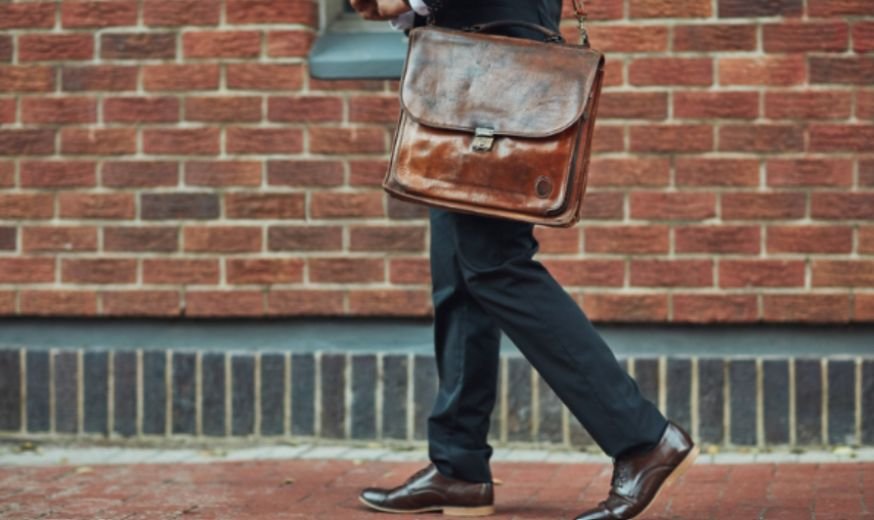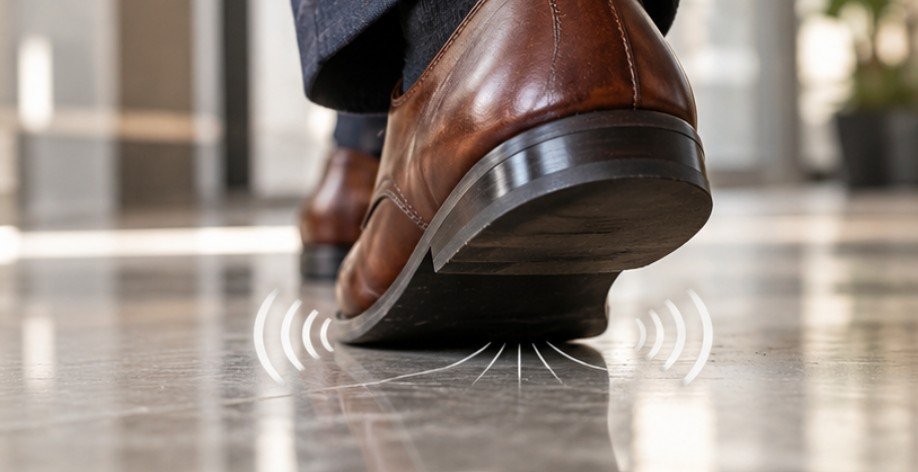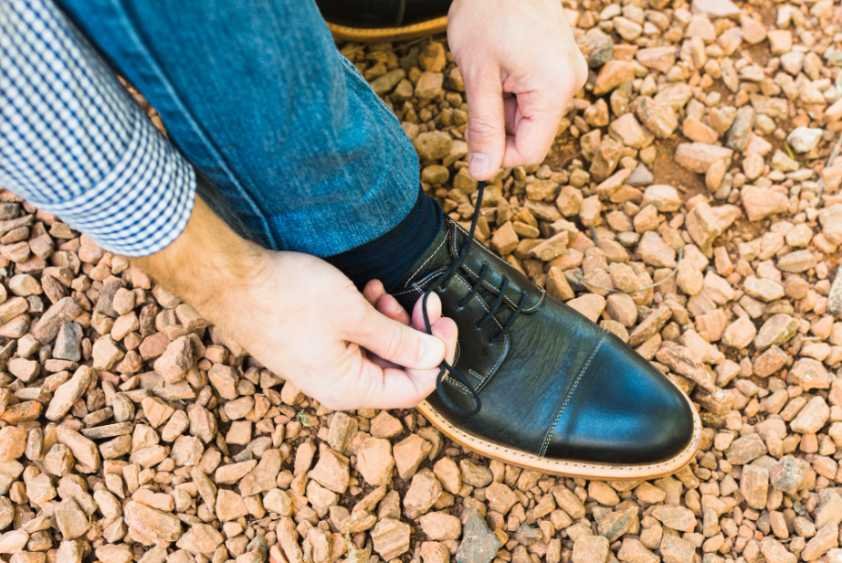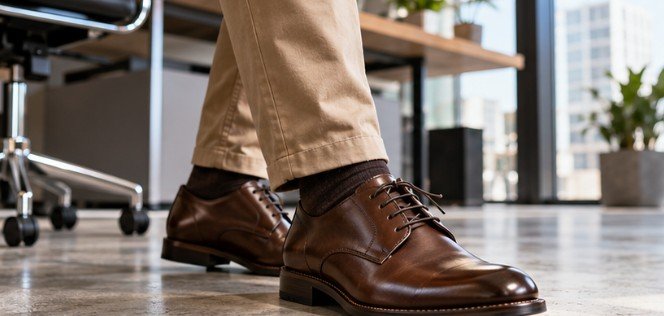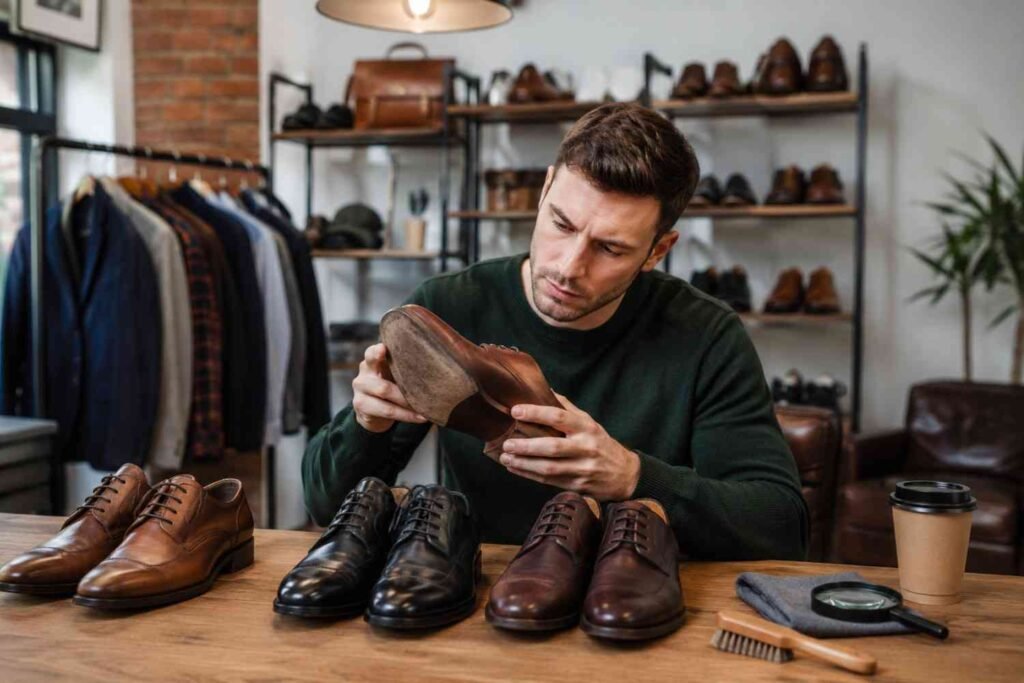
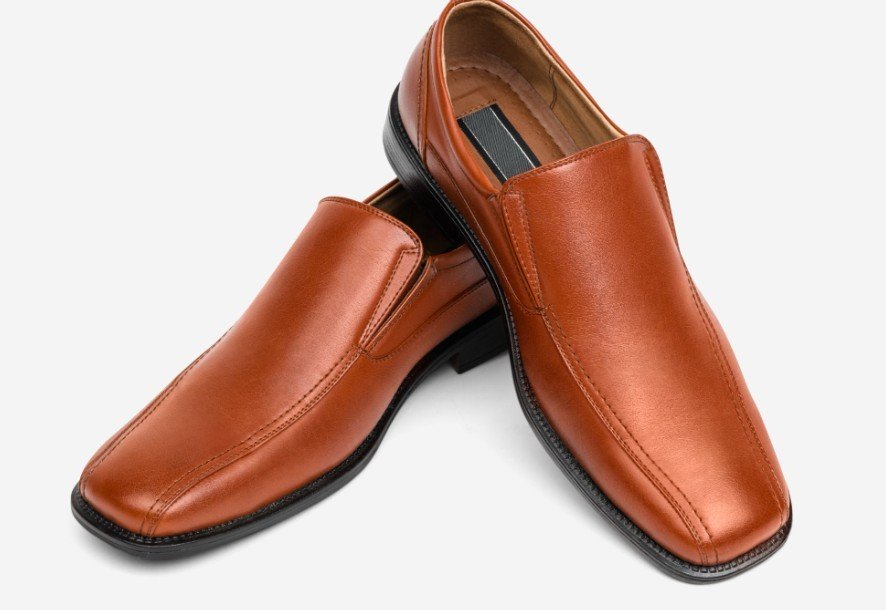
Brown oxford shoes for business casual have a rare advantage: they can make an office outfit look sharper without making it feel stiff or overdressed. That balance matters in modern American workplaces, where a full suit may be unnecessary but sneakers can still feel too relaxed.
What makes brown Oxfords especially useful is how easily their formality can shift. A dark brown cap-toe pair can look polished with gray wool trousers and a blazer, while brogued, suede, or lighter cognac versions feel more natural with chinos and textured sport coats.
I like them because one well-chosen pair can cover several dress codes without forcing the rest of the outfit to work too hard. The real difference comes down to shade, material, toe design, broguing, sole construction, and how you coordinate the shoes with your trousers and accessories.
Why Do Brown Oxford Shoes Work So Well for Business Casual?
Oxford shoes use closed lacing, meaning the eyelet sections sit underneath the vamp instead of opening outward like those on Derby shoes. This gives Oxfords their naturally sleek, refined appearance.
Brown reduces some of that formality. Dark coffee and chocolate tones remain professional, while medium brown, cognac, and tan create progressively more relaxed looks.
Styling details can lower the formality even further. A cap toe introduces a visible seam across the front of the shoe, while broguing adds decorative perforations. The more decorative detailing an Oxford carries, the easier it generally becomes to pair with textured trousers, chinos, and relaxed tailoring.
Which Brown Oxford Style Is Best for Business Casual?
Are Cap-Toe Oxfords the Most Versatile Choice?
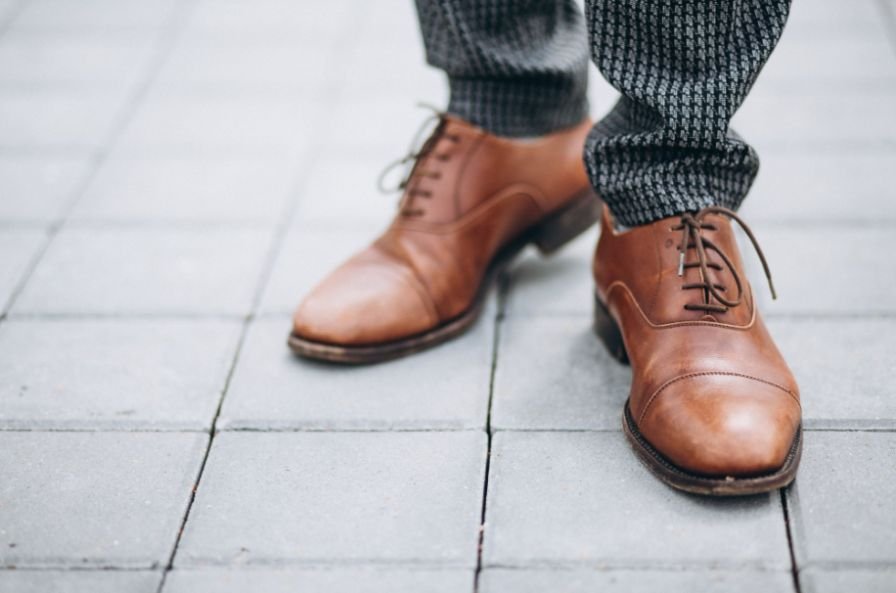
For most offices, I would start with a medium or dark brown cap-toe Oxford.
The straight seam across the toe gives the shoe visual interest without making it flashy. It works with wool trousers for important meetings but transitions easily to navy or khaki chinos on ordinary workdays.
If someone wanted only one pair of brown dress shoes for office use, this would be one of my safest recommendations.
Are Wingtip and Brogue Oxfords More Casual?
Yes. Broguing naturally lowers the formality of an Oxford shoe.
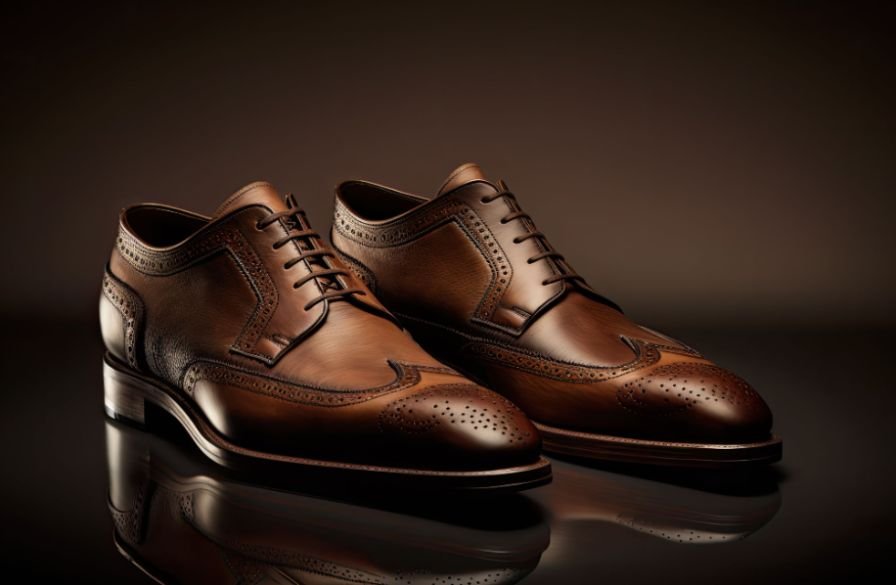
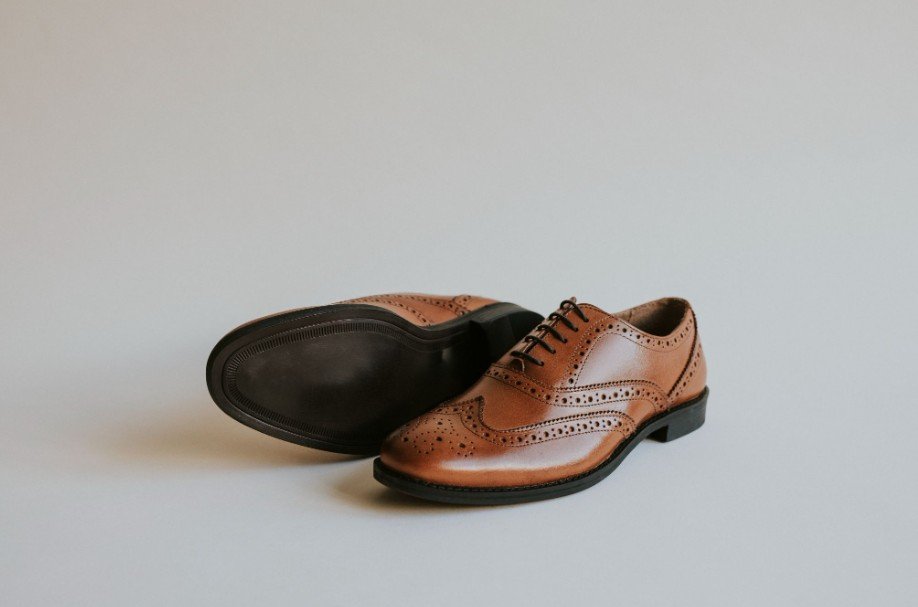
Quarter-brogues remain relatively refined, while semi-brogues and full-brogue wingtips have more decorative perforations and a stronger casual character. I particularly like brown wingtips with tweed, flannel trousers, olive chinos, and other texture-rich fabrics.
They can also work with dark denim in relaxed workplaces because their decorative design bridges the gap between dress shoes and casual clothing.
For men who want to wear this decorative style without sacrificing forefoot comfort, exploring comfortable wingtip shoes for wide feet can help them find options that balance a roomier fit with the refined appearance needed for business-casual outfits.
Are Hybrid or Sneaker-Sole Oxfords Good for the Office?
Hybrid Oxfords combine a traditional closed-lacing leather upper with a cushioned rubber or athletic-inspired outsole.
These shoes make sense in modern American offices where employees spend long days walking between departments, commuting, or standing at work. They offer more underfoot cushioning than traditional leather-soled dress shoes while maintaining a recognizable dress-shoe silhouette.
Beyond outsole cushioning, arch support and overall fit are important considerations when choosing office footwear. Men with flatter arches can explore this guide to Oxford shoes for men with flat feet for additional advice on balancing formal styling with foot comfort.
For men who prefer a more traditional brogued design with added everyday practicality, wingtip shoes with rubber soles for men offer another option, combining classic dress-shoe styling with improved traction for commuting and busy office days.
I would reserve them for relaxed business-casual environments rather than conservative law, banking, or executive settings.
Do Brown Suede Oxfords Work for Business Casual?
Brown suede immediately makes an Oxford appear more relaxed because the material has a soft, matte texture instead of the polished surface of calfskin leather.
Suede pairs especially well with chinos, corduroy, flannel, and seasonal sport coats. Medium or dark brown suede Oxfords can be particularly effective during fall, while lighter suede works well with spring wardrobes.
Are Plain-Toe and Wholecut Oxfords Too Formal?
A smooth plain-toe Oxford can appear more formal because there are few details breaking up its clean surface.
Wholecut Oxfords take this even further. They use a largely uninterrupted piece of leather and often have a sleek, elegant profile.
They can still work for business casual, but I would choose a softer leather finish rather than a high-gloss polish.
What Shade of Brown Oxford Shoes Should You Choose?
Dark brown is the safest option for offices that lean conservative. It pairs naturally with charcoal, navy, medium gray, and darker olive trousers.
Medium brown offers the greatest versatility. I can wear it with navy chinos one day and gray wool trousers the next without the shoe looking out of place.
Tan and cognac feel more relaxed and draw more attention. They work especially well with true khaki, stone, cream, beige, and lighter blue trousers.
For most wardrobes, medium brown gives the best balance between professional and casual.
What Pants Look Best With Brown Oxford Shoes?
Choosing trousers carefully makes brown oxford shoes for business casual look intentional rather than mismatched.
Can You Wear Brown Oxfords With Navy Chinos?
Navy and brown form one of the easiest combinations in menswear.
I like medium or dark brown Oxfords with navy chinos, a white or pale-blue button-down shirt, and a gray or navy blazer. The contrast looks professional without resembling a traditional suit.
Do Brown Oxfords Work With Gray Trousers?
Gray trousers pair particularly well with darker brown shoes.
Light gray creates noticeable contrast, while charcoal and chocolate brown create a more restrained combination suitable for meetings and client-facing work.
Can You Wear Brown Oxfords With Khaki, Stone, or Cream Pants?
Yes, particularly when using medium brown, cognac, or tan footwear.
Khaki chinos create a classic American business-casual look. Stone and cream trousers work especially well during spring and summer because lighter fabrics and lighter brown footwear naturally complement one another.
Do Olive Trousers Work With Brown Oxford Shoes?
Olive and brown share warm, earthy undertones, so they combine easily.
I prefer medium or dark brown shoes with olive chinos and a white, pale blue, or soft gray shirt. A navy sport coat can finish the outfit without making it look too formal.
Can You Wear Brown Oxford Shoes With Jeans?
You can, but the jeans need to match the refined shape of the shoes.
I would choose clean dark indigo denim with a straight or slim silhouette. Avoid distressed washes, excessive fading, or very loose jeans.
Brogue, wingtip, suede, or hybrid Oxfords generally work better with denim than highly polished plain-toe styles.
Should Your Brown Belt Match Your Oxford Shoes?
Your belt should belong to roughly the same brown family, but it does not need to be an exact match.
Dark brown shoes usually look best with a similarly dark belt, while tan or cognac shoes suit lighter brown leather. Coordinating these details well supports the idea that fashion could be a daily confidence boost rather than something that feels overly calculated.
I prefer close coordination over perfect matching because slight tonal differences make an outfit feel more natural.
Should Your Socks Match Your Shoes or Pants?
I usually match socks more closely to the trousers.
Navy trousers with navy socks create a continuous visual line, while gray trousers work well with gray or charcoal socks.
Subtle patterns are perfectly suitable for many US business-casual workplaces, but understated choices remain safer for presentations, interviews, and important meetings.
Are Oxford Shoes Better Than Derby Shoes for Business Casual?
Oxfords look sharper because their closed-lacing system creates a cleaner silhouette.
Derbies use open lacing, making them visually more relaxed and often more forgiving for men with higher insteps.
I choose Oxfords when I want a polished office look and Derbies when the outfit or workplace is more casual. Neither is automatically better; the surrounding clothing determines which one feels more natural.
What Common Styling Mistakes Should You Avoid?
The most common mistake is pairing extremely formal Oxfords with clothing that is too casual.
Highly polished wholecuts rarely make sense with faded jeans or untucked T-shirts. Likewise, bright tan shoes can look distracting beneath conservative charcoal tailoring.
Trouser length also matters. Excess fabric bunching around the shoe hides its clean shape.
Finally, keep the leather or suede in good condition. Dirty soles, dried leather, or neglected suede can undermine an otherwise polished outfit.
Frequently Asked Questions
1. Are brown oxford shoes for business casual appropriate for most US offices?
Yes. Medium and dark brown Oxfords work especially well in workplaces where employees wear chinos, tailored trousers, button-down shirts, knitwear, and blazers rather than full suits.
2. What is the best brown Oxford style for work?
A medium or dark brown cap-toe Oxford is usually the most versatile. Quarter-brogue styles are also excellent when you want a slightly more relaxed appearance.
3. Are sneaker-sole Oxfords considered business casual?
They can be in modern or relaxed workplaces. Traditional offices may still favor leather or thinner rubber soles because they create a more refined silhouette.
4. Can I wear suede Oxfords to the office?
Yes. Brown suede Oxfords work particularly well in less-conservative offices and with chinos, flannel, corduroy, and sport coats.
5. Can brown Oxfords be worn with a navy blazer?
Absolutely. A navy blazer with gray, khaki, olive, or stone trousers creates an easy business-casual combination with medium or dark brown Oxfords.
Final Take
When I want an office outfit to feel polished without becoming rigid, brown Oxfords give me more flexibility than traditional black dress shoes. Cap toes offer everyday versatility, brogues and wingtips add personality, suede introduces texture, and hybrid soles bring extra comfort to relaxed workplaces.
I would start with medium or dark brown, pair the shoes with navy, gray, khaki, olive, stone, or cream trousers, and keep the belt within the same general color family. Once those fundamentals are right, brown Oxfords can handle everything from an ordinary day at the office to a client lunch or smart after-work event.