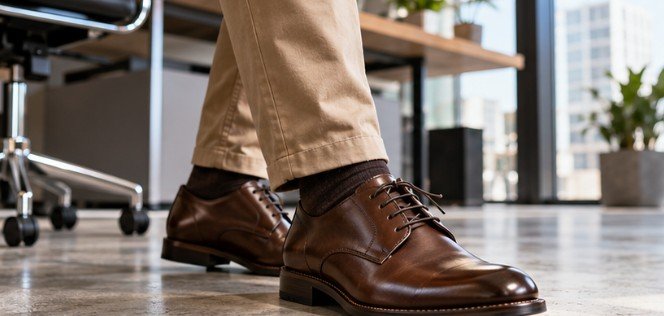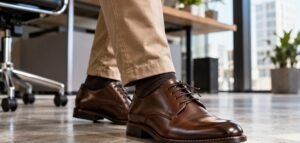
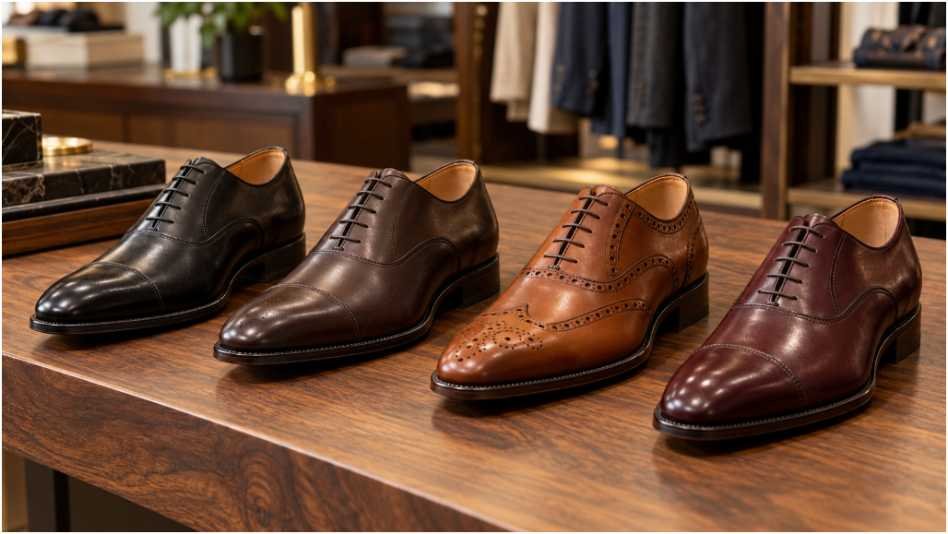
Most budget dress shoes look sharp under showroom spotlights, then crease into plastic ribbons after two rainstorms. Finding the best full grain leather dress shoes under 300 requires cutting through glossy marketing to verify upper tannage, lasting methods, and welt integrity.
After wearing, flexing, and resoling footwear across corporate floors for over a decade, I ran four standout sub-$300 candidates through an 18-month wear test to find which pairs deliver genuine high-end value without retail markups.
What Separates Real Full-Grain from Department Store Traps
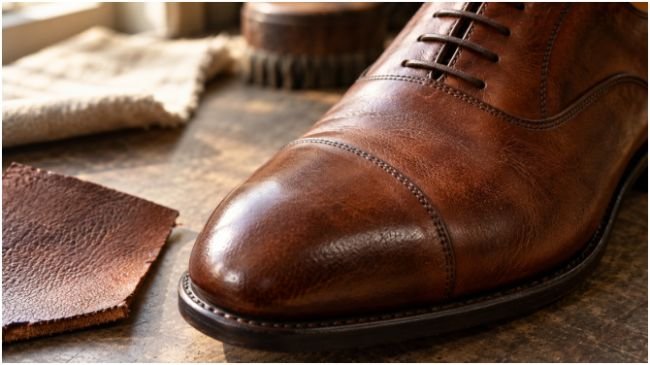
The footwear industry abuses the word “leather.” Brands often take genuine splits or corrected-grain hides, sand off surface imperfections, coat them in pigmented acrylic resin, and stamp them with an artificial pebble print. That polyurethane topcoat prevents the hide from breathing. It traps sweat, suffocates your feet, and cracks along flex points within six months.
Full-grain leather leaves the outer epidermal layer completely unbuffed. The natural tight pore structure remains intact, which provides maximum tensile fiber strength and moisture resistance. Over months of wear, full-grain does not crack; it stretches micro-millimeters to match your foot anatomy and develops a rich patina.
The Cross-Section Anatomy: Full-Grain vs. Corrected Leather
The structural integrity of leather relies directly on tanning chemistry and fiber preservation, standards tracked closely by tannery auditing bodies like the Leather Working Group (LWG).
When you cut a cross-section of high-grade calfskin:
- The Grain Layer: The outermost 0.4 mm to 0.8 mm contains tightly interwoven corium junction fibers. This surface takes high-friction wear and resists tearing.
- The Corium Layer: Looser, thicker collagen bundles that provide flex memory.
Cheaper alternatives grind away the grain layer entirely. In contrast, historic tanneries like Horween Leather Company rely on slow vegetable extracts and hot-stuffed waxes to preserve this natural corium bond, allowing the hide to self-heal minor scuffs through heat and friction during routine brushing.
Top Full-Grain Dress Shoes Under $300 Tested and Ranked
+————————–+——————-+———–+———————+———————–+
| Model | Construction | Price | Width Options | Standout Characteristic|
+————————–+——————-+———–+———————+———————–+
| Beckett Simonon Dean | Blake Stitched | $249 | Standard D | Argentinian Calfskin |
| Thursday The Executive | Goodyear Welted | 188|StandardD,EEWide|Cork-bedMidsole||3DMLifestyleBrogue|BlakeStitched|~170 | Standard D | Chiseled European Toe |
| Meermin Mallorca Oxford | Goodyear Welted | $210 | Medium, E Wide | French Boxcalf Tannage|
+————————–+——————-+———–+———————+———————–+
1. Beckett Simonon Dean Oxford ($249)
The Dean Oxford represents direct-to-consumer efficiency done right. Beckett Simonon operates on a made-to-order batch model, keeping inventory costs close to zero. That savings shows up directly in the upper: 1.4 mm full-grain Argentinian calfskin that feels supple right out of the box.
The lining uses smooth, vegetable-tanned sheepskin that prevents hot spots during long commutes. Because they use a Blake stitch through a slim leather outsole, the Dean keeps a narrow, razor-sharp profile suited for tailored trousers and strict formal wear. The break-in required just two wears of desk duty before the vamp felt glove-soft.
2. Thursday Boot Company The Executive ($188)
Thursday Boot Company built their reputation on rugged boots, and they brought that same workhorse DNA to The Executive. Handcrafted with a 360-degree Goodyear welt, this shoe has unmatched water resistance and sole longevity in the sub-$200 bracket.
Underfoot, Thursday stacks a Poron antimicrobial shock-absorbing sheet on top of a poured cork-bed midsole. Over three months of wear, the cork compressed around my metatarsal bones, matching my natural foot contours. The hand-finished leather is thicker than Beckett Simonon’s calfskin, which demands a stiffer four-day break-in period around the stiff heel counter. Once settled, it became my most reliable pick for eight-hour standing days.
3. 3DM Lifestyle Quarter Brogue ($170)
If you appreciate traditional English styling, the 3DM Lifestyle Quarter Brogue hits well above its price tag. The toe cap features subtle micro-perforations that add visual depth without looking casual.
They use full-grain French calfskin pulled over an Italian-inspired last. The waist is cut tight, creating an athletic arch hug that keeps your foot stable. The factory sole features a clean channeled stitch, concealing the thread beneath a shaved leather flap—a finish usually reserved for benchmade shoes double its price.
4. Meermin Mallorca Classic Cap Toe ($210)
Meermin is the benchmark for affordable Goodyear-welted dress shoes. Sourcing hides from French tanneries like Les Tanneries du Puy, their leather features a tighter grain structure than almost anything else under $300.
That density comes with a catch: the initial break-in is tough. The double-leather vegetable-tanned insole takes roughly 15 to 20 miles of walking to flex freely. Once broken in, Meermin shoes hold their shape, resist ugly creasing, and feel like tailored armor for your feet.
The Construction Trade-Off: Goodyear Welted vs. Blake Stitched
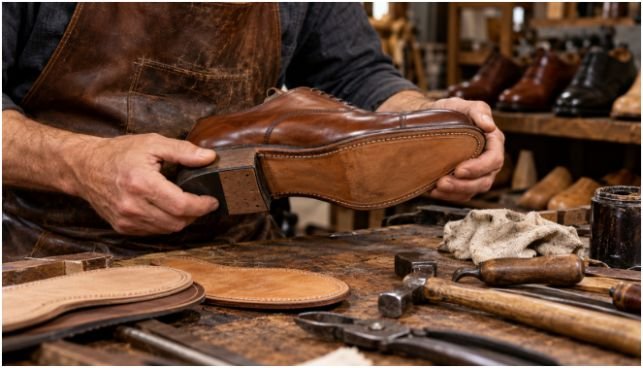
The way the leather upper attaches to the sole determines how the shoe flexes, breaths, and holds up to wet pavement:
- Goodyear Welted: A leather rib runs along the perimeter of the insole, stitched to both the upper and the welt. A second stitch secures the welt to the outsole. This two-part seam creates a cavity filled with cork that insulates against cold pavement, resists puddles, and allows repeated resoling at any local cobbler. The downside is added bulk and initial rigidity.
- Blake Stitched: The upper wraps directly around the insole, and a single through-stitch connects the interior lining, upper, and outsole in one pass. This leaves a clean, slim silhouette with immediate torsional flex. Blake-stitched shoes feel featherlight on the foot, but water can wick through the needle holes during heavy downpours, and resoling requires a cobbler with a specialized Blake machine.
Width & Instep Breakdown: Matching Lasts to Narrow and Wide Feet
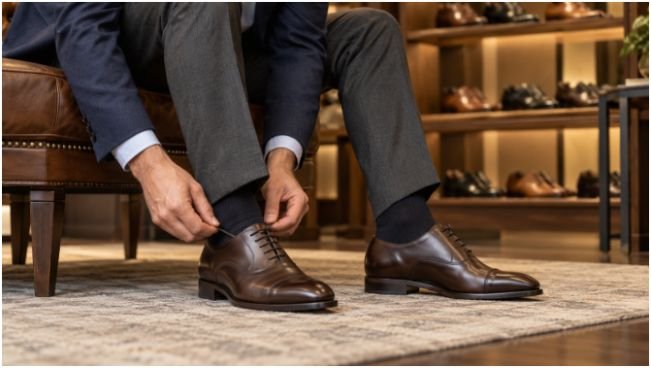
A pair of high-end dress shoes will torment your feet if the last shape conflicts with your instep height or toe splay:
[Standard Foot Profile]
|
+——————+——————+
| |
[Wide / High Instep] [Narrow / Low Volume]
| |
– Thursday Executive (EE Wide) – Meermin Hiro Last (Tight Waist)
– Open Derby Lacing – Chiseled Balmoral Oxfords
– Rounded American/British Lasts – Adjusted Double Monk Straps
If you have a wide forefoot or a high instep, avoid narrow European closed-laced oxfords. The facing will form an exaggerated “V” shape when laced, squeezing the delicate dorsal nerves on top of your foot. Look instead for brands offering dedicated EE widths, or choose an open-laced Derby like the TRUE BOVINE Dean, where the eyelet panels open wide to relieve instep tension.
For narrow feet with low arches, Meermin’s Hiro last and 3DM’s tapered designs prevent heel slippage. Their tight heel cups and slender waists lock the rear foot in place, stopping your toes from jamming forward into the cap.
Cost-Per-Wear Analysis: Why the Sub-$300 Tier Beats Budget Footwear
Buying cheap footwear is expensive. A $90 cemented dress shoe uses bonded leather scraps coated in polyurethane, glued directly to a synthetic rubber sole. Standard friction tests following NIST mechanical durability principles show that bonded soles fail at the adhesive line under continuous torque, with no option for resoling.
+————————————+————————–+——————————-+
| Attribute | Fast-Fashion Budget Pair | Tested Sub-$300 Welter |
+————————————+————————–+——————————-+
| Initial Purchase Price | $90 | $210 |
| Lifespan (Without Catastrophic Wear)| 9 Months (100 Wears) | 6 Years (600 Wears + 1 Resole)|
| Resoling Cost | Impossible (Glued) | $85 (At Year 3) |
| Total Investment Over 6 Years | $720 (8 New Pairs) | $295 Total |
| Effective Cost Per Single Wear | $0.90 / wear | $0.49 / wear |
+————————————+————————–+——————————-+
Full-grain uppers regularly survive two to three sole replacements. Investing $200 to $250 upfront saves hundreds of dollars over a six-year period while providing better arch support, real breathability, and timeless styling.
Stop Ruining Your Leather: Three Non-Negotiable Upkeep Rules
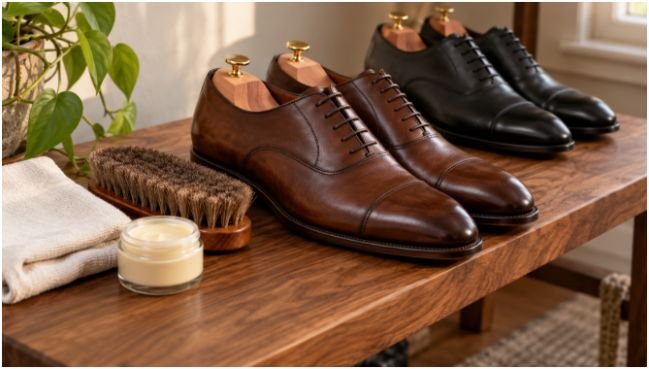
- Insert Raw Cedar Trees Within Ten Minutes of Taking Them Off: Your feet sweat nearly half a pint of moisture every day. Cedar draws that dampness out of the insole before it rots the interior threads, all while maintaining the shoe’s shape to reduce deep vamp wrinkles.
- Rotate Between Wears: Never wear the same pair two days in a row. Vegetable-tanned insoles and internal cork beds need 24 hours to air out and regain their structural resilience.
- Condition Sparingly with Natural Waxes: Synthetic silicone shines create a plastic coating that clogs leather pores. Use an unpigmented, beeswax-based conditioner once every 12 to 15 wears to replenish the natural oils lost to evaporation and sidewalk dust.
Frequently Asked Questions
1. Can I wear Goodyear-welted shoes in heavy rain?
Yes, Goodyear-welted shoes resist roadside puddles well, but you should treat the leather outsoles with a thin coat of pure dubbin wax or add rubber sole protectors for regular wet-weather commutes.
2. How do I check if my dress shoes are genuine full grain?
Look closely under natural light: real full-grain shows tiny, irregular pore patterns and subtle variations, whereas corrected-grain leather appears glossy, uniform, and rubbery to the touch.
3. Is Blake stitching or Goodyear welting better for daily office wear?
Goodyear welting is superior for daily office use and standing because its internal cork layer molds to your foot arches over time.
4. How much should I spend on my first resoling?
A standard half-sole leather or Vibram rubber resole by an experienced local cobbler typically runs between $60 and $95.
Step Up Your Footwear Game
Throw out the disposable, plastic-coated dress shoes that shred your heels and crack at the toes. Stepping into authentic full-grain calfskin gives you footwear that molds to your stride, looks better with age, and saves you money over the long haul.
Grab a pair of raw cedar shoe trees right now, pick the construction that matches your daily routine, and check your sizing carefully on a Brannock device before you order.