I judge a polishing routine by how shoes look after a day of walking, not just under a lamp. A glossy toe means little if the creases look chalky or the color remains uneven. When comparing shoe cream vs wax polish for leather dress shoes, I start with the problem: faded leather, a dull finish, or a desire for extra shine.
Cream polish usually helps refresh color and produces a softer sheen. Wax polish adds surface gloss and light protection. You can use both, but not every pair needs both every time.
What Is the Difference Between Cream and Wax?
Cream Polish Refreshes Color and Appearance
Shoe cream commonly combines pigments, oils, waxes, and a liquid carrier. Colored formulas help disguise light scuffs and uneven fading, while their conditioning properties depend on the formulation.
Cream can leave a polished satin finish after brushing. It is not necessarily matte, and it is not automatically identical to a dedicated leather conditioner. Check the label rather than assuming every cream delivers the same care.
Wax Polish Builds a Glossier Surface
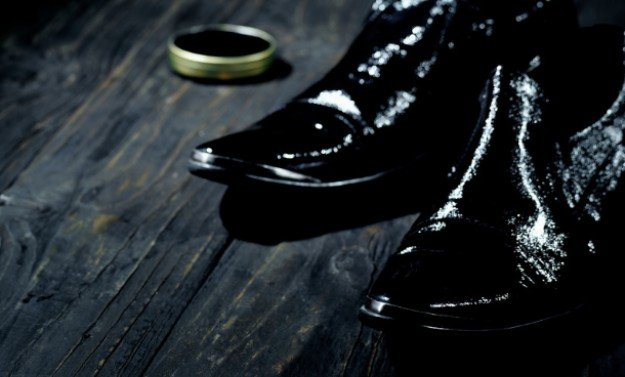
Hard wax polish creates a thin surface layer that can be buffed and built into a higher shine. It is especially useful on firm toe caps and heel areas.
Wax offers some resistance to splashes and light scuffing, but it does not make dress shoes waterproof. It also cannot repair torn leather, deep scratches, or structural cracks.
Which Product Should You Choose?
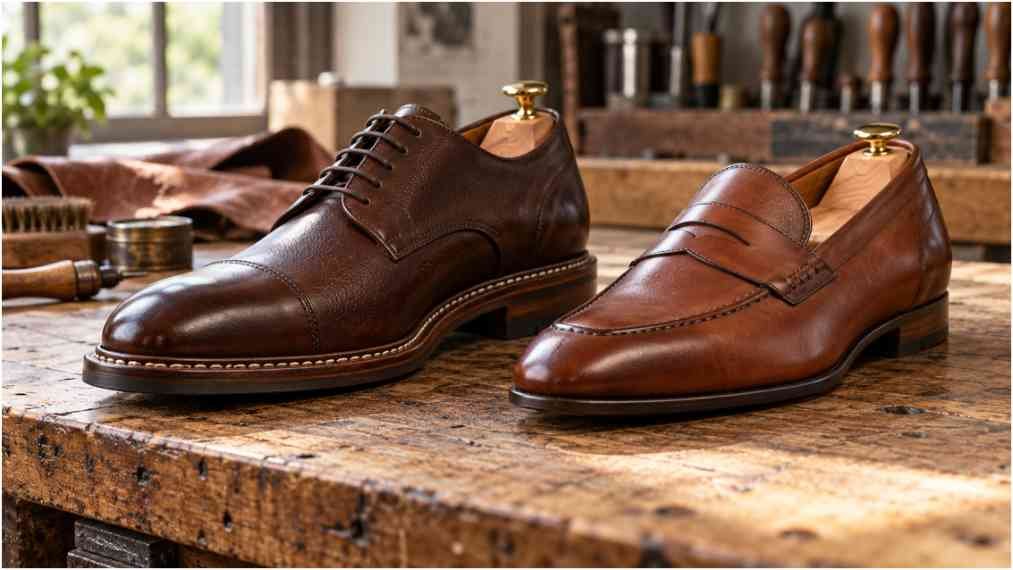
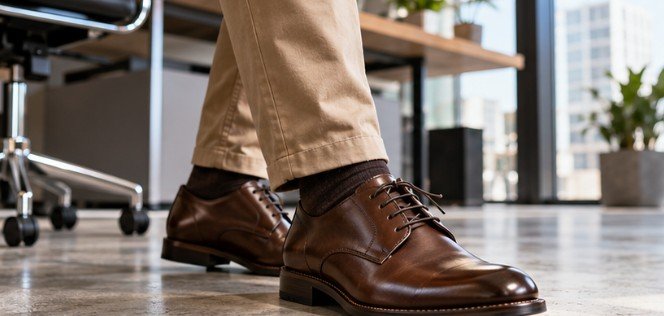
For routine office wear, cream often provides enough color renewal and shine. Brown Derbies, leather loafers, and everyday Oxfords can look smart without a reflective finish.
If the leather looks good but you want sharper gloss for a wedding or formal event, add wax after cream has dried and been buffed.
The practical answer to shoe cream vs wax polish for leather dress shoes depends on the result you need. Choose cream for refreshing the finish; choose additional wax for higher gloss. Treat dryness with a compatible conditioner when needed.
How Do You Apply Them Correctly?
Prepare Clean, Dry Leather
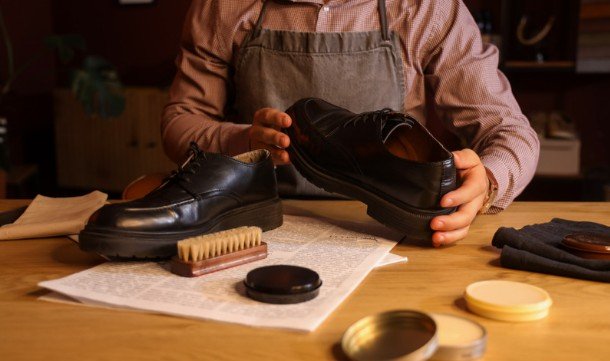
Remove the laces and insert shoe trees. Brush away dust with a horsehair brush, checking seams and sole edges.
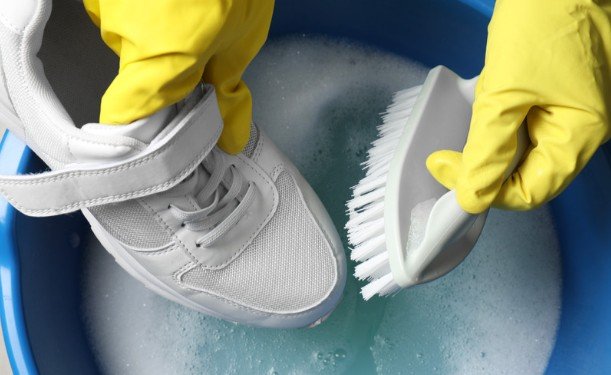
Use a barely damp cloth for remaining surface dirt, then allow the shoes to dry naturally. Avoid radiators, hair dryers, and polishing over damp leather. For stubborn stains, choose a cleaner for the finish.
Apply a Thin Layer of Cream
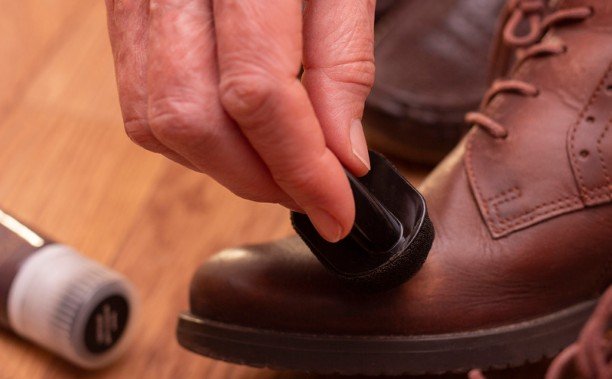
Test the product on a discreet area first. Spread a small amount over compatible smooth leather with a soft cloth, adding only enough to create even coverage.
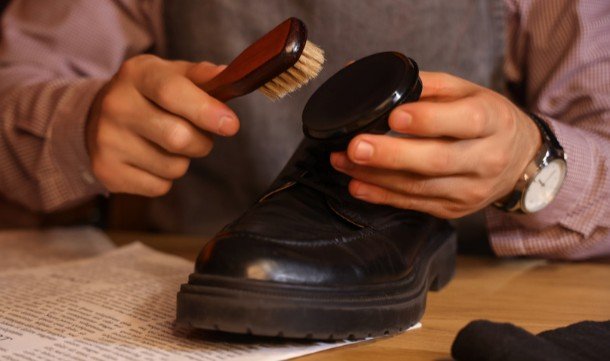
Follow the manufacturer’s drying instructions. Buff with a horsehair brush until excess product disappears and the finish looks consistent. Inspect the result before adding another layer; more cream does not automatically improve it.
Add Wax Where Extra Shine Helps
Apply wax sparingly with a clean cloth. Concentrate additional layers on firm toe and heel areas rather than the vamp, which bends across the forefoot.
A thick wax coating can fracture at creases, leaving pale residue. For mirror shining, use very thin layers and minimal water following product instructions. Stop if the finish becomes sticky or cloudy.
Should You Use Neutral or Colored Polish?
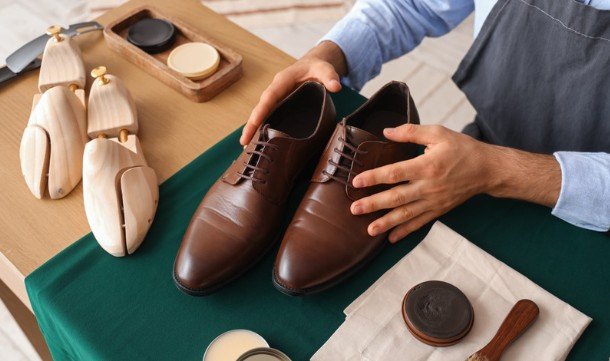
Colored cream helps restore faded areas; neutral cream adds no matching pigment and therefore offers less color correction. Before applying either, clean leather shoe welts and stitching. Choose a close shade and test it before treating the entire shoe.
Be especially cautious with light brown leather, contrasting stitching, and decorative burnishing. A darker product can alter the appearance. Neutral wax may suit several colors, but check for visible residue before committing.
How Often Should You Polish Dress Shoes?
Inspect the shoes rather than following a rigid weekly schedule. Brush after wear and apply cream when the finish becomes dull, lightly scuffed, or uneven.
Refresh wax when shine needs attention. Try brushing first; you may revive the finish without another application. Repeatedly adding products over old residue can create buildup.
Which Leather Types Need Different Care?
This routine applies primarily to compatible smooth leather. Suede and nubuck need products that preserve their nap. Patent leather requires care suited to its glossy coating.
Shell cordovan, exotic skins, oiled leather, and delicate finishes may need specialized products. Follow the shoe maker’s guidance before treating unfamiliar leather, including resale finds.
Frequently Asked Questions
1. Which Wins: shoe cream vs wax polish for leather dress shoes?
Neither suits every goal. Cream helps refresh color and gives a softer shine; wax adds gloss. Use cream alone when the finish already meets your needs.
2. Can Cream Polish Replace Conditioner?
Some creams provide conditioning benefits, but formulations vary. Dry or stiff leather may need a separate compatible conditioner. Follow product and footwear instructions.
3. Why Does Wax Turn White at Creases?
Heavy wax layers can crack when the shoe flexes. Reduce buildup with an appropriate cleaner used cautiously, then keep future applications thin.
4. Can Polish Hide Deep Scratches?
Polish may reduce their visibility, but it cannot rebuild damaged leather. Ask a cobbler about deep gouges, splits, or damaged stitching.
My Final Take
I prefer an even color and clean finish before adding gloss. My approach is simple: clean carefully, apply cream lightly, and use wax only where extra shine serves a purpose. That keeps routine care manageable while helping dress shoes look their best.