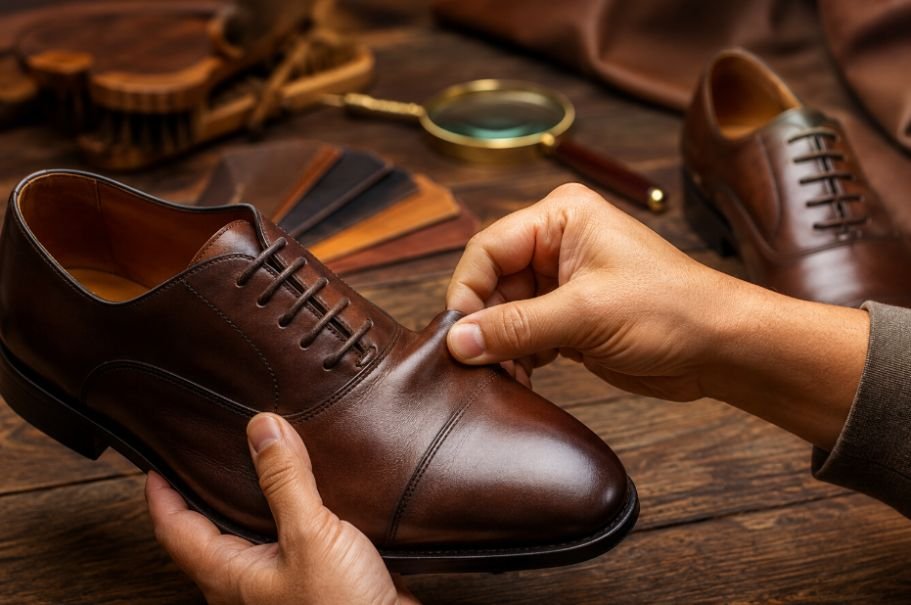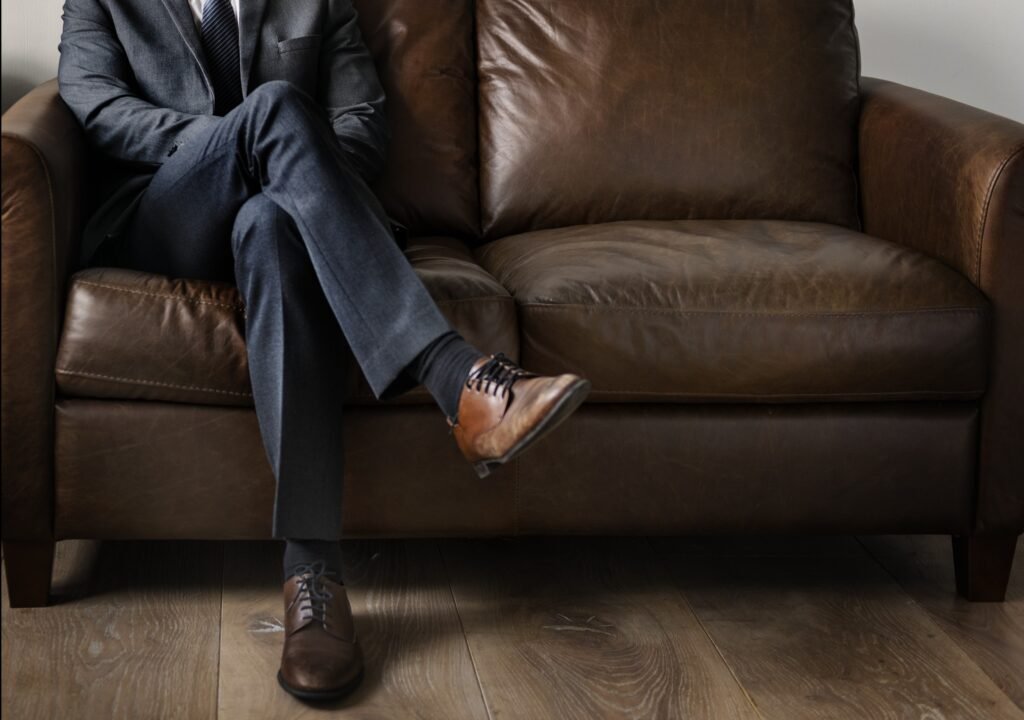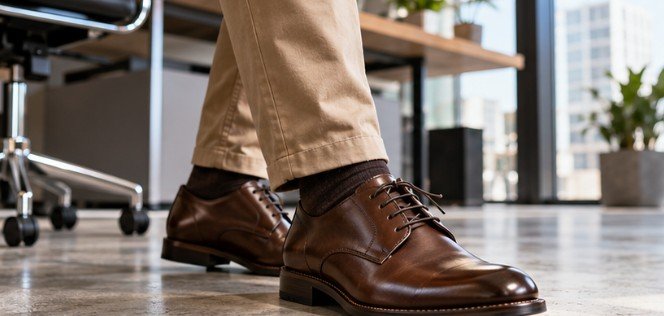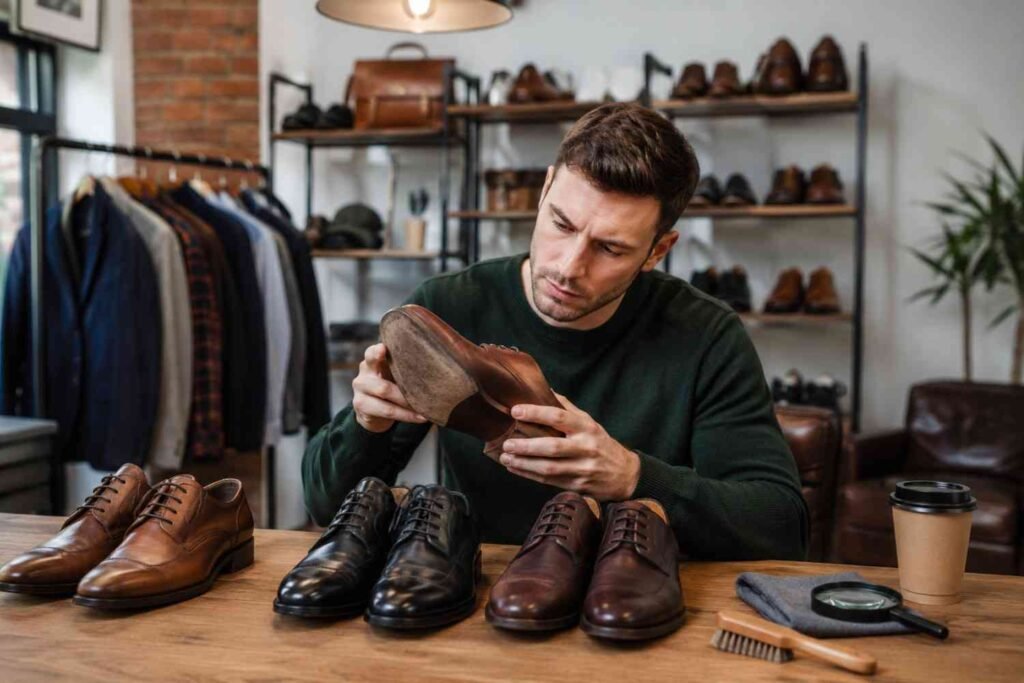
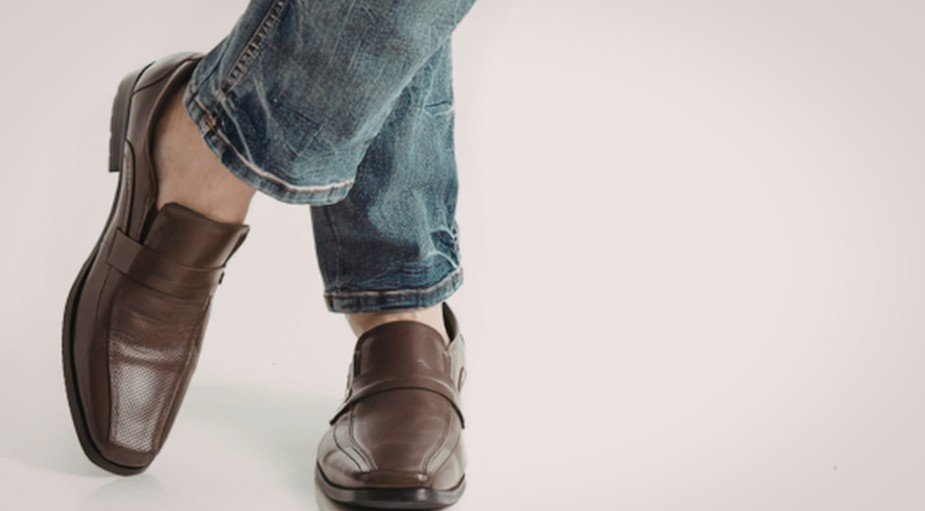
If you are asking how men’s leather dress shoes fit, the answer is simple: snug, secure, and supportive from the first wear. They should not crush your toes, slip off your heel, or feel like sneakers with extra space.
I have learned this the hard way. A beautiful pair of leather Oxfords can ruin a workday if the toe box is tight or the instep bites. The right fit feels tailored, not loose. Harvard Health recommends about a half-inch of space between the longest toe and the front of the shoe, while Better Health notes that 1 to 1.5 cm is a healthy fit range.
The Perfect Dress Shoe Fit Starts With Snug, Not Tight
Men’s leather dress shoes should feel close around the foot without painful pressure. Think of a firm handshake, not a squeeze. Your foot should feel held at the heel, supported through the arch, and relaxed at the toes.
Leather can soften and mold with wear, but it will not stretch longer. If your toes hit the front in the store, they will still hit the front after break-in. That is not a break-in issue. That is the wrong size.
A good leather dress shoe fit has three signs. Your toes can move slightly, your heel stays mostly secure, and the widest part of your foot sits at the widest part of the shoe.
Toe Room: The Thumb-Width Rule That Saves Your Feet
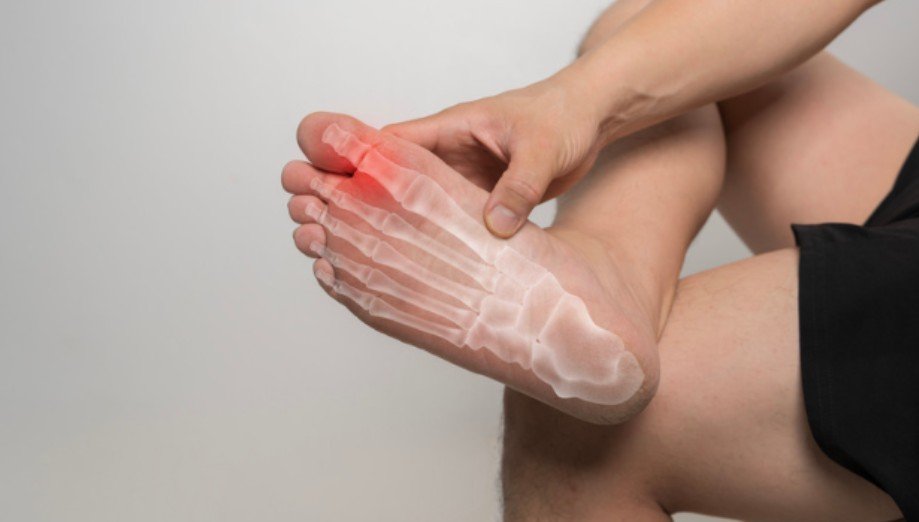
The front of the shoe should leave about 1 to 1.5 cm of space beyond your longest toe. For many men, this is close to a thumb’s width. Always measure from the longest toe, not automatically from the big toe. Your second toe may be longer.
Your toes should not feel curled, stacked, or pressed against the leather. A tight toe box can cause rubbing, soreness, and calluses. FootCareMD also recommends checking that the shoe has enough depth, especially if toes rub against the top of the shoe.
Do not confuse a sleek shape with a tight fit. A dress shoe can look sharp and still offer enough toe room. Almond and round toe shapes usually work better than aggressively pointed styles for daily wear.
Width and Ball Fit Matter More Than Shoe Size
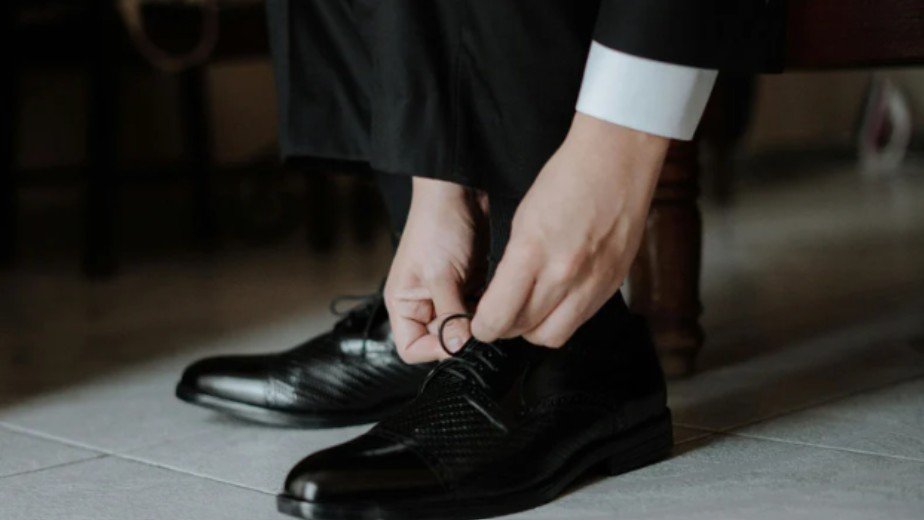
The ball of your foot should line up with the widest part of the shoe. This is where many men get the fit wrong. They focus only on length and ignore width.
If the leather bulges over the sole, the shoe is too narrow. If your foot slides side to side, the shoe is too wide. The sides should hug your foot without pinching.
Why Sizing Up Is Usually a Mistake
If your dress shoes feel narrow, do not simply buy a longer size. A longer shoe can create heel slippage, poor arch alignment, and awkward creasing. Instead, keep your true length and choose a wider width such as E, EE, or EEE.
This matters even more with premium leather shoes. If you are comparing materials, understanding genuine leather vs full grain dress shoes can help you know how different leather qualities soften and age.
Heel Slip: What Is Normal and What Is Not
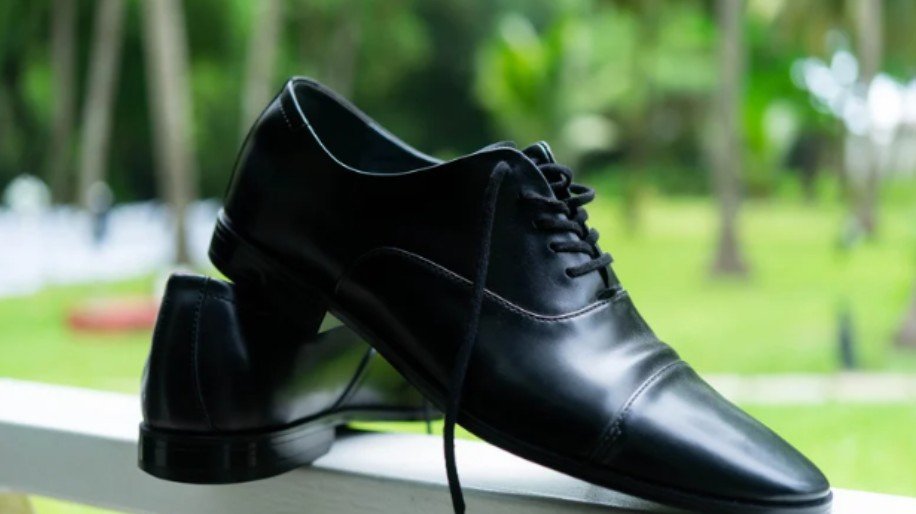
A small amount of heel slip is normal in new leather dress shoes. Around 3 to 5 mm is usually fine because stiff leather soles and heel counters need time to flex.
More than 1 cm of heel lift is a warning sign. That much movement can cause blisters and make your foot slide forward. Your heel should feel cupped, not trapped.
Walk on both carpet and hard flooring when trying shoes. If your heel pops out with every step, the shoe is too big or too deep for your foot shape.
Instep Fit: The Hidden Reason Dress Shoes Hurt
The instep is the top ridge of your foot. If it feels crushed under the laces, the shoe is wrong for your foot shape. This is common for men with high arches.
Oxfords have a closed lacing system. That makes them elegant, but less forgiving. If the laces form a very wide V gap, your instep needs more room.
Best Dress Shoes for High Arches
For high arches, Derby shoes are often the safest choice. If heel pain is also part of the problem, learning about oxford shoes good for plantar fasciitis can help you decide whether a closed-lace dress shoe gives enough support for daily wear.
Their open lacing allows the quarters to spread upward, giving the instep more breathing room.
Monk strap shoes can also work well because the buckle lets you adjust pressure across the top of the foot. Some loafers with elastic goring can help, but stiff low-cut loafers may bite.
High arches can also increase impact on the heel and ball of the foot. The American Podiatric Medical Association notes that arch type affects shoe support needs, especially for cushioning and shock absorption.
Best Dress Shoes for Wide Feet and High Arches
Wide feet with high arches need both horizontal and vertical space. This is why many Oxfords fail. They can pinch the forefoot and press down on the instep.
Choose Derby shoes in E, EE, or EEE widths. Look for removable insoles if you use orthotics. A round or almond toe box gives the forefoot more natural room.
The best fit should feel secure, not forced. If you feel pressure across the laces after five minutes, it will likely get worse after five hours.
My 10-Minute Dress Shoe Fit Test
I use a simple test before buying leather dress shoes. First, I try them on in the late afternoon because feet often swell later in the day. Mayo Clinic Health System also recommends shoe shopping later in the day for this reason.
Then I wear the exact socks I plan to use with the shoes. Thin dress socks and thick socks can change the fit more than expected.
I stand first, then walk for at least 10 minutes. I check for toe pressure, heel slip, side pinching, lace bite, ankle rubbing, and hot spots. If a shoe annoys me indoors, I do not trust it outdoors.
Leather Break-In: What Will and Will Not Change
Leather dress shoes will soften across the upper. The heel counter may relax slightly. The outsole may flex better after a few wears.
But length will not improve. A painful toe box will not magically become spacious. A narrow shoe may soften slightly, but it will not turn into a wide-width shoe.
Break-in should improve comfort, not rescue a bad fit. If the shoe hurts sharply in the store, leave it there.
Common Fit Mistakes Men Make
The first mistake is buying for looks alone. A sharp Oxford is useless if it pinches your instep or crushes your toes.
The second mistake is ignoring width. Many men wear shoes that are too long because they never tried wide sizes.
The third mistake is accepting a painful break-in. Mild stiffness is normal. Numb toes, burning pressure, and deep rubbing are not.
The fourth mistake is trying shoes too quickly. A two-minute store test cannot reveal heel slip, lace bite, or ball pressure.
FAQs
1. How should men’s leather dress shoes fit in the toe box?
They should leave about 1 to 1.5 cm of space beyond the longest toe while letting your toes wiggle naturally.
2. Should leather dress shoes feel tight at first?
They should feel snug, not tight. Sharp pressure, numbness, or toe pain means the fit is wrong.
3. Is heel slipping normal in new leather dress shoes?
Slight heel slip of 3 to 5 mm is normal, but more than 1 cm usually means the shoe is too large.
4. What dress shoes are best for high arches?
Derby shoes and monk straps usually fit high arches better because they offer more instep adjustability.
Final Swagger Check: Buy the Fit, Not the Fantasy
The real answer to how men’s leather dress shoes fit is this: they should feel polished on the outside and peaceful on your feet. A great pair should hold your heel, support your arch, respect your toe space, and match your foot shape.
My final tip is simple. Never buy pain and call it elegance. Choose the pair that lets you walk into the room sharp, steady, and blister-free.