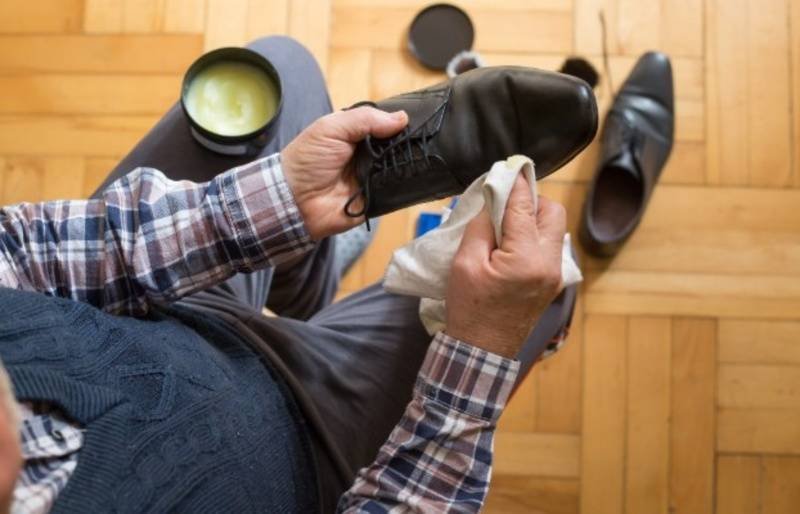
I used to think leather shoes only needed polish when they looked dull. Then I learned that polish adds shine, but conditioner keeps the leather soft, flexible, and protected. If your shoes feel dry, stiff, faded, or slightly cracked, learning how to condition leather shoes properly can help them last longer and look cleaner with every wear.
Why Leather Shoes Need Conditioning
Leather is a natural material. Over time, heat, dust, pavement, moisture, and regular wear can pull oils from the surface. When leather loses moisture, it becomes stiff. That stiffness leads to deep creases, rough texture, and cracking.
Conditioning helps restore flexibility. It keeps dress shoes, Oxfords, wingtips, slip-on shoes, and handmade leather shoes from drying out too quickly. It also helps the leather age better instead of looking tired after a few wears.
What You Need Before You Start
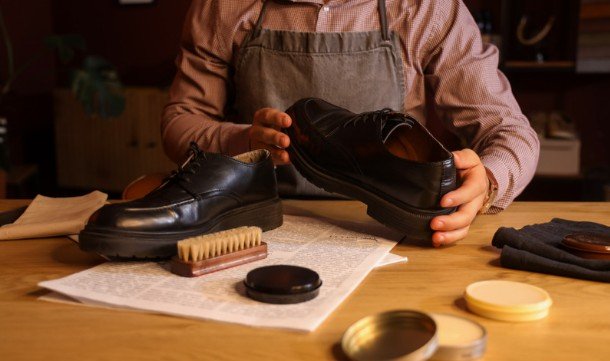
You only need a few simple items: a soft brush, clean cloth, leather cleaner, leather conditioner, shoe trees, and a buffing cloth. Use products made for leather footwear because household oils can damage the finish.
Avoid olive oil, coconut oil, petroleum jelly, harsh soap, and too much water. These can darken leather, clog the surface, or leave greasy marks that are hard to remove.
Clean the Shoes First
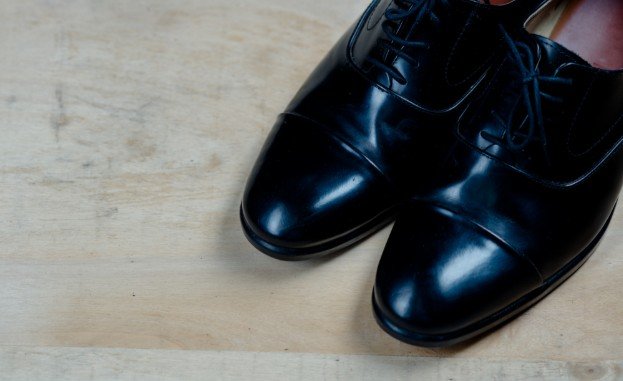
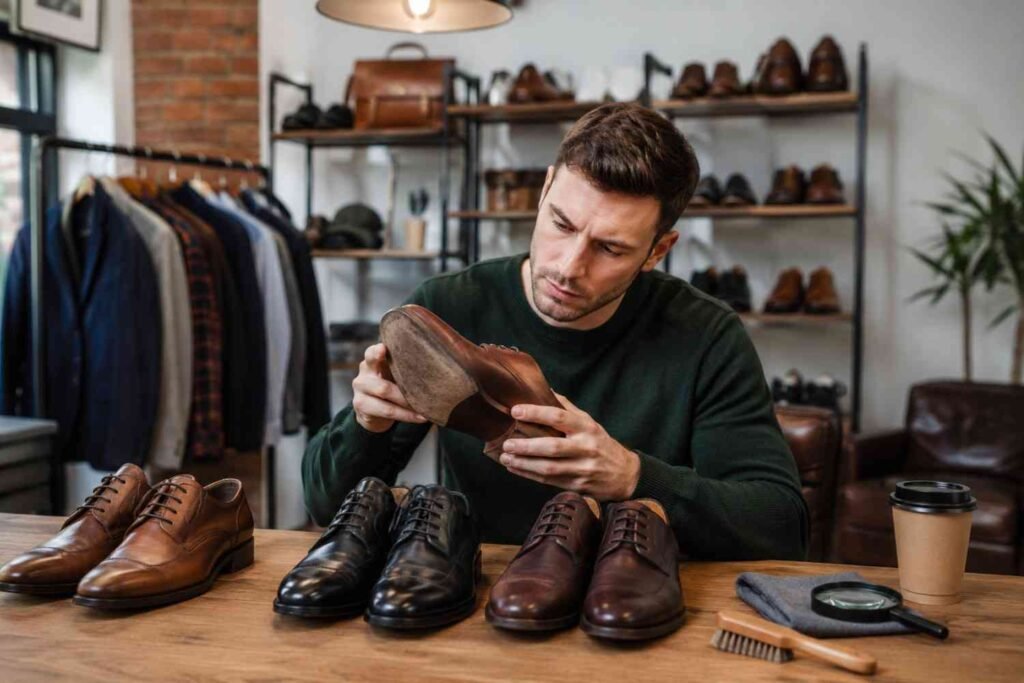
Never condition dirty shoes. Dirt and dust can get trapped under the conditioner and make the leather look uneven. This same cleaning-first rule also helps you judge the condition of resale shoes, since scuffs, cracks, stains, and worn areas are easier to inspect once surface dirt is removed.
Remove the laces first. Brush away loose dirt from the upper, seams, tongue, and welt area. If the shoes need more cleaning, wipe them gently with a slightly damp cloth or leather cleaner. Do not soak the leather.
After cleaning, let the shoes dry naturally at room temperature. Do not use a hair dryer, heater, fireplace, or direct strong sunlight. Fast heat can shrink and crack leather.
How to Condition Leather Shoes Step by Step
Test the Conditioner
Before using conditioner on the whole shoe, test it on a hidden area. Some conditioners may darken lighter leather shades like tan, cognac, burgundy, or brown.
Apply a Thin Layer
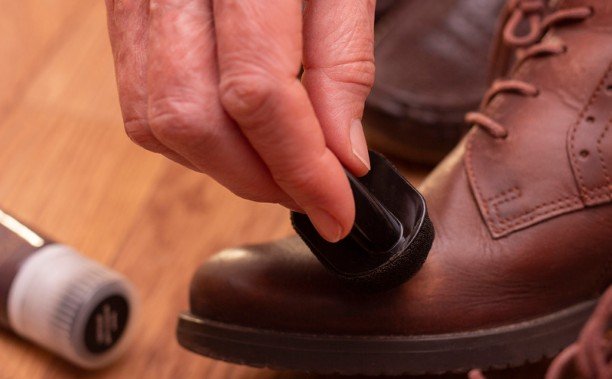
Take a small amount of conditioner on a soft cloth. Rub it into the leather using small circular motions. Focus on dry areas, flex points, and creased sections.
The key is to use less than you think you need. Too much conditioner can make leather greasy, soft, or uneven. This is one of the most important parts of how to condition leather shoes properly.
Let It Absorb
Let the shoes rest for 20 to 30 minutes. Very dry leather may need more time. The conditioner should sink into the leather instead of sitting heavily on top. If the shoes have become damp during cleaning, allow them to air dry naturally before applying polish, as this is one of the safest ways to dry leather shoes without damaging the leather.
Avoid using direct heat, such as hair dryers or radiators, since excessive heat can cause the leather to dry out and crack.
Wipe and Buff
Use a clean cloth to remove extra conditioner. Then buff the leather gently until it looks smooth and refreshed. The shoes should feel nourished, not oily.
Conditioner vs Polish
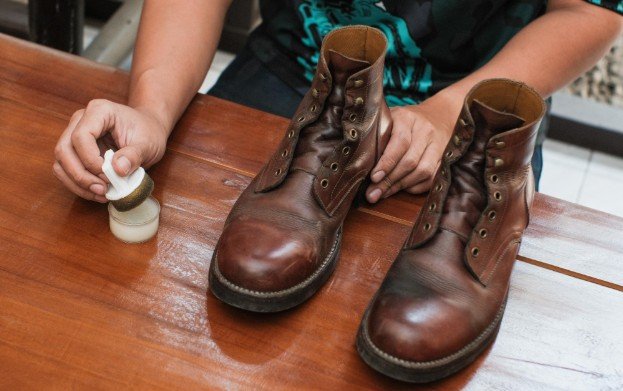
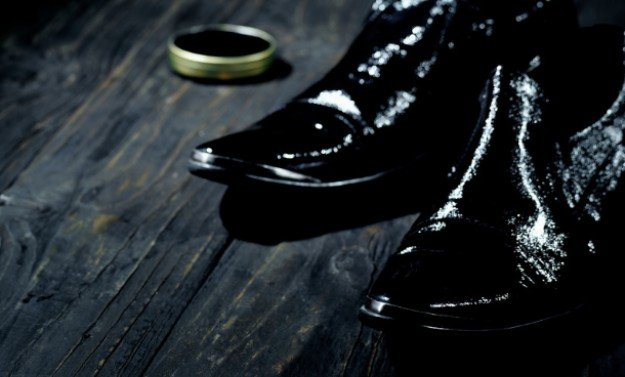
Conditioner and polish are not the same. Conditioner softens and feeds the leather. Polish adds color, shine, and surface protection.
Use conditioner first when the leather feels dry. Use polish after conditioning if you want more shine or color correction. Cream polish is good for restoring color, while wax polish is better for a glossy finish. While sneaker cleaners can work well on casual footwear, they should not replace proper leather conditioner or polish for dress shoes.
How Often Should You Condition Leather Shoes?
For shoes worn weekly, conditioning every two to three months is usually enough. For shoes worn daily, check them every four to six weeks. If the leather looks dull, feels stiff, or creases sharply, it may need conditioner.
Do not over-condition. Too much product can weaken the leather and make it lose structure.
Frequently Asked Questions
1. How do I know if leather shoes need conditioner?
They may need conditioner if they look dull, feel stiff, crease deeply, or show signs of dryness.
2. Can I condition all leather shoes the same way?
No. Regular leather conditioner is usually for smooth leather only. Suede, nubuck, and patent leather need special care.
3. Can conditioner replace polish?
No. Conditioner softens leather, while polish adds shine and color.
4. How to condition leather shoes properly without darkening them?
Always spot test first, apply a thin layer, use a small amount, and wipe away excess conditioner.
Final Thoughts
For me, leather shoe care became easier once I stopped using polish as the only solution. Conditioner is what helps leather stay flexible, strong, and comfortable over time.
Clean first, dry naturally, condition lightly, wipe excess, polish if needed, and store shoes correctly. That simple routine is the best way to understand how to condition leather shoes properly and keep your shoes looking sharp for years.